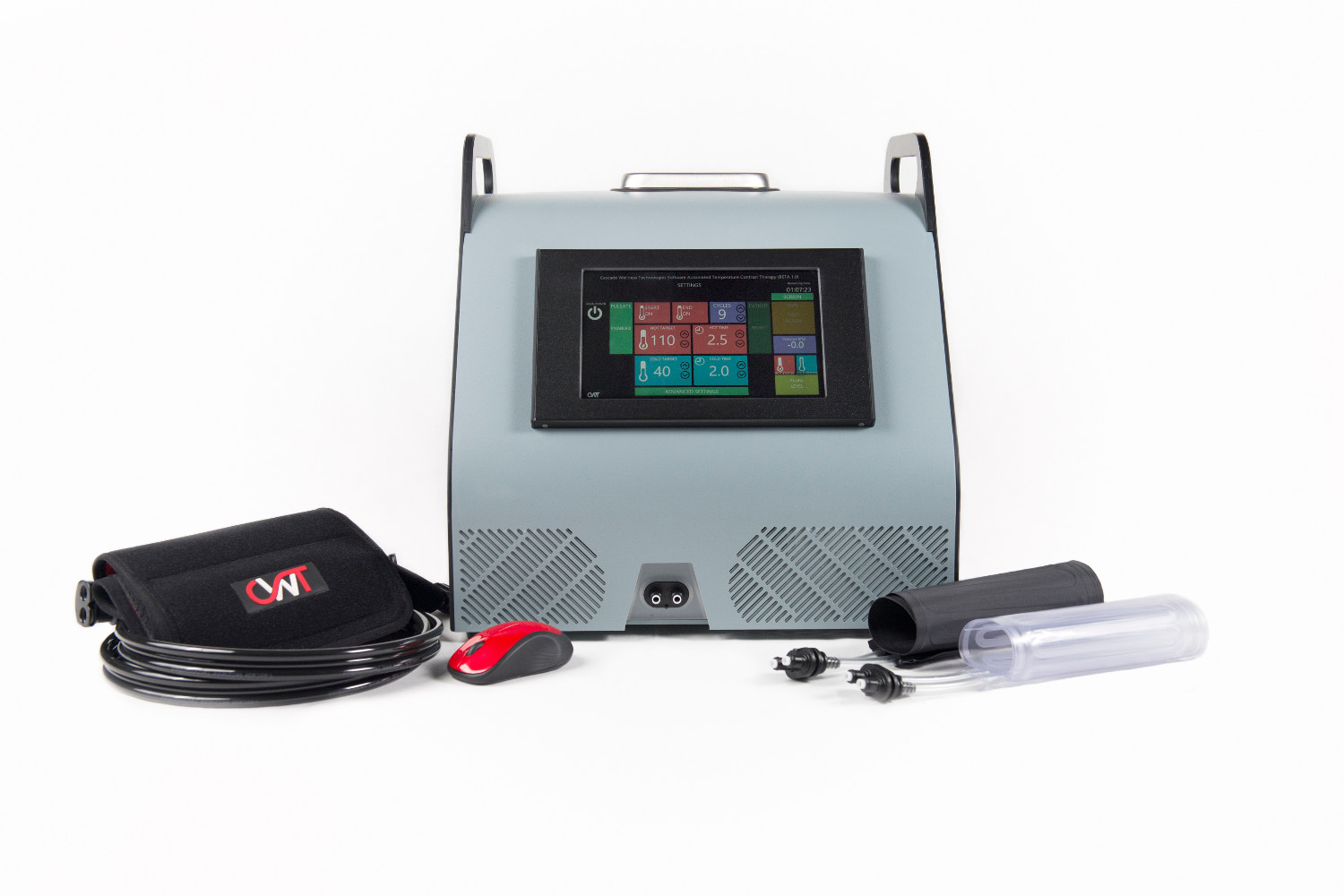
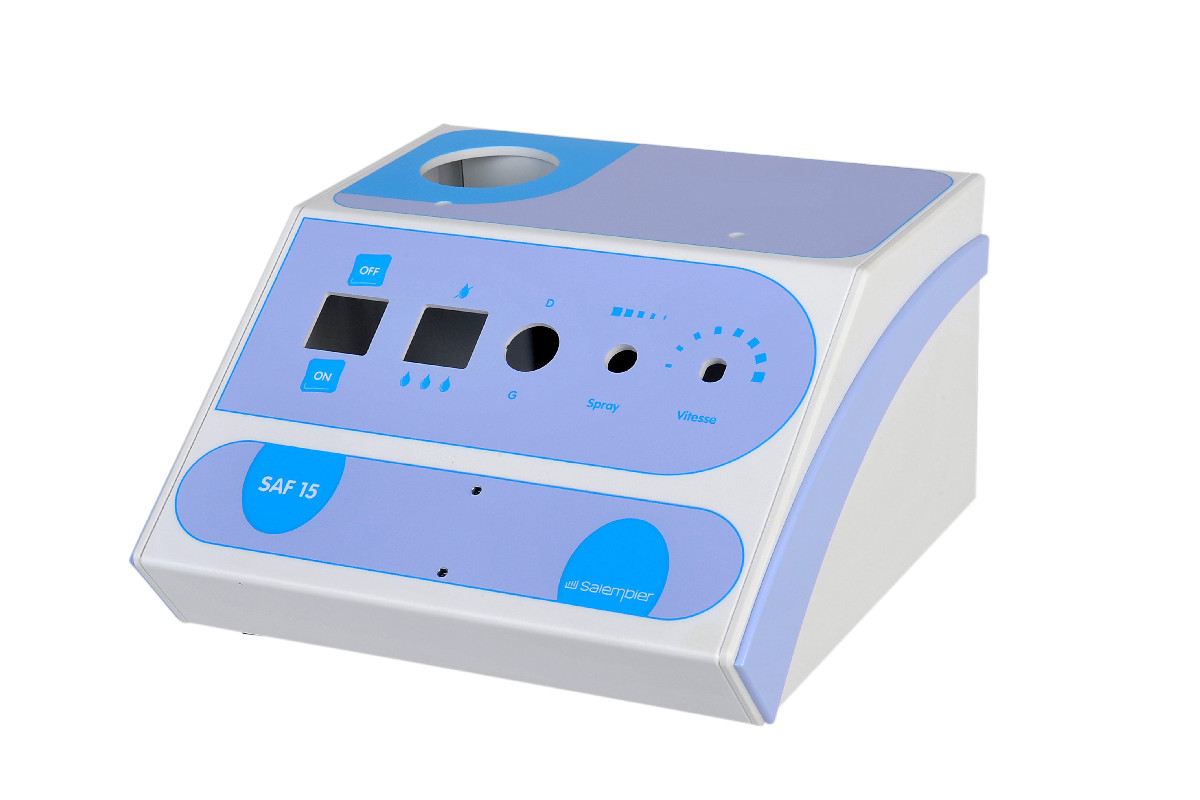
Conversations about greener enclosures usually start with the material: bio-based, biodegradable. For a flame-rated medical housing those options rarely work, and we do not offer them. What does reduce waste is mostly about not making things that get thrown away: tooling retired by a design change, stock made obsolete by a revision, a whole housing discarded because one panel cracked, and coatings nobody needed.
This post sets out where a fabricated housing helps, where it does not, and the design choices that make the difference.
No mold to scrap when the design changes
Medical devices change during development and after launch. A connector moves after usability testing, a battery grows, the regulatory team wants a different vent. With an injection-molded housing each change is a tool modification, and a large enough change retires the tool. With a fabricated housing the tool is a CNC program, and the change is an edit. Medical housings tend to ship in the hundreds, change and ship again; we regularly build 500 units, revise the design and build 500 more before a customer considers tooling.
The fair counterpoint: for a stable design at high volume, molding is efficient. A mold spread over many thousands of parts makes little scrap per part, while our process machines flat patterns out of sheet and leaves an offcut skeleton behind. The advantage of building without molds is real while the design moves or the volume is modest, and it fades as the design settles and the volume climbs.
Batches sized to demand, not to the mold
A mold pushes you toward large runs so the tool pays for itself. When the design is then revised, the housings on the shelf become scrap or rework. With no tooling to pay off there is no minimum order: one or two units carry a setup charge, and the process is most economical from 100 to 10,000 units.
A blanket order covers 10 to 10,000 units released on a schedule, monthly, quarterly or on another cycle, and volume runs ship three weeks after PO. You can hold a few weeks of stock instead of a whole production lot, so when a revision lands, little of the old one is left on the shelf.
Housings that last, and panels you can replace
The longest-lived housing is the one nobody replaces. A bent and bonded housing is as strong as an injection-molded part in a similar material, and where a device is handled hard we add thicker sheet, corner doublers and ribs.
Repairability is a decision made early, because solvent-bonded joints are permanent. Decide which pieces are bonded for life and which are fastened for service. The parts most likely to be damaged or changed are the front panel with its connectors, the display bezel, the battery door and the lid. Fasten those into brass inserts, which survive repeated service where a self-tapping boss is good for fewer than two or three insertions.
Then a cracked panel is a spare part, not a scrapped device. The panel is defined by a program rather than a mold, so a replacement can be cut in any quantity, even one or two with a setup charge. The same applies when a display is discontinued: a new front panel with a revised cutout can fit units already in service instead of replacing their housings.
Color from the sheet, coatings only where needed
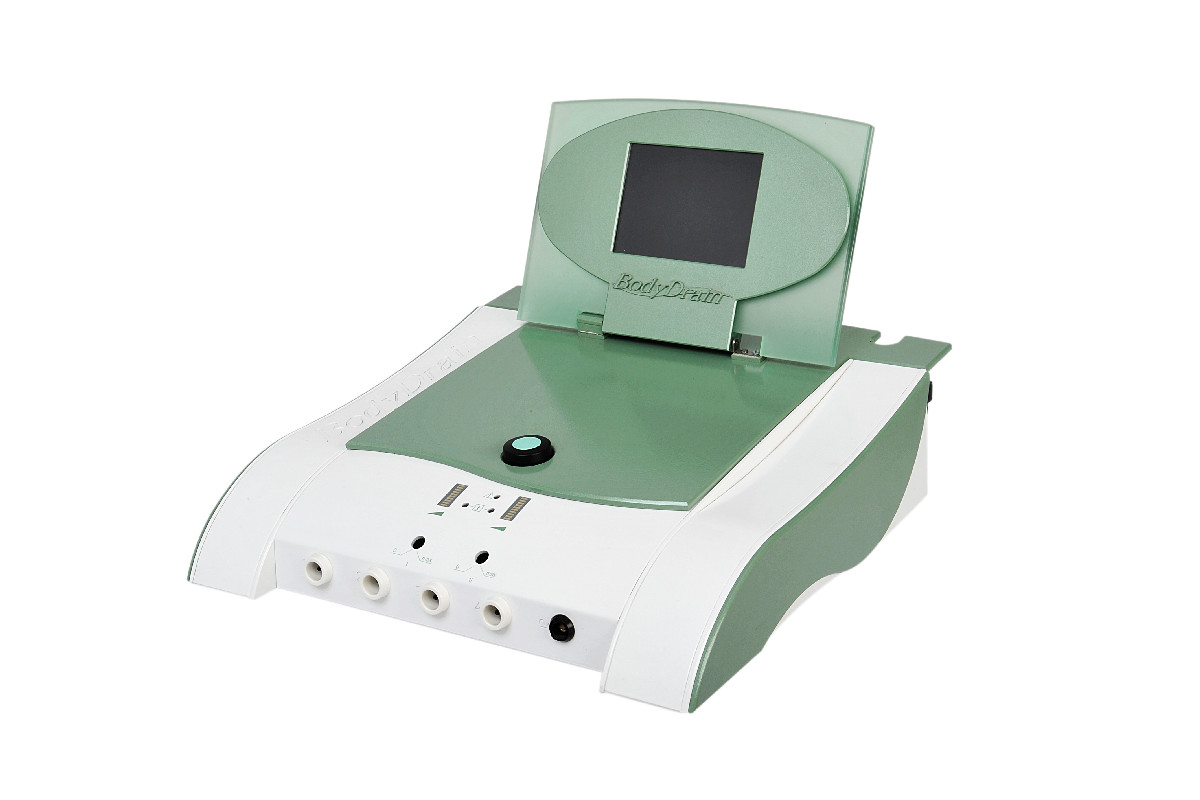
Our sheet arrives pre-colored and pre-textured, so a housing in a stock color (white, black, light grey or dark grey ABS) needs no paint, and two-tone designs come from colored sheet rather than masking and spraying. Legends and branding are UV printed directly on the part, with no screens or plates to make.
Two honest caveats. Custom colors require around 2,000 lb of material, so on a small program a custom color means buying sheet you may never use; a stock color with a printed accent is the leaner choice. And the process is not solvent-free, because the joints are solvent bonded.
Coatings are the other place to be sparing. An EMI coating is a second material applied inside the housing, so specify it on the faces that need shielding rather than by default. Paint is the same, and we recommend it selectively anyway because it can fill seams unevenly. The stocked sheet materials and their colors are listed with data sheets.
Why biodegradable and bio-based plastics rarely fit
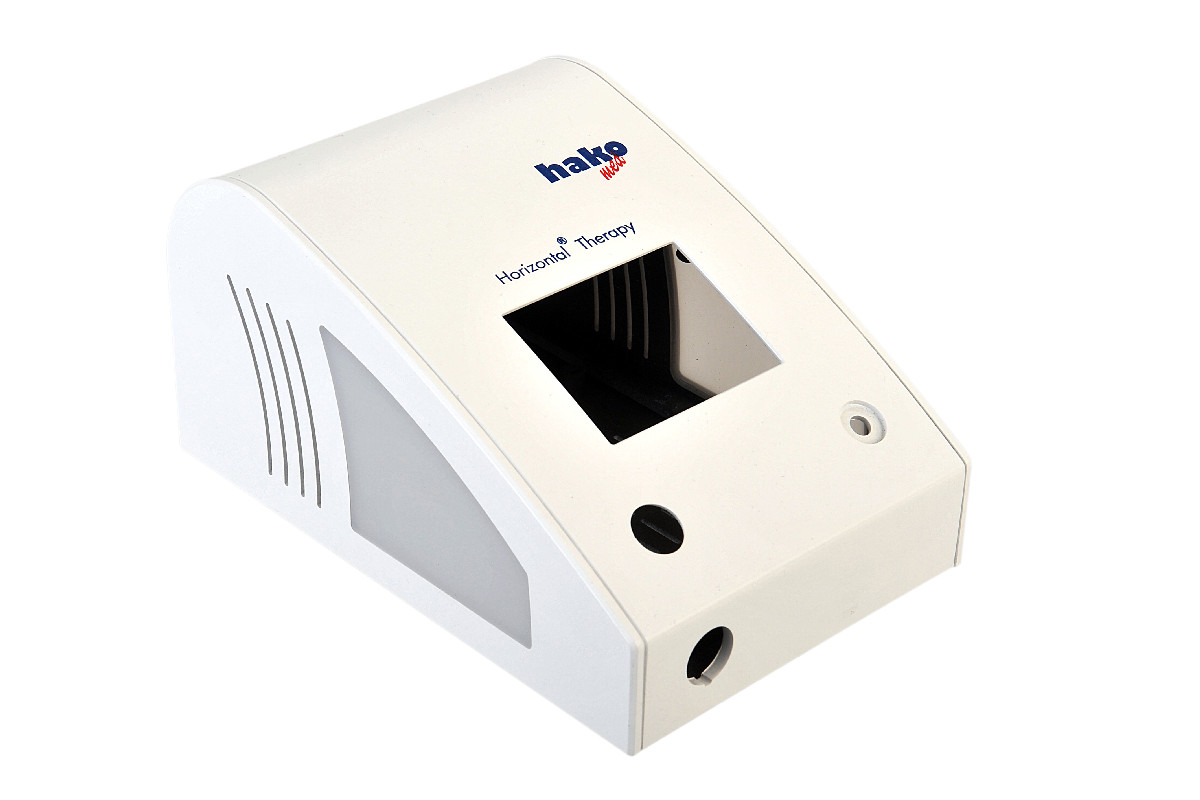
A medical electronics housing has to keep its properties for the life of the device: a flame rating at the specified thickness, resistance to repeated disinfection, dimensional stability next to warm electronics, and the same behavior from one sheet lot to the next. A biodegradable plastic is designed to do the opposite and break down. PLA, the most common one, also softens at around 60 °C, a temperature the inside of an electronics housing can reach.
Bio-based grades that are chemically the same as conventional plastics avoid the degradation problem, but they face the same test as any sheet: an extruded, thermoformable grade with a flame listing at your gauge and data for your disinfectant. None of the sheet we stock is bio-based or biodegradable.
There is also the regulatory cost. Changing the material of a released medical device is a design change. It reopens the flammability and cleaning evaluations, and the biocompatibility evaluation where a part touches the patient, and that work can outweigh the benefit of the new material. If a material target matters, set it before verification.
Design choices that help at end of life
End of life is decided mostly at the design stage. These choices at the design stage make it easier, and several of them also cost less.
| Choice | What it saves | Trade-off |
|---|---|---|
| Stock color with printed accents | No paint, no 2,000 lb custom-color purchase | Four stock ABS colors |
| Service panels fastened, not bonded | A damaged panel is replaced, not the housing | Inserts and screws add parts and assembly time |
| Blanket releases instead of one large lot | Less obsolete stock after a revision | Releases have to be scheduled |
| EMI coating only on faces that need it | Less mixed material in the housing | Coated and masked areas defined in the model |
| Brass inserts only where screws cycle | Fewer metal parts to separate from the plastic | Self-tap bosses are good for fewer than two or three insertions |
| Material code marked inside | Whoever handles disposal can identify the plastic | None worth mentioning |
For the material code, the generic marking system in ISO 11469 places the material abbreviation, such as ABS, between angle brackets. We can engrave or print it on an inside face along with the rest of the artwork.
If sustainability targets are part of your requirements, list them in the RFQ with the cleaning and flame requirements so the engineering review can weigh them together. Send your CAD files and an engineer will reply within one business day.