
Custom plastic fabrication
Custom Plastic Fabrication Without Molds
Enclosures, panels, bezels, brackets and bins machined from flat plastic sheet, bent on computerized thermal benders and solvent bonded in our Everett, Washington shop. Seven CNC mills, sheet from 2 mm to 12 mm, and a design change that costs a program edit.
What we mean by fabrication
Custom plastic fabrication that starts from a pre-colored sheet.
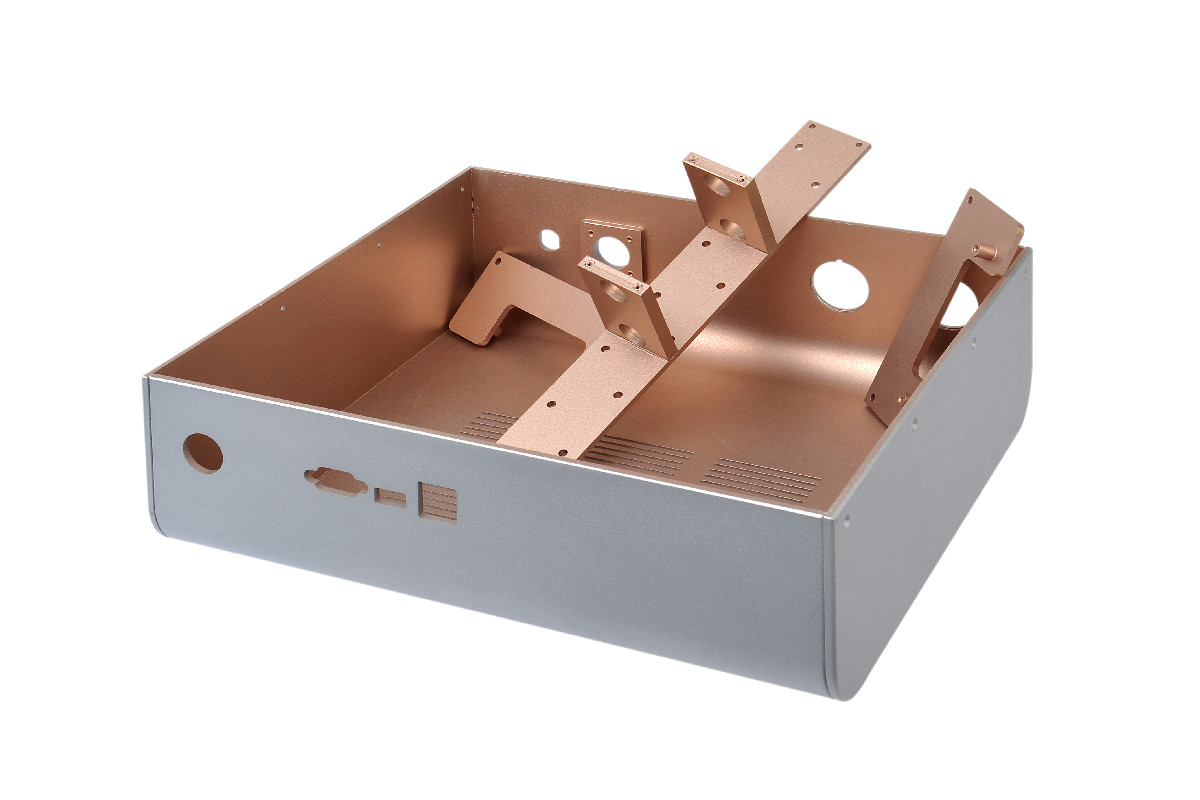
Most custom plastic manufacturers either mold a part, which needs a tool, or 3D print it, which needs hours per piece and gives a layered surface. Custom plastic fabrication at Toolless starts from sheet. The stock is already colored and textured when it arrives, so the finish is set by the material rather than by a mold surface, and the geometry is set by a CNC program rather than by a cavity.
The process was adapted from sheet metal and cabinet making in 1985 and automated with CNC. A flat pattern is machined with all of its openings, vents and recesses, the edges are routed with a modified tongue-and-groove, the bend lines are scored halfway through the sheet on a V-groove table saw, and the part is folded on a thermal bender. Solvent bonding turns the folded pieces into a single rigid part that is as strong as an injection-molded equivalent from the same material. The full sequence is on the manufacturing process page.
Custom plastic parts
Beyond the enclosure.
The same machines that cut an enclosure body cut the parts around it. These are the families we fabricate most.
Bezels and shrouds
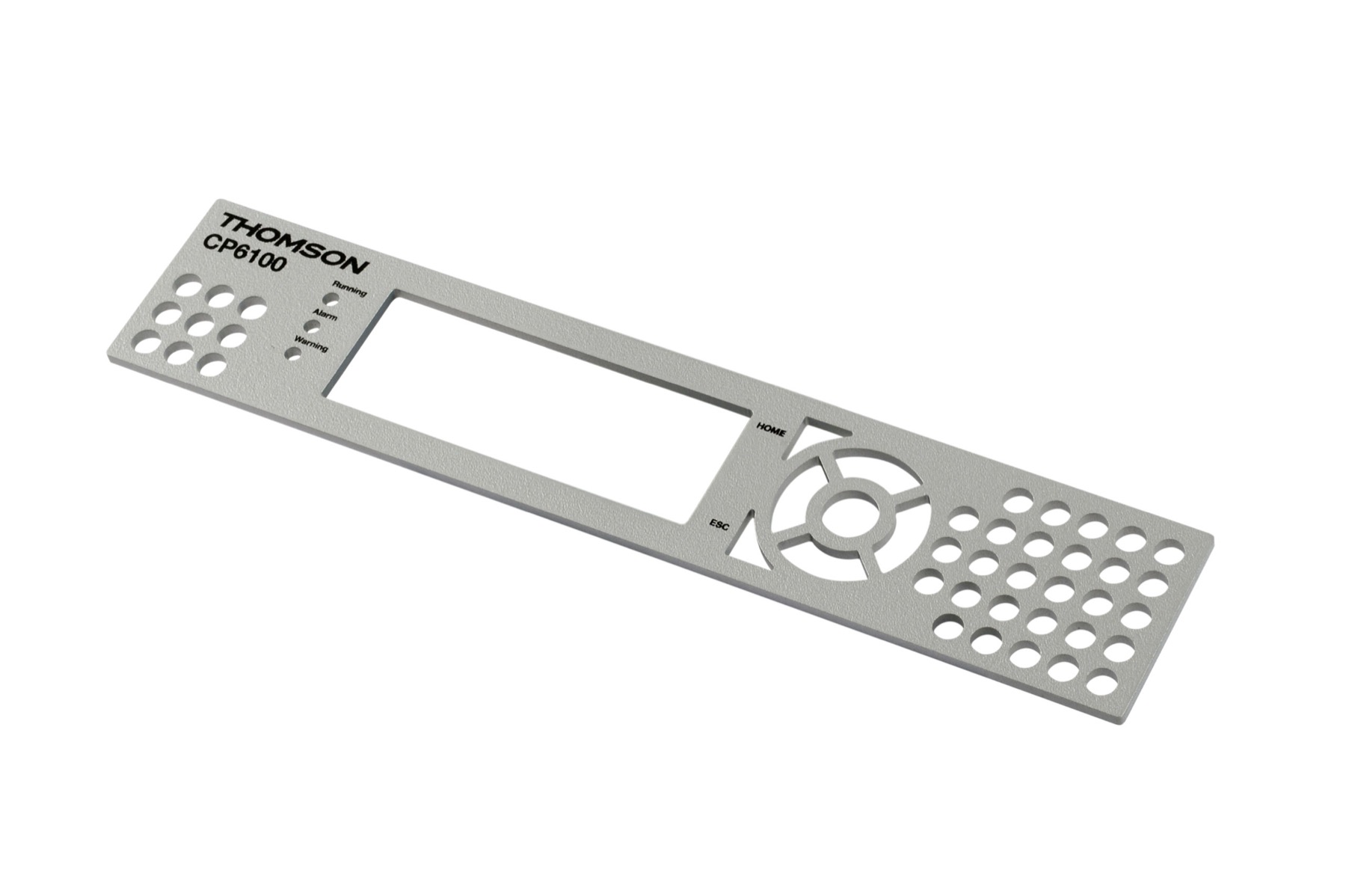
Display frames and covers with a machined window recess and a chamfered or radiused edge.
BezelsBrackets
Bent-sheet mounting brackets with heat-staked inserts where a fastener will be cycled.
BracketsPanels and covers
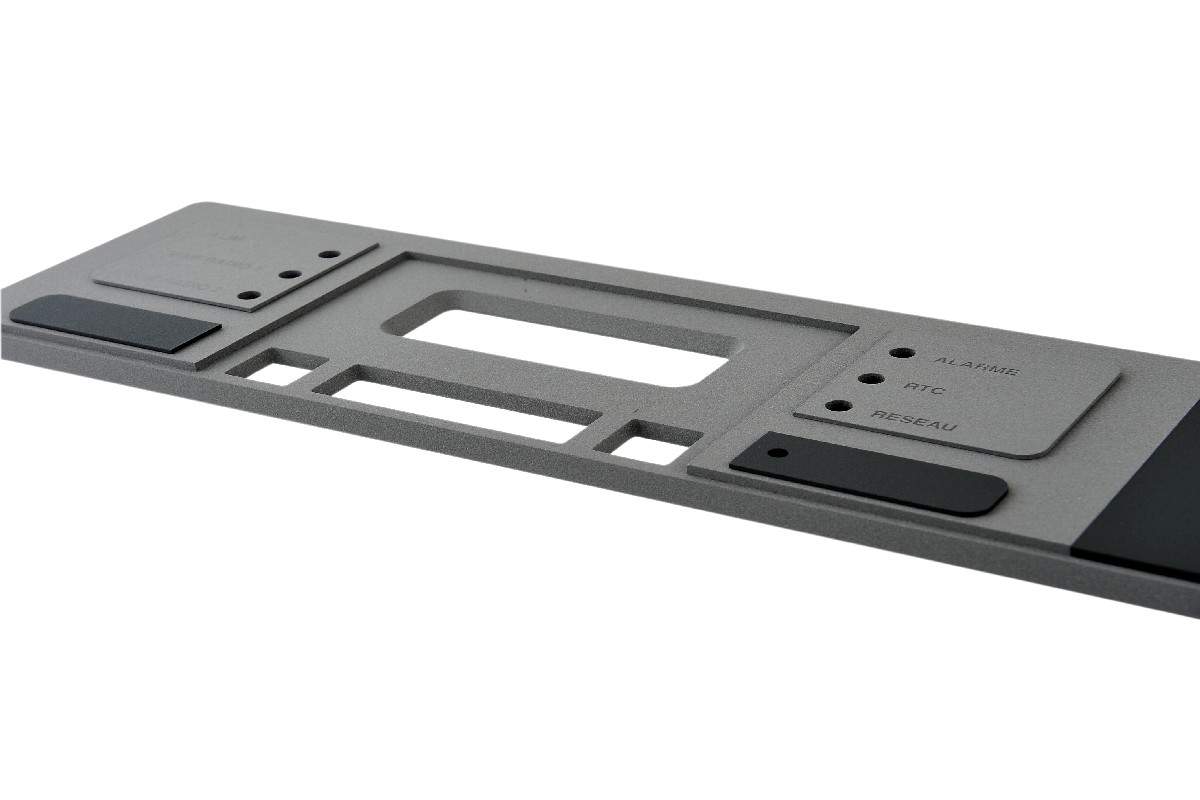
Front panels, rear connector plates and access covers, machined flat and printed or engraved.
PanelsContainers and bins
Open trays, storage bins and cassettes bent from one sheet with bonded end walls.
BinsPlastic enclosure machining
Six operations between the sheet and the shipped part.
CNC machining
Openings, vents, pockets and recesses are cut into the flat sheet on one side wherever possible. Parts stay in the sheet until machining is complete, held by flashing that breaks out afterward.
Edge routing
Table routers add the tongue and groove, standard radii of 1, 2 and 3 mm, and a 0.5 mm chamfer on the tongue edge that turns the joint line into a clean cosmetic seam.
V-groove scoring
Bend lines are scored halfway through the sheet on a custom V-groove table saw. Each groove runs the full width of the panel, which is why the process folds like a cabinet rather than a brake press.
Thermal bending
A computerized thermal bender heats the groove and folds the panel to angle, up to 115 degrees on a standard bend and 40 inches long. Curved surfaces are rolled in one direction.
Inserts and bonding
Brass inserts are heat staked into bosses, bosses are installed, and the assembly is solvent bonded. Tongue-and-groove joints locate themselves with a nominal 0.2 mm clearance.
Secondary operations
Digital printing, engraving, painting, EMI and RFI conductive coating, acrylic windows, latches, hinges and magnets, then inspection in the quality lab before shipping.
Materials and finishes
Custom plastic in the material the application calls for.
Around 80 percent of what we fabricate is general-purpose ABS, stocked in white, black, light grey and dark grey at 3, 4, 6 and 8 mm. Flame-retardant ABS and Boltaron 4335 cover UL94 V-0 requirements. Polycarbonate, PETG and acrylic are the transparent choices. Any thermoformable sheet can be considered, and custom colors are sourced for volume programs.
- Stocked materials
- ABS, flame-retardant ABS, Boltaron 4335, polycarbonate, PETG, acrylic
- Thickness
- 2 mm to about 12 mm
- File formats accepted
- STEP, IGES, SAT, SolidWorks, STL, DXF
- Models delivered
- prt, igs, stp, stl, sldprt
- Decoration
- Two digital UV printers, engraving, painting, two-tone panels
- Hardware
- Brass inserts, bosses, hinges, latches, magnets, light pipes
Why fabricate instead of mold
Quantity decides the process. Fabrication keeps the decision open.
A mold commits a product to one geometry and one payback volume. Fabricated parts carry no tooling, so the first unit and the five-thousandth come from the same program, and the geometry can change between them. That fits products that iterate, products with uncertain demand, and products that will sell in the hundreds or low thousands for years.
Engineering is included with a prototype: a SolidWorks model in your format, reviewed against the shop's design rules before cutting, and the design belongs to you. Read the engineering process or compare the technologies on the technology matrix.
Flexible changes
A revision is reprogrammed in CAD, frequently at no charge, even mid-run.
How changes workBlanket orders
10 to 10,000 units released against one PO, three weeks per release.
Blanket order programQuality
ISO 9001:2015 inspection on every lot from a quality-control lab on site.
Quality systemQuestions
Custom plastic fabrication, answered.
What kinds of parts can you fabricate besides enclosures?
Bezels, shrouds, brackets, covers, panels, containers and bins, plus assemblies that combine them. Anything that can be described as a flat pattern with bends and bonded joints is a candidate, and we can bond in sheet-metal or wood components where a design needs them.
What tolerance do you hold?
Machined features on the flat pattern hold ±0.2 mm. Features located from a template on the reverse side hold ±0.4 mm. Outside dimensions grow by one material thickness at each bend, so we dimension to the inside walls.
Is there a minimum order or a tooling charge?
No tooling and no minimum. One or two pieces carry a setup charge; the process is most economical from 100 to 10,000 units. Lead time on volume releases is three weeks after the purchase order.
Can you bend all four sides of a panel like sheet metal?
No. The V-groove is cut on a table saw and runs the full width of the panel, so a box is built from bent sections and bonded end pieces rather than folded up on four sides. Curves are formed in one direction.
Why engineers choose Toolless
Trusted for enclosures since 1998.
Startups, OEMs and medical device makers across the USA, Canada and Australia come back for the next run. Read more testimonials.
- Years without molds
- 25+
- Certified quality system
- ISO 9001
- Units per order
- 1–10,000
- Sq ft in Everett, WA
- 13,000
“We initially considered injection molding, but with our volume the cost of tooling would never be recovered. It took only a week to settle on a design and get a prototype, and we were in production a week later.”
“I spent 9 years as a quality engineer at Rockwell and tend to be a perfectionist. Your professionalism and diligence in helping evolve our cover is greatly appreciated.”
“After a number of orders, Toolless have become our preferred supplier. Even though we are located in Australia, all deliveries have been fast and hassle free.”
Start your enclosure
Send the board. We’ll send the box.
Quotes come from an engineer, not a form robot. Attach CAD, photos or a sketch and we reply within one business day.