
Design services
Enclosure Design Services
Mechanical and industrial designers who model your housing in SolidWorks, prototype it on our own floor and carry it into production. Enclosure design services with one engineer as your project manager from the first sketch to the shipped unit.
What the service covers
Enclosure design services that end in a part, not a rendering.
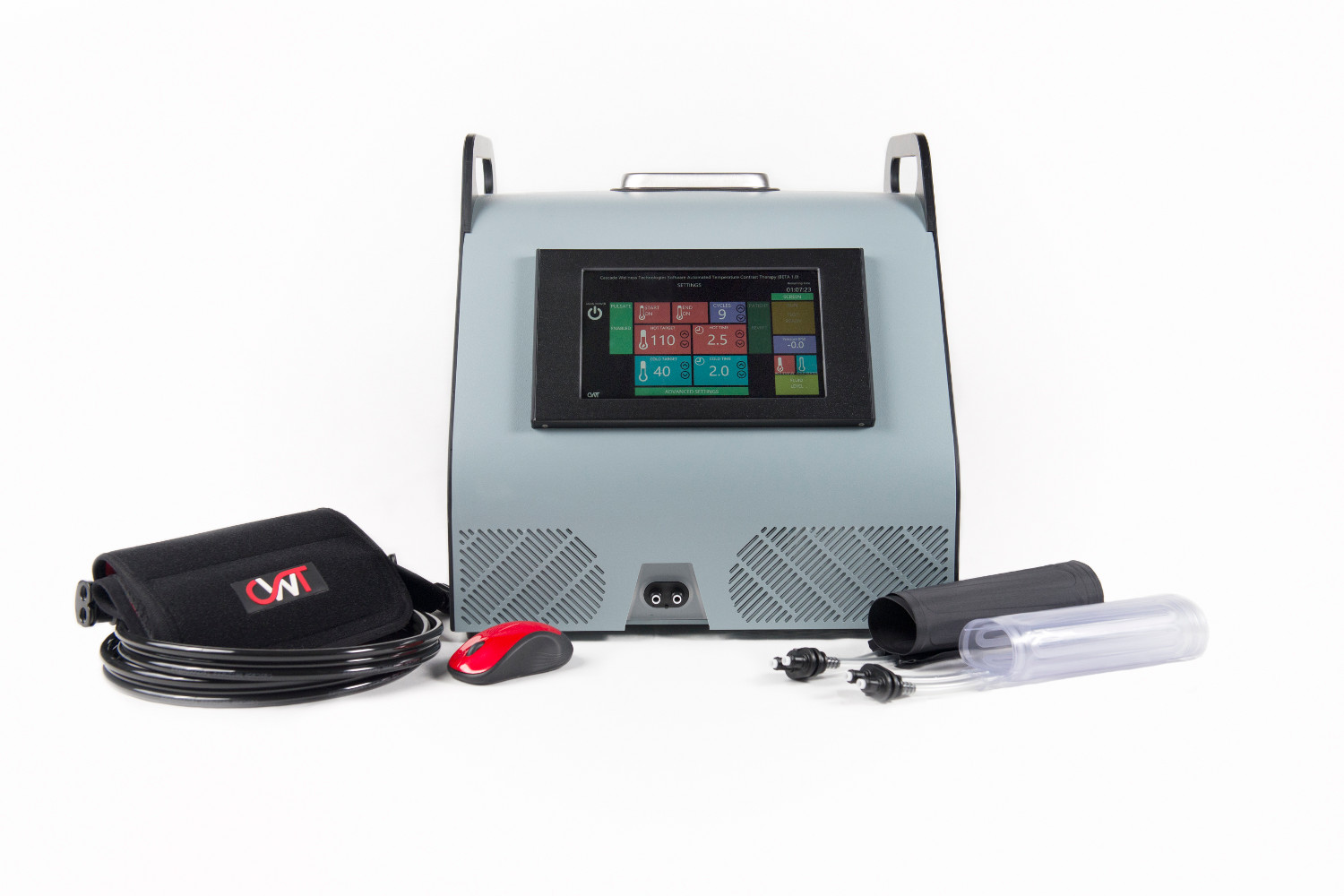
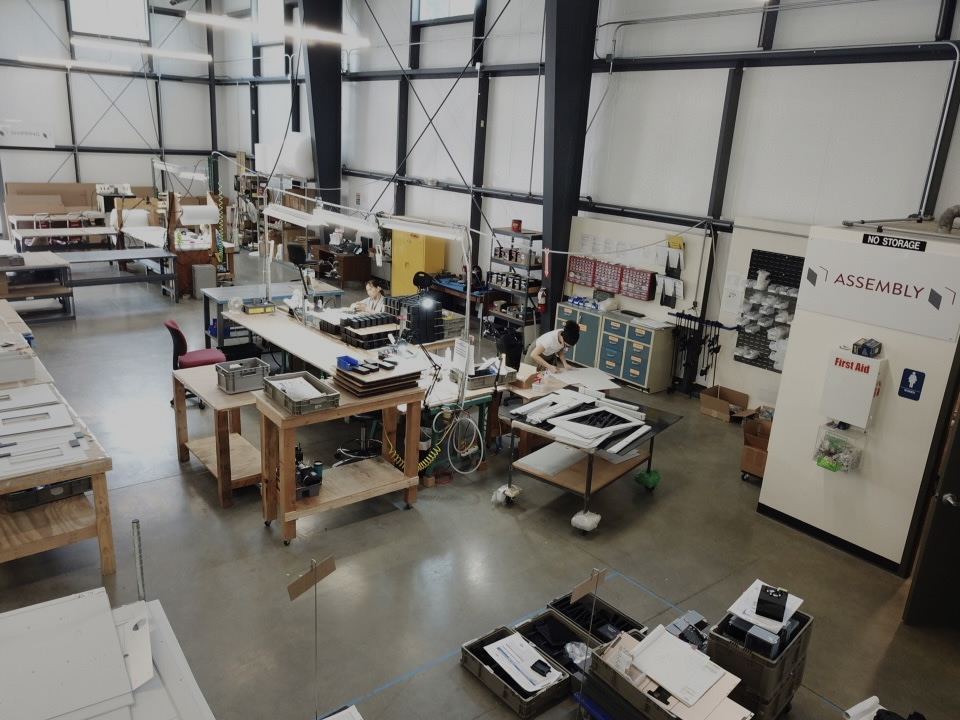
Our enclosure design services take a product from a board file, a sketch or a competitor's box to a manufacturable 3D model, a prototype you can hold and a production release. The difference from a design studio is that the same people who model the housing also program the CNC, bend the panels and inspect the finished unit, so every design decision is made with the process in mind.
Custom enclosure design at Toolless is delivered by a cross-functional team: one engineer acts as project manager for your job and pulls in industrial design, CNC programming and quality as the project moves. You get one point of contact and a model you own in the format you use.
How a design project runs
Four stages, each with something you can review.
Plastic enclosure design moves fastest when the customer sees a concrete deliverable at every stage. These are the four we use.
Brief and constraints
Board or component files, connector list, environment, target quantity, how the unit is serviced and what the user should see first. We ask about drop requirements and cleaning here, because they set the sheet thickness and joint layout.
3D model
A SolidWorks assembly with cutouts, bosses, inserts, windows and print artwork placed. Delivered as prt, igs, stp, stl or sldprt so your team can check fit against the real board in your own CAD.
Prototype
The model is cut, bent and bonded on the production equipment, in 3 to 21 working days. Because it is made by the production process, what you learn about fit, assembly and finish applies directly to the run.
Release and repeat
Changes from the prototype review are program edits. Production follows in runs of 1 to 10,000, and later revisions ride along on the next blanket order release.
Three ways to start
Bring a CAD file, a sketch or nothing at all.
You designed it
Send a STEP, IGES, SAT, SolidWorks, STL or DXF model. Our engineers review it for the process, flag anything that cannot be bent or bonded as drawn, and return a quote. Send CAD files
We design it
Start from a board, a photo, a sketch or a list of parts. Industrial and mechanical designers develop the electronic enclosure design and hand you the model to approve. Custom design process
You configure it
Size a pre-designed C Box or U Box around your board in the TraceParts-hosted Product Designer and download the CAD immediately. Open the Product Designer
Design rules we apply
What our engineers know that a generic CAD model does not.
Hardware enclosure design for a sheet process has its own rules. These are the ones that shape most decisions in our models, and the ones we check on every file a customer sends.
- V-groove bends run the full width of a panel, so a box is built from bent panels joined at the corners rather than four sides folded from one sheet
- Joint lines are placed deliberately and used as a design feature; they are not hidden
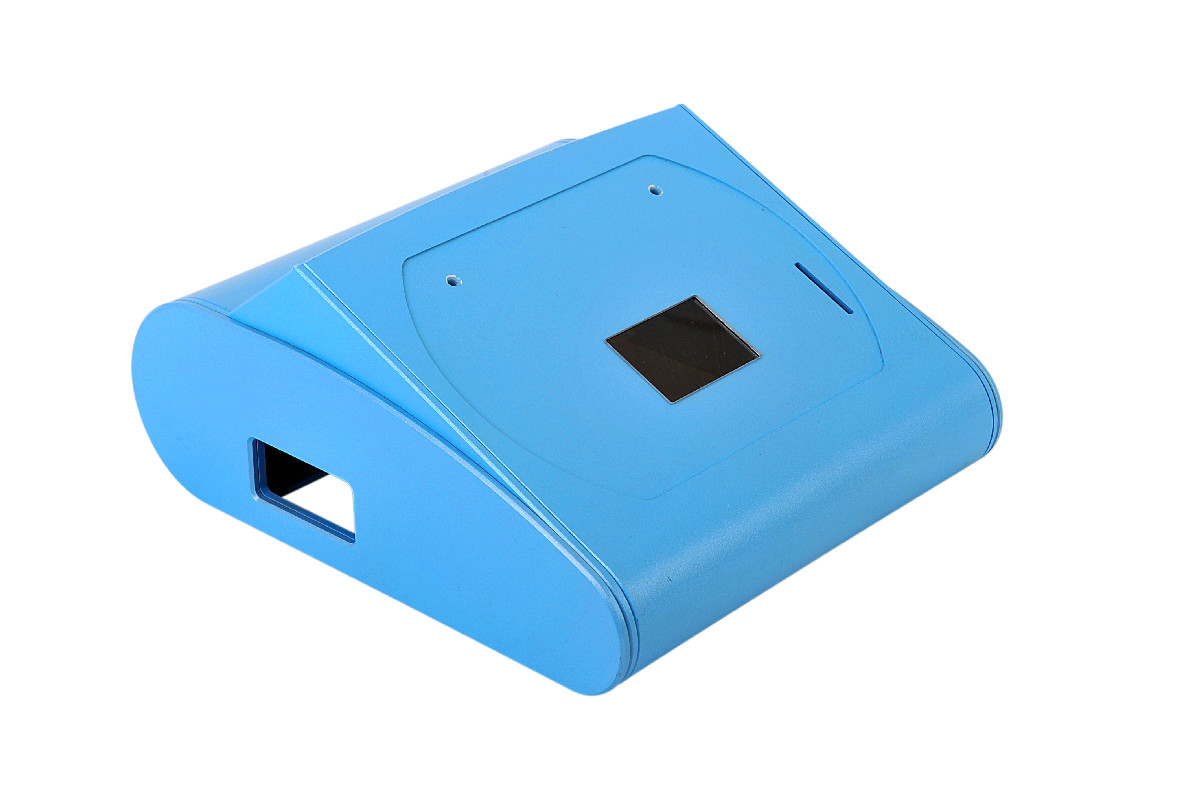
- Curves are formed in one direction on our rolling equipment, which suits sloped fronts, wrapped tops and display bezels
- Sheet thickness, corner doublers and ribs are chosen against the drop and load requirement, not by default
- Inserts, bosses, light pipes, magnets, hinges and latches are modeled in so assembly is planned before the first cut
- Print and engraving artwork is placed in the model so labels line up with the openings they describe
Engineering deliverables
What lands in your inbox.
Every custom enclosure design service project produces files you can use with any supplier, because the model is yours. The table lists the standard package; drawings for inserts, print artwork and assembly notes are added when the project calls for them.
Engineering process- Modeling
- SolidWorks assembly of the enclosure with bosses, inserts, windows and cutouts
- Formats out
- prt, igs, stp, stl, sldprt
- Formats in
- STEP, IGES, SAT, SolidWorks, STL, DXF
- Prototype
- Production-process part in 3 to 21 working days
- Project management
- One engineer as your point of contact for the life of the project
- Quality
- ISO 9001:2015 system; inspection before ship
Proof
What customers say about the design work.
Design services are judged on the first prototype. Two customers on what arrived.
Read all testimonials“We needed to hide the screws and wanted a multicolor housing; they even came up with the idea of using magnets for our side door. It took them 10 working days after approval to accomplish the prototype.”
“Traditional injection molding requires an initial investment of tens of thousands of dollars into molding forms. Toolless is the only company in the United States able to make custom plastic parts inexpensively without molds.”
Related
More on how we design and build.
Creative design
Industrial design that decides what the enclosure looks like and how it is held.
Learn moreFlexible changes
Why a design change is a program edit, with a comparison against mold rework.
Learn more3D design gallery
Renderings and models from past enclosure projects.
Learn moreBlog: design solutions for mechanical engineers
How mechanical engineers approach enclosure design for a no-mold process.
Read articleDo I need a finished CAD model before contacting you?
No. A board file, a photo of the components, a sketch or a list of what has to fit inside is enough to start. If you do have a model, send it in STEP, IGES, SAT, SolidWorks, STL or DXF and we review it for the process before quoting.
Who owns the design files?
You do. The enclosure is delivered as a 3D model in prt, igs, stp, stl or sldprt format, and you can check fit against your board in your own CAD before we cut anything.
Can you design an enclosure that will later be injection molded?
Yes, with a caveat. We can simulate the function of the product, but the form and fit of a bonded sheet enclosure differ from a molded one. If your end goal is a mold, a Toolless enclosure is most useful as an interim production run while the design is still changing, which is how many customers use it.
How long does the design stage take?
Prototypes arrive 3 to 21 working days after the model is approved, depending on complexity. Customers have reported a first prototype in one week and in 10 working days on projects with printing and multicolor panels.
Start your enclosure
Send the board. We’ll send the box.
Quotes come from an engineer, not a form robot. Attach CAD, photos or a sketch and we reply within one business day.