
Instrument enclosures
Plastic Instrument Housing and Enclosures
Benchtop analyzers, calibration devices, portable testers and clinical instruments need a housing that holds tolerance, cleans easily and looks finished. Toolless builds plastic instrument housings without a mold, from the first prototype to production runs.
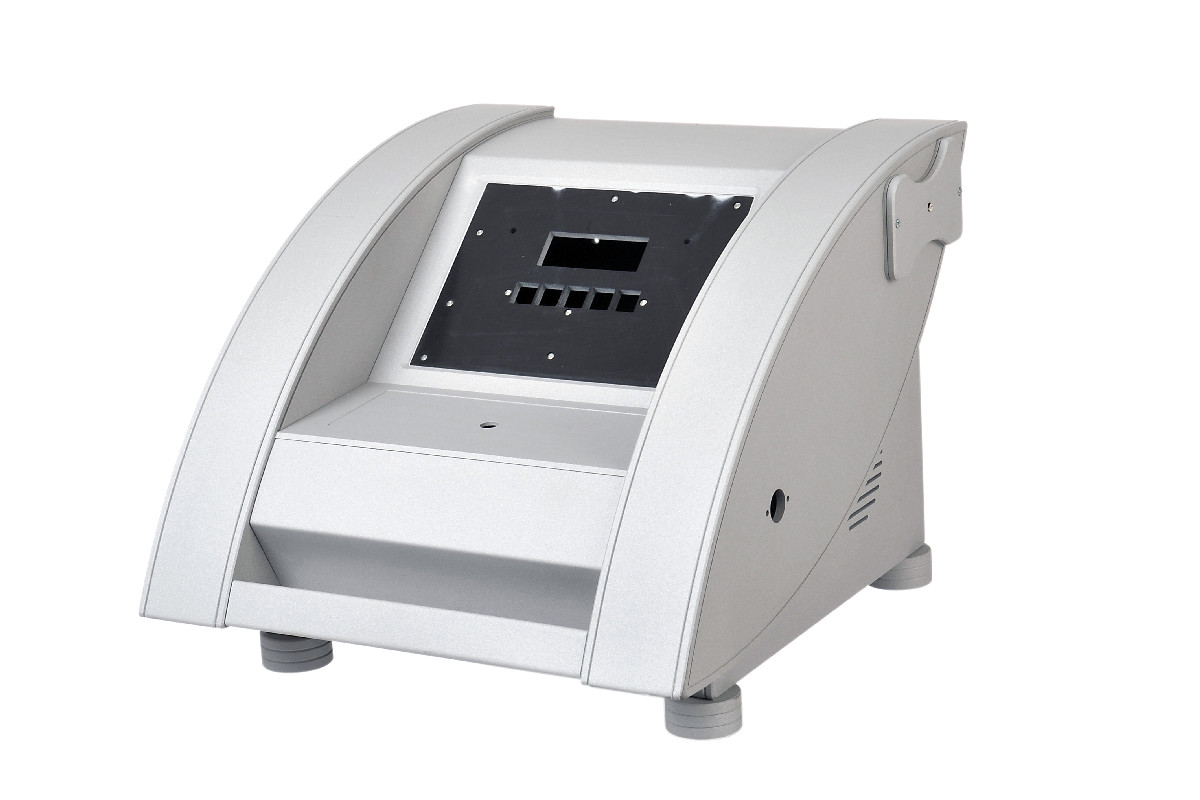
Precision in plastic
A plastic instrument housing that holds its dimensions.
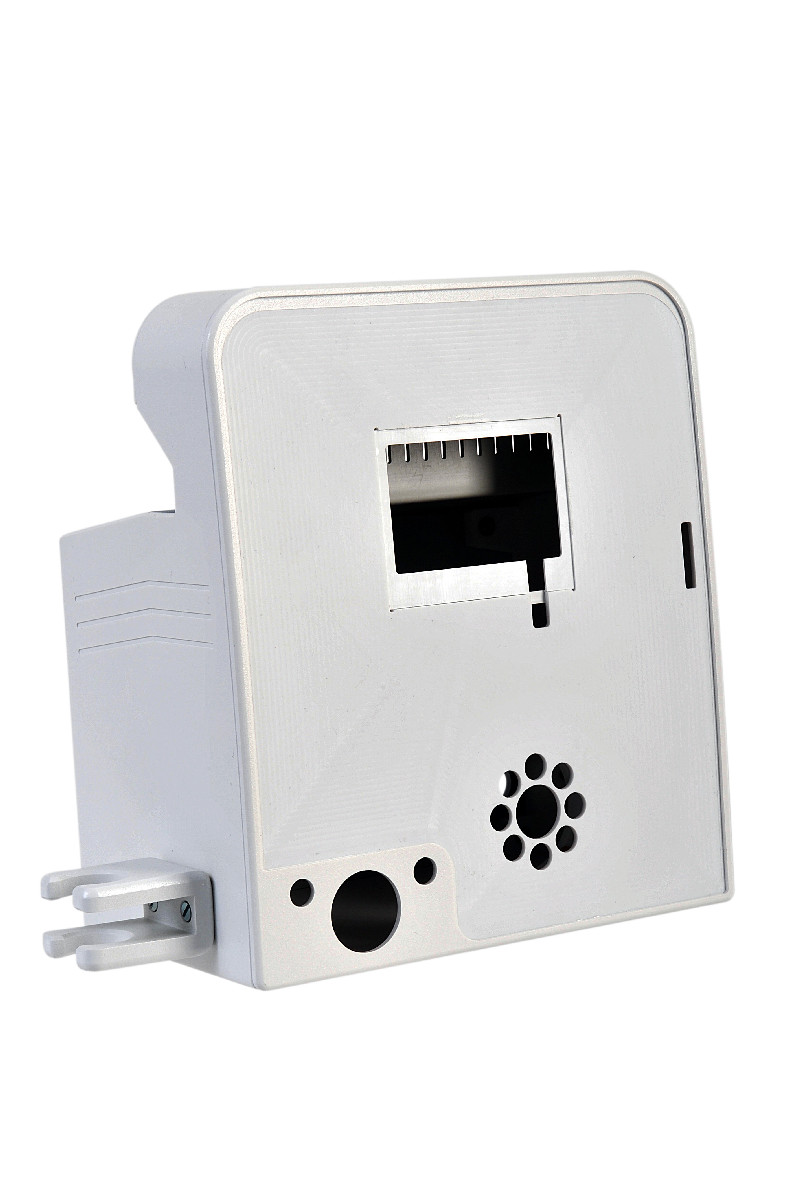
Instrument enclosures differ from ordinary electronics boxes in what they must locate: optical paths, sample ports, sensor mounts and display windows that have to sit where the instrument's engineering puts them. Toolless machines every opening and recess into the flat sheet on CNC mills before bending, which is why the finished plastic instrument housing matches the CAD model closely enough for gas chromatography, purge systems, calibration devices and sampling pressure testers.
Our on-site engineers handle tight-tolerance instrument work as a specialty and model each housing in SolidWorks around the customer's internal assembly. The result is delivered as a 3D file you can check against your own layout before the first panel is cut.
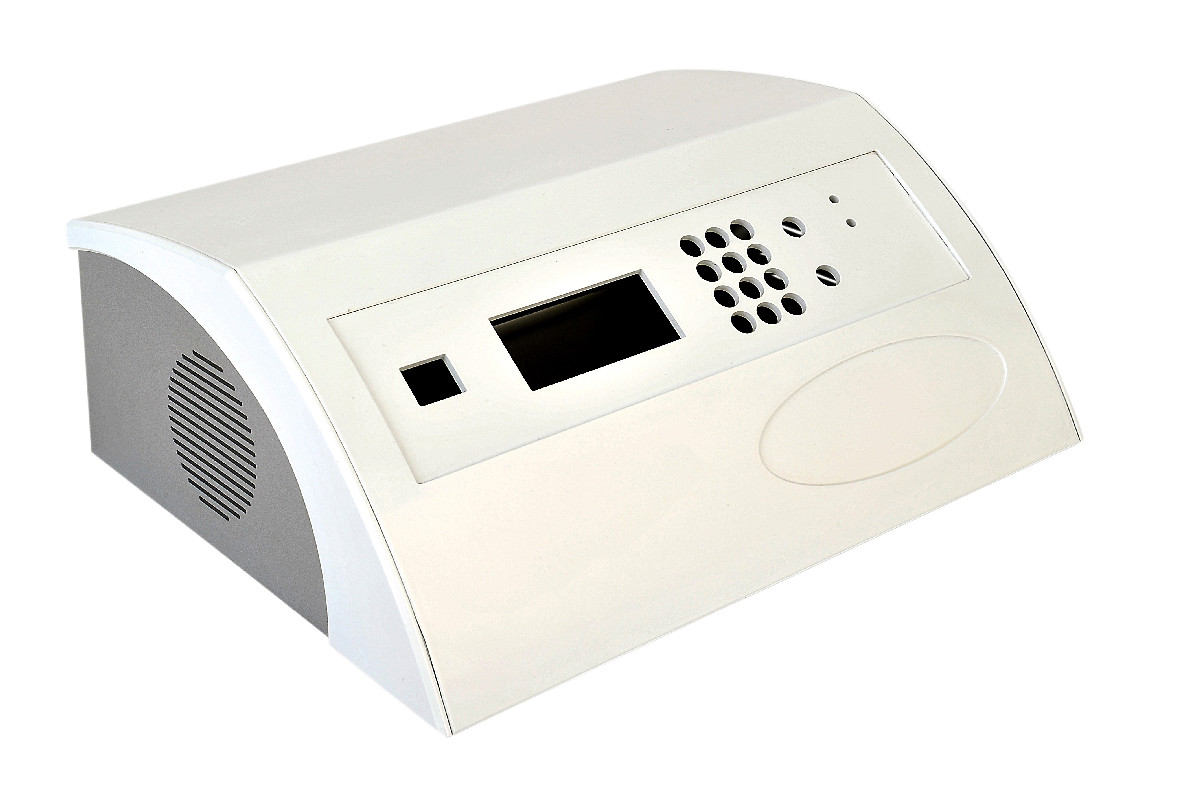
Instrument formats
Four kinds of plastic instrument enclosures.
The same cut, bend and bond process covers each format. Sheet thickness, joint placement and hardware change with the job.
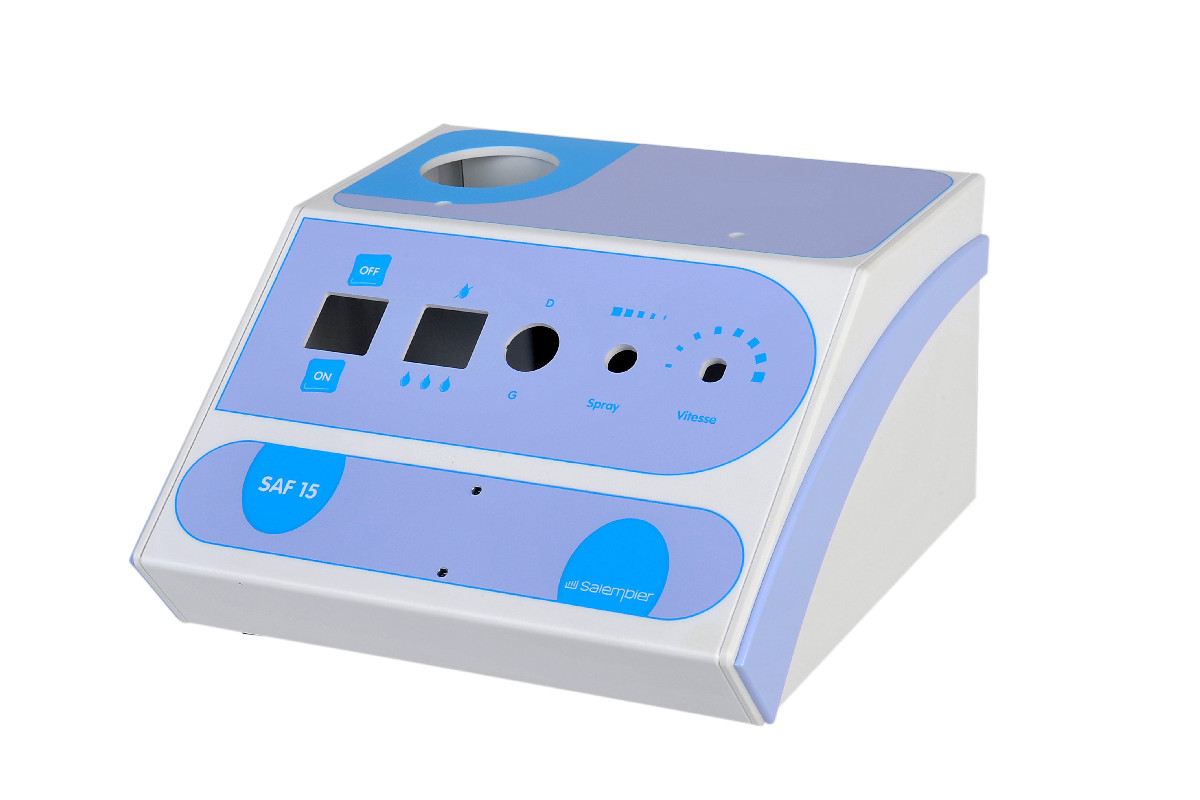
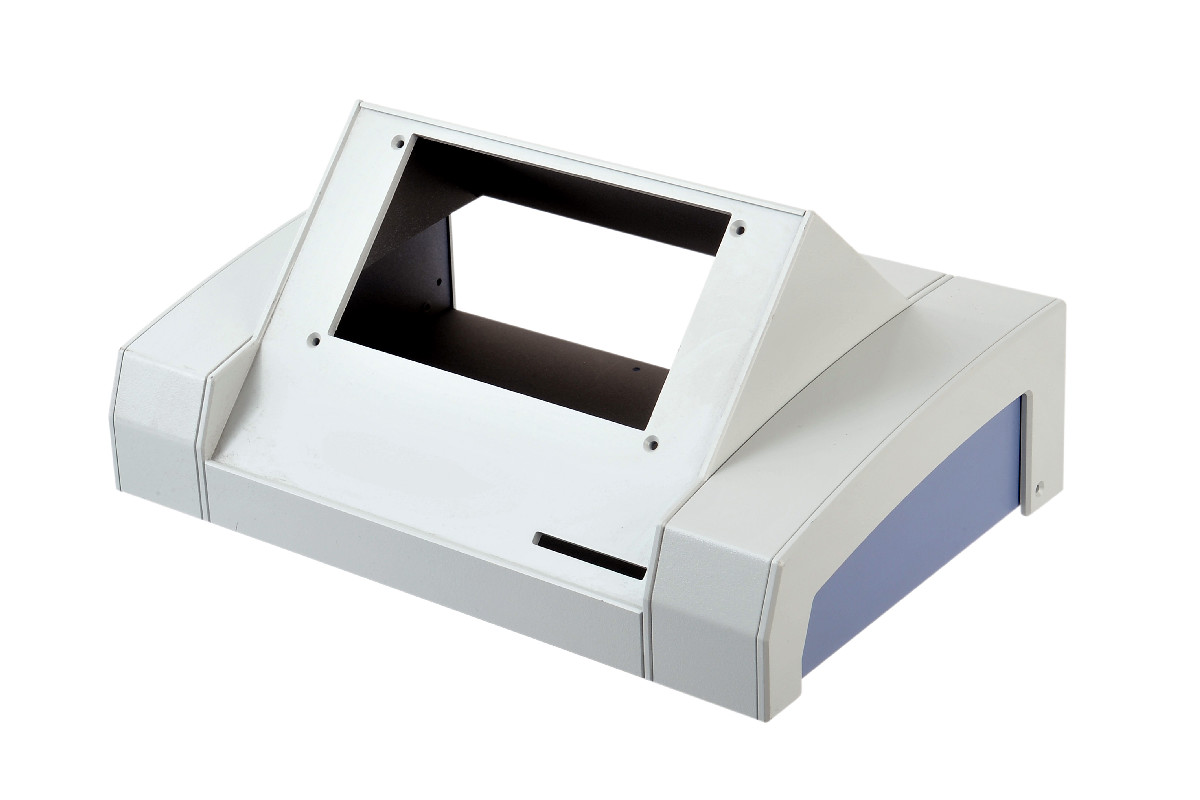
Benchtop
Sloped control panels, display windows, rear connector plates and vented sides for lab and clinical bench instruments.
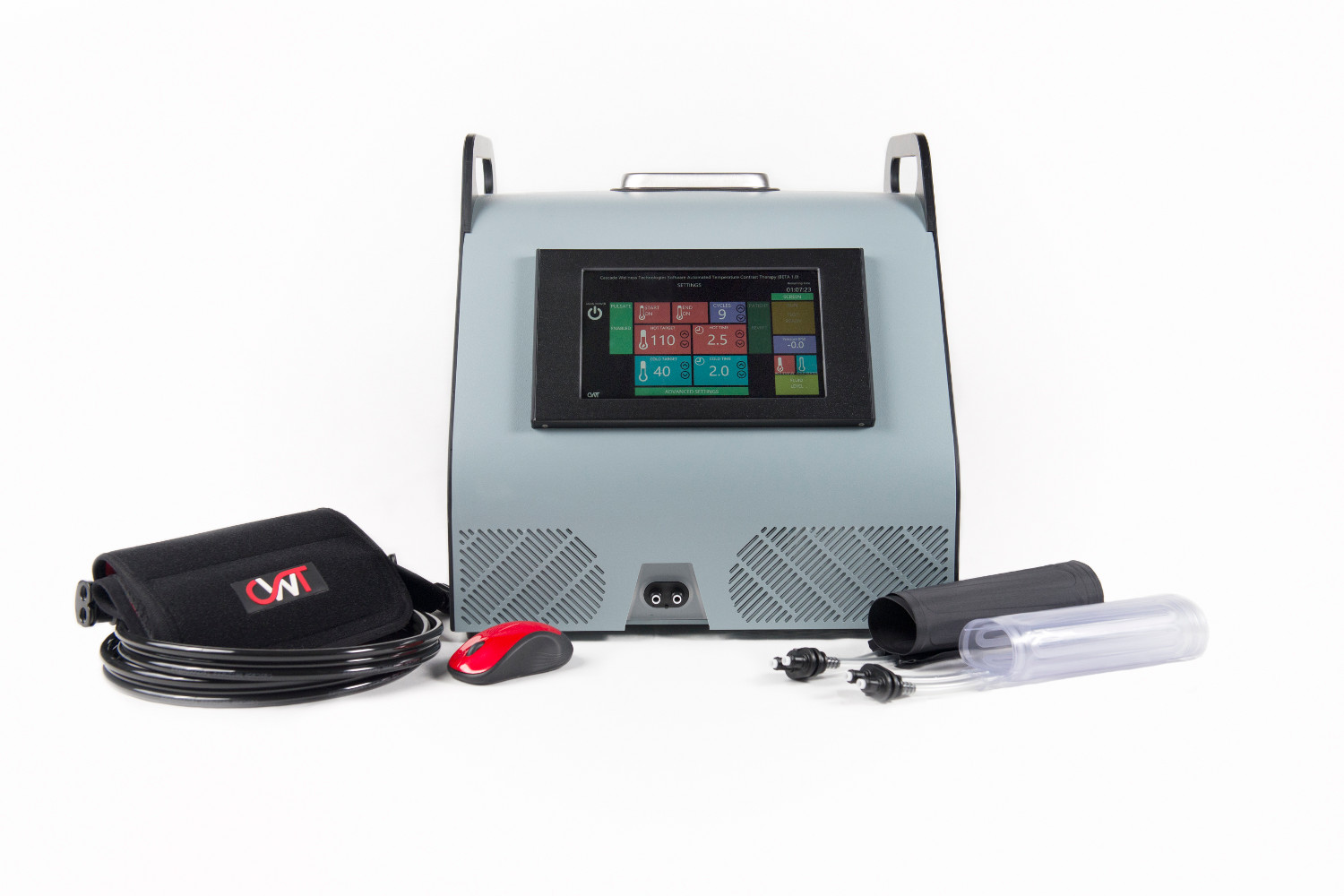
Portable
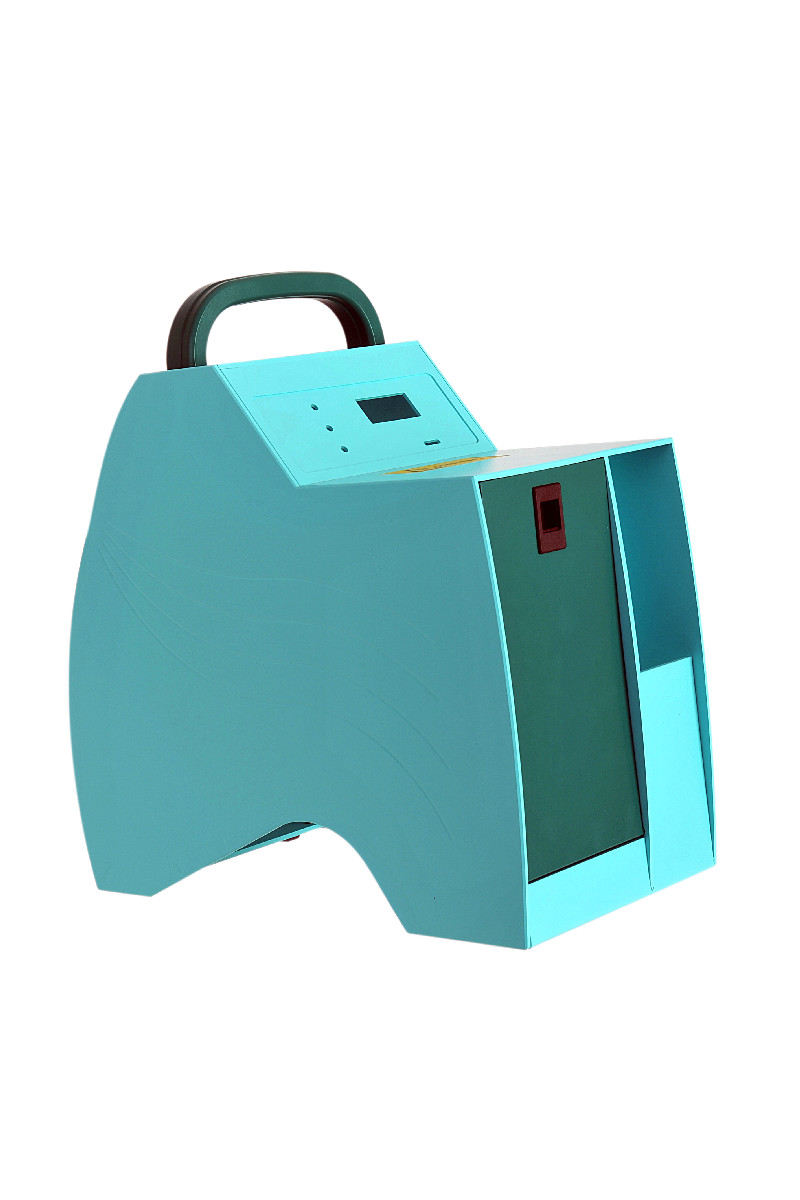
Carry handles, battery doors and thicker sheet with corner doublers for instruments that travel to the sample. See handheld enclosures.
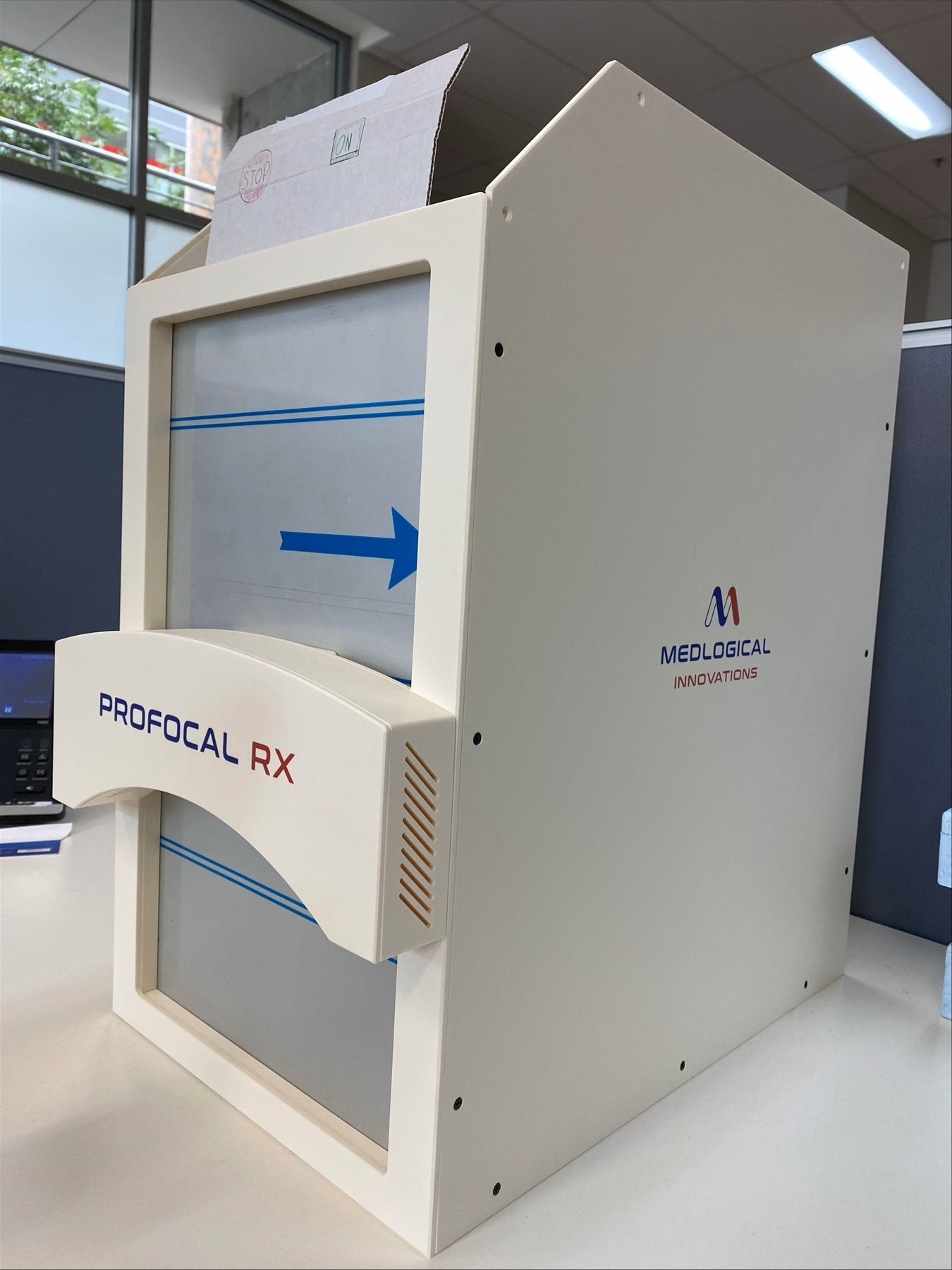
Cart and floor
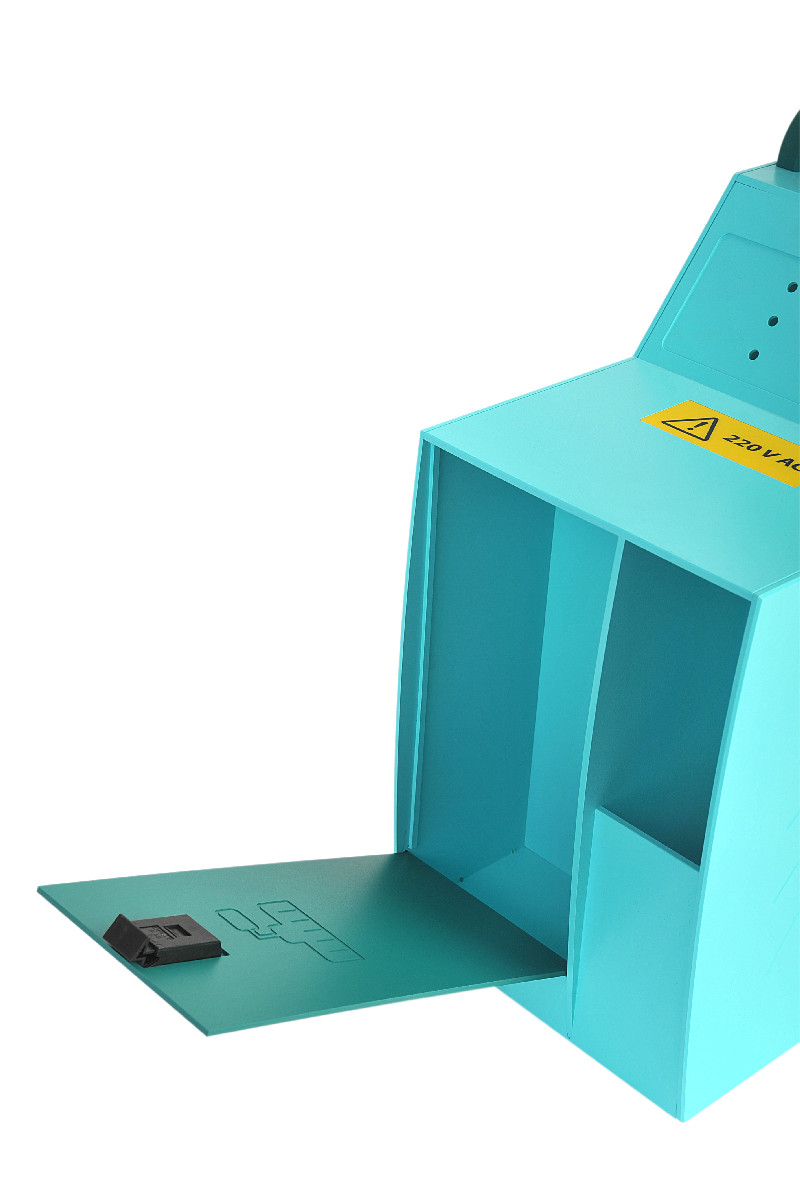
Larger housings built from combined panels over a frame, with printed graphics and service doors on magnets or hinges.
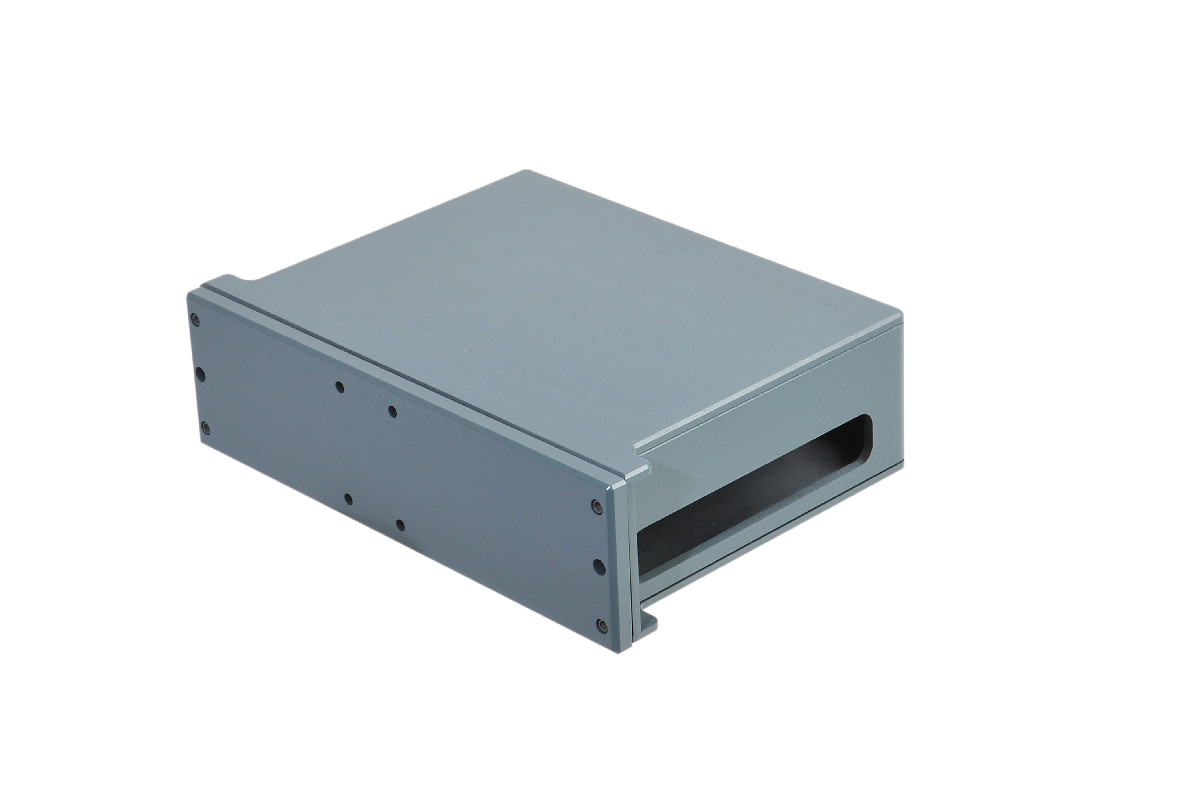
Module and rack
Rectangular modules with front-panel cutouts and rear connector fields for systems that stack or slide into a rack.
Medical and laboratory
Plastic housings for medical instruments since 1994.
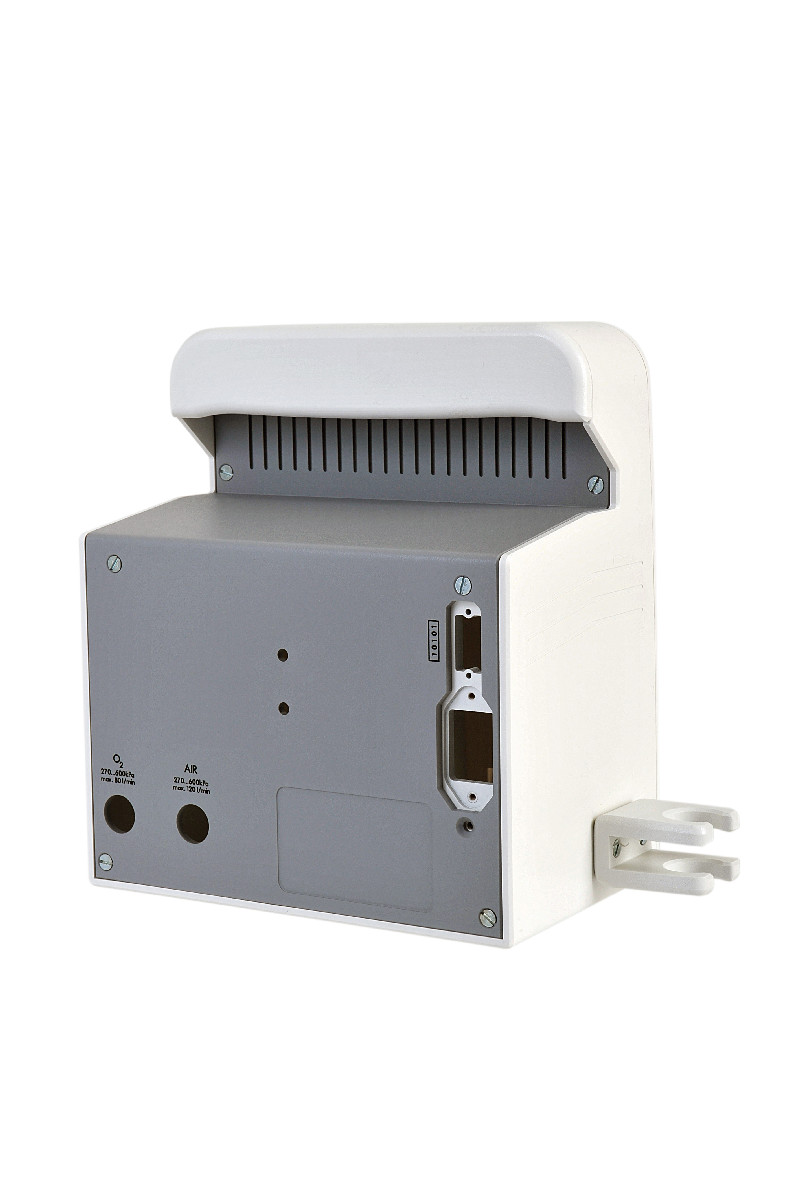
The plant has supplied plastic housings for medical instruments since 1994: equipment for surgery rooms, sleep diagnostics, dry-eye devices, respiratory devices, breathing simulators and CPAP ventilators. Cleanability drives the design. Joint lines are placed where they can be wiped, panels are pre-colored so there is no paint to wear through, and flame-retardant ABS or Boltaron 4335 is chosen when the device specification calls for a UL94 V-0 material.
Because the housing is made without tooling, a medical device team can run several design iterations while the device itself is still being refined, then carry the final version into production without a second supplier. Details are on the medical enclosures page and in the amplifier medical enclosure case study.
Specifications
What goes into an instrument housing.
Instrument work is where the secondary operations earn their place. Windows, light pipes, inserts and shielding are planned in the model and applied on the same floor as the machining.
Tolerances and repeatability- Materials
- General-purpose ABS (UL94 HB), flame-retardant ABS (UL94 V-0), Boltaron 4335 (UL94 V-0), polycarbonate, PETG, acrylic
- Sheet thickness
- 2 mm to about 12 mm; 3, 4, 6 and 8 mm ABS in stock
- Windows and optics
- Bonded acrylic or transparent polycarbonate windows, light pipes for indicators
- Mounting
- Bosses with brass inserts, machined recesses, internal slots, magnets for service doors
- Shielding
- EMI/RFI conductive coating applied inside the housing
- Markings
- UV digital printing (full color, white ink, raised TEXTUR3D) and engraving
- Quantity and lead time
- 1 to 10,000 units; prototypes in 3 to 21 working days; volume releases three weeks after PO
Proof
From instrument makers who switched.
Customers on the difference between a molded housing budget and a Toolless one.
Read all testimonials“Traditional injection molding requires an initial investment of tens of thousands of dollars into molding forms. Toolless is the only company in the United States able to make custom plastic parts inexpensively without molds.”
“We needed to hide the screws and wanted a multicolor housing; they even came up with the idea of using magnets for our side door. It took them 10 working days after approval to accomplish the prototype.”
Related
More for instrument makers.
Medical enclosures
Housings for clinical and laboratory devices, with the cleanability rules we follow.
Learn moreHandheld enclosures
Portable instrument housings built light and drop-tested.
Learn moreCustom panels
Front panels and bezels as standalone parts for existing instruments.
Learn moreBlog: enclosures for testing equipment
How to choose a plastic enclosure for test and measurement gear.
Read articleCan the housing include a clear window for a display or optical port?
Yes. Acrylic and transparent, UV-stabilized polycarbonate are stocked and bonded into machined openings. Light pipes carry LED indicators to the outside of the panel where a full window is not wanted.
What materials are suitable for a medical instrument housing?
Flame-retardant ABS (UL94 V-0) and Boltaron 4335 (UL94 V-0) are stocked for devices whose specification requires a V-0 material. General-purpose ABS, polycarbonate and PETG cover the rest. Material selection is part of the design conversation and is documented on the materials page.
Can you hide the joint lines on an instrument housing?
Not without creating bigger problems, so we do not. Instead the joint lines are placed deliberately and used as a design feature, positioned for the best appearance and for cleanability. Our staff industrial designer turns them to the product's advantage.
How repeatable are the dimensions from unit to unit?
Every opening and recess is CNC-machined from the same program, and bending is done on computerized thermal benders, so the features that locate your internal assembly repeat from the prototype through the production run. Details are on our tolerances and repeatability page.
From the portfolio
Instrument enclosures we have built.
Start your enclosure
Send the board. We’ll send the box.
Quotes come from an engineer, not a form robot. Attach CAD, photos or a sketch and we reply within one business day.