
Custom plastic housings
Custom Plastic Housings for Electronics
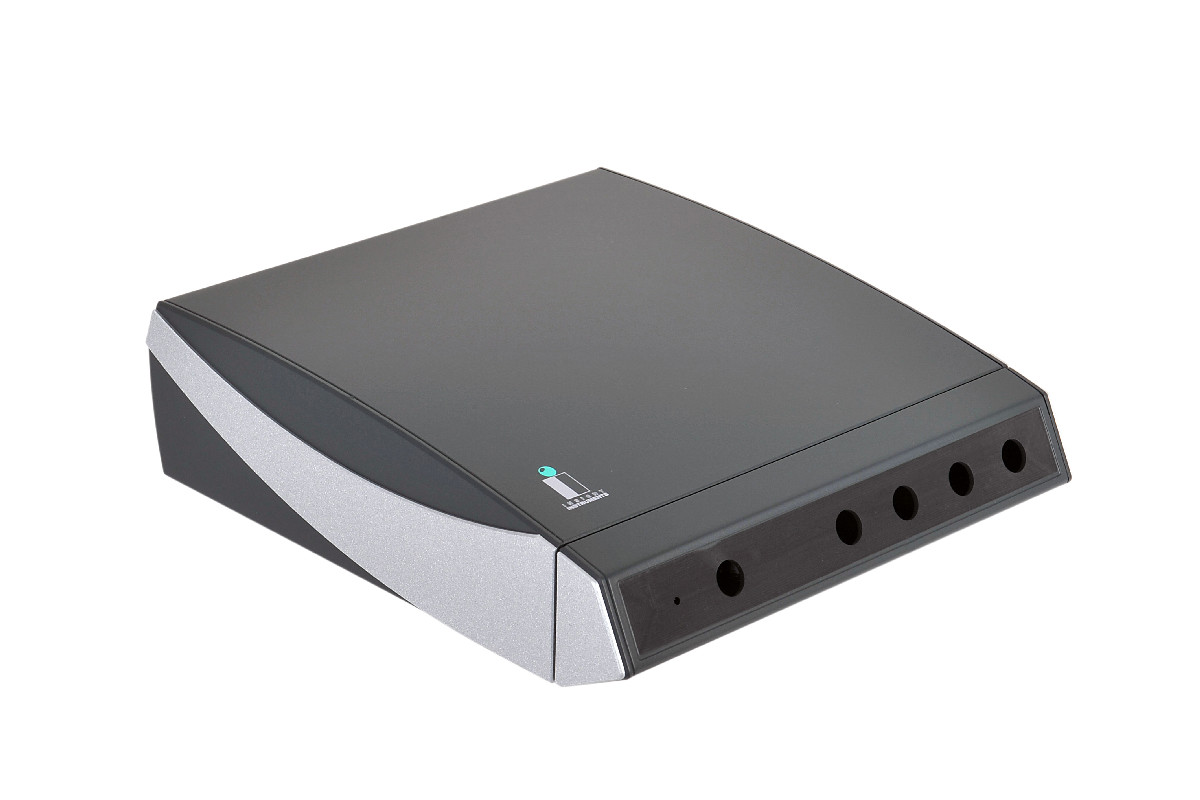
A plastic housing protects the electronics, presents the product and decides how it is assembled. Toolless builds custom plastic housings without moulds or tooling, so the design can change every time the board does.
What a housing has to do
A plastic housing does three jobs at once.
An electronic housing protects the circuit board from impact, spills and handling, presents the product to the person using it, and defines how the unit is put together on the assembly bench. A plastic housing for electronics that gets one of the three wrong costs money on every unit: a service door that needs tools, a label that peels, a connector that sits a millimeter off the opening.
Toolless designs the housing around your components in SolidWorks and builds it from pre-colored plastic sheet. Openings are CNC-milled, bends are V-grooved and thermally formed, and the panels are solvent-bonded into a rigid shell. No mold is involved at any stage, which is why the same process delivers one prototype and a run of 10,000.
Protect, present, assemble
How each job is solved in the sheet process.
Protection
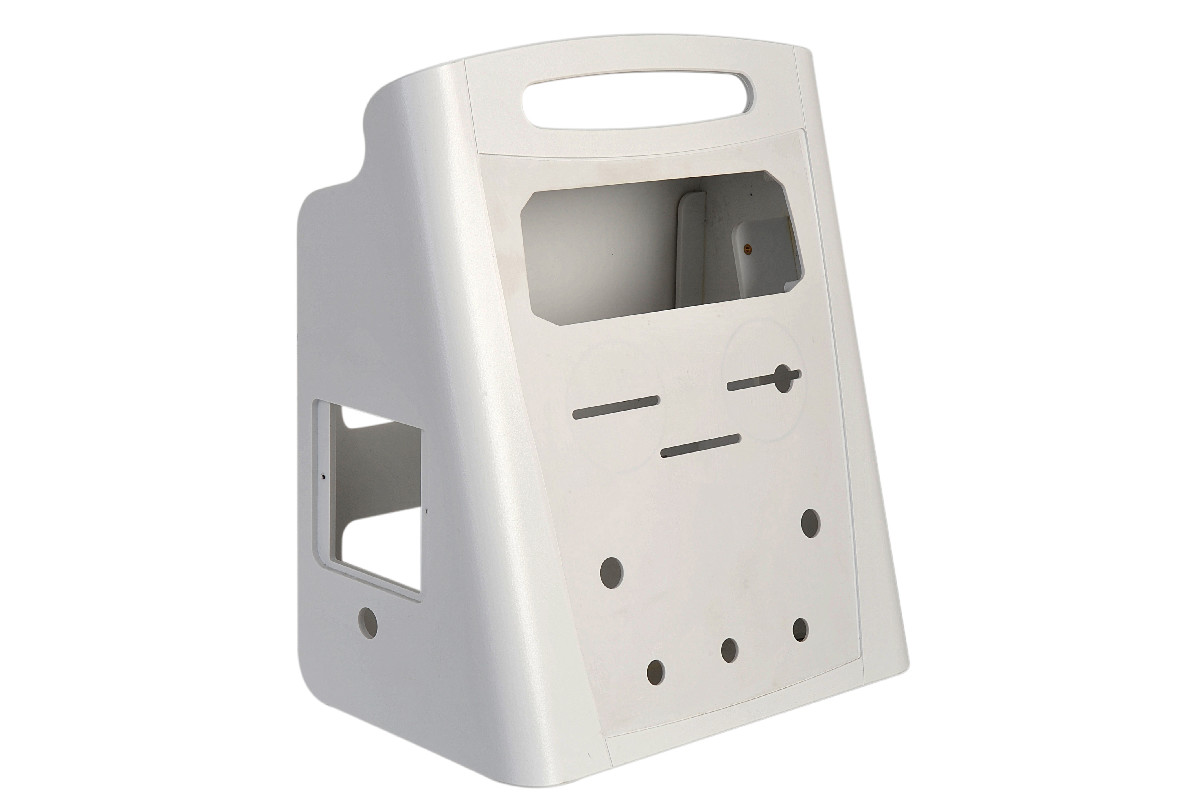
Sheet thickness from 2 mm to about 12 mm, corner doublers and ribs where the unit is dropped or leaned on, flame-retardant ABS or Boltaron 4335 where the specification calls for UL94 V-0, and EMI/RFI conductive coating for sensitive boards. Bonded housings pass the drop tests our customers run on molded parts.
Presentation
Pre-textured, pre-colored sheet in white, black, light grey and dark grey, mixed for two-tone housings. Full-color UV digital printing, engraving, painting, acrylic windows and light pipes finish the outside. Joint lines are placed as a design feature.
Assembly
Bosses with heat-staked brass inserts, standoff recesses, board slots, hinges, latches and magnets for tool-free doors. Everything is modeled before the first cut so the housing goes together the way your assembly line expects.
Why no mold matters
Custom plastic housings without moulds, compared.
Electronics housings are revised more than any other part of a product because the board underneath keeps changing. A moulded housing locks the design at the moment the steel is cut. A sheet housing follows every revision with a program edit, and customers on our blanket order program fold changes into the next release.
The comparison shows where the two approaches diverge for a typical electronics product. The flexible changes page goes into specific change requests.
Strength
As strong as a moulded housing in the same material.
A bonded sheet housing is as strong as an injection-moulded part made from similar material, withstands the usual drop tests and has comparable mechanical integrity. Where a customer has a specific test to pass, the design moves up a sheet thickness, adds doublers in the corners or reinforcing ribs, and reinforces the glue joints. Durability is engineered into the design rather than left to the material.
Curved surfaces are formed in one direction on our rolling equipment, which is what produces wrapped tops, sloped fronts and rounded edges without sacrificing wall thickness. The design details page shows the joint and bend geometry.
Who orders housings
Electronic housings for assemblers, OEMs and device teams.
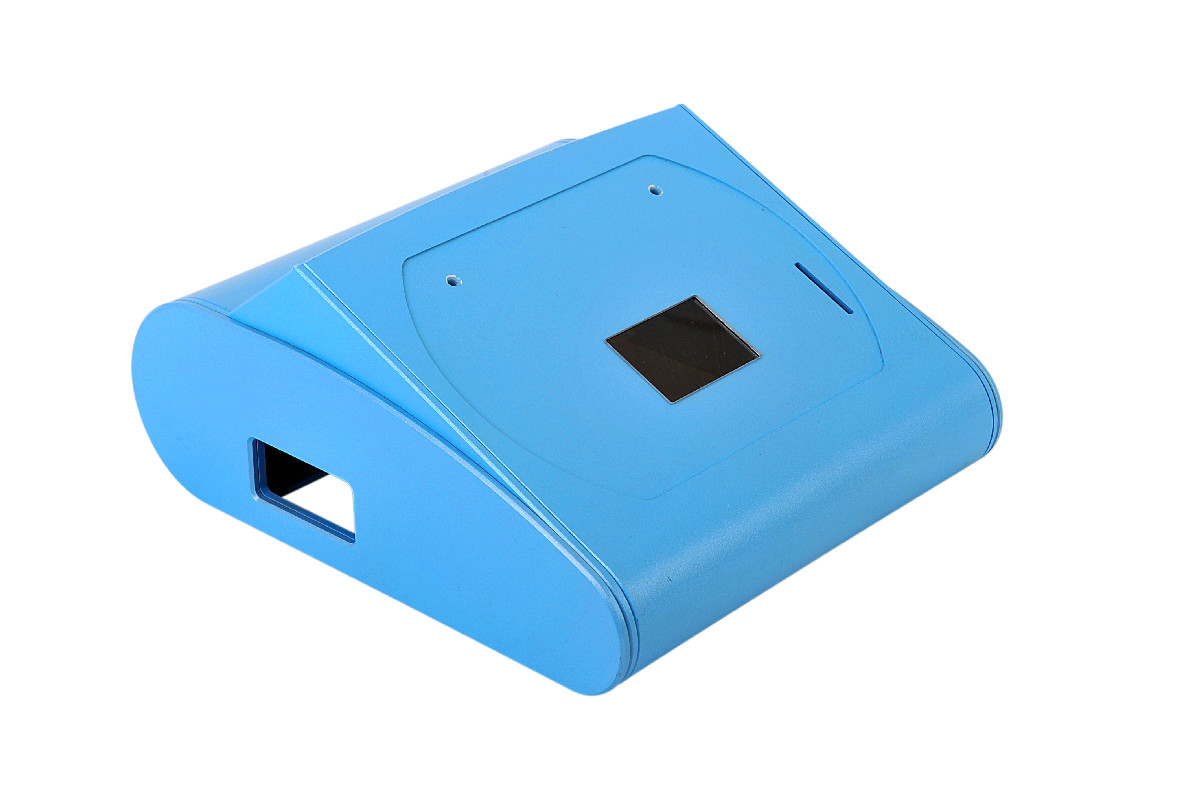
Electronic assemblers and contract manufacturers order housings alongside the boards they build, so the assembly features matter most. OEMs in process control and instrumentation order housings that get revised with each product generation. Medical device teams have ordered housings from the plant since 1994. Each group is written about on the blog.
Related
Housings by type.
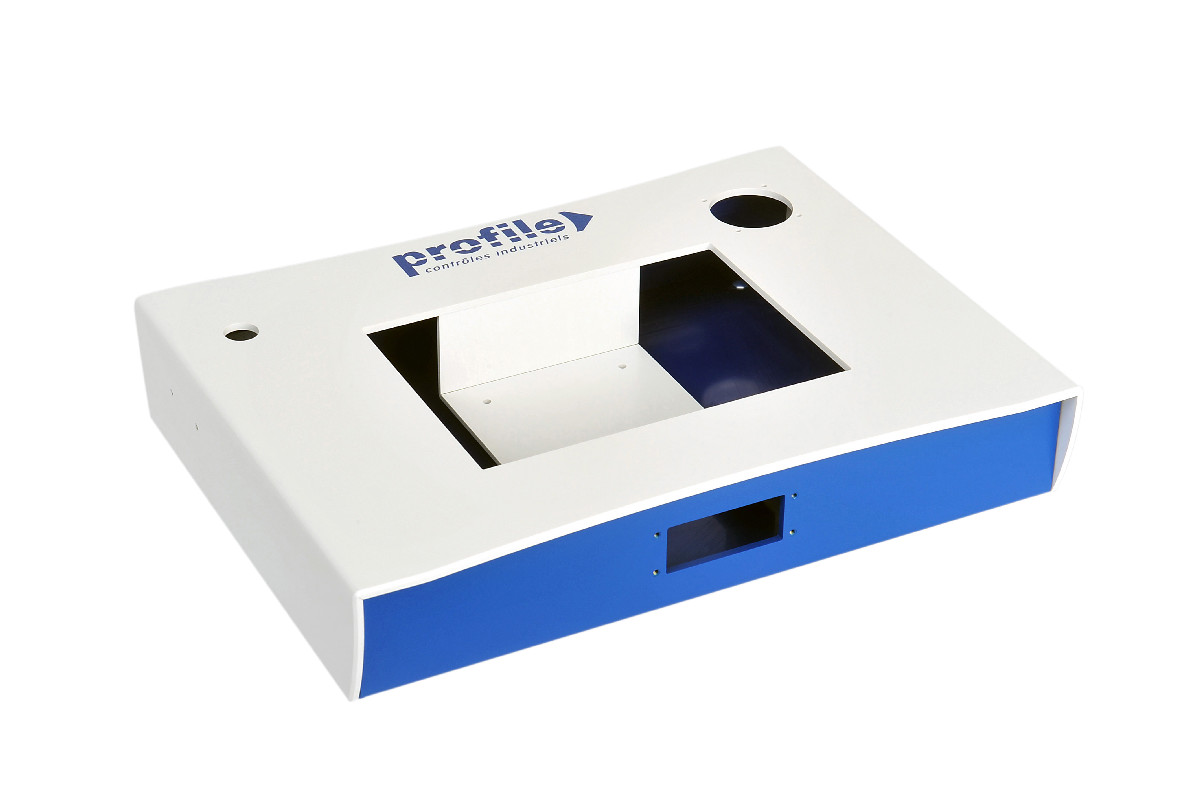
Electronic enclosures
Project boxes and housings for boards, displays and power supplies.
Learn moreHandheld housings
Light, drop-tested housings for portable devices.
Learn moreWall mount housings
Flanged and keyholed housings for controllers and sensors.
Learn moreMaterials
ABS grades, polycarbonate, PETG and acrylic, with thicknesses and colors in stock.
Learn moreWhat is the difference between a housing, an enclosure and a case?
In practice they are the same part. Engineers say housing when the plastic is part of the product's structure, enclosure when it is a box around electronics, and case when it is handheld or portable. Toolless builds all three by the same process.
Can the housing be a different color than the stock greys, black and white?
Yes. Panels can be painted, printed in full color, or made from custom-colored sheet with a minimum material purchase of around 2,000 lb. Two-tone housings mix stock colors at no extra tooling cost.
Can you bend all four sides of a housing from one sheet?
No. The V-groove bending cuts are made on a table saw and run the full width of the panel, so a housing is built from bent panels joined at the corners with a tongue-and-groove joint rather than folded like sheet metal on a brake press.
Can special materials be used?
If it can be thermoformed, it can be considered. ABS, styrene and polycarbonate are the best fits. Sheet-metal parts for extra strength or wood parts for appearance can be incorporated into a housing.
Why engineers choose Toolless
Trusted for enclosures since 1998.
Startups, OEMs and medical device makers across the USA, Canada and Australia come back for the next run. Read more testimonials.
- Years without molds
- 25+
- Certified quality system
- ISO 9001
- Units per order
- 1–10,000
- Sq ft in Everett, WA
- 13,000
“We initially considered injection molding, but with our volume the cost of tooling would never be recovered. It took only a week to settle on a design and get a prototype, and we were in production a week later.”
“I spent 9 years as a quality engineer at Rockwell and tend to be a perfectionist. Your professionalism and diligence in helping evolve our cover is greatly appreciated.”
“After a number of orders, Toolless have become our preferred supplier. Even though we are located in Australia, all deliveries have been fast and hassle free.”
Start your enclosure
Send the board. We’ll send the box.
Quotes come from an engineer, not a form robot. Attach CAD, photos or a sketch and we reply within one business day.