
Custom plastic parts
Custom Plastic Containers and Bins
Storage bins, drawer trays, drip trays and condensation pans made to the exact size of your rack, drawer or machine. Bent and bonded from plastic sheet with no mold, in one piece or a thousand.
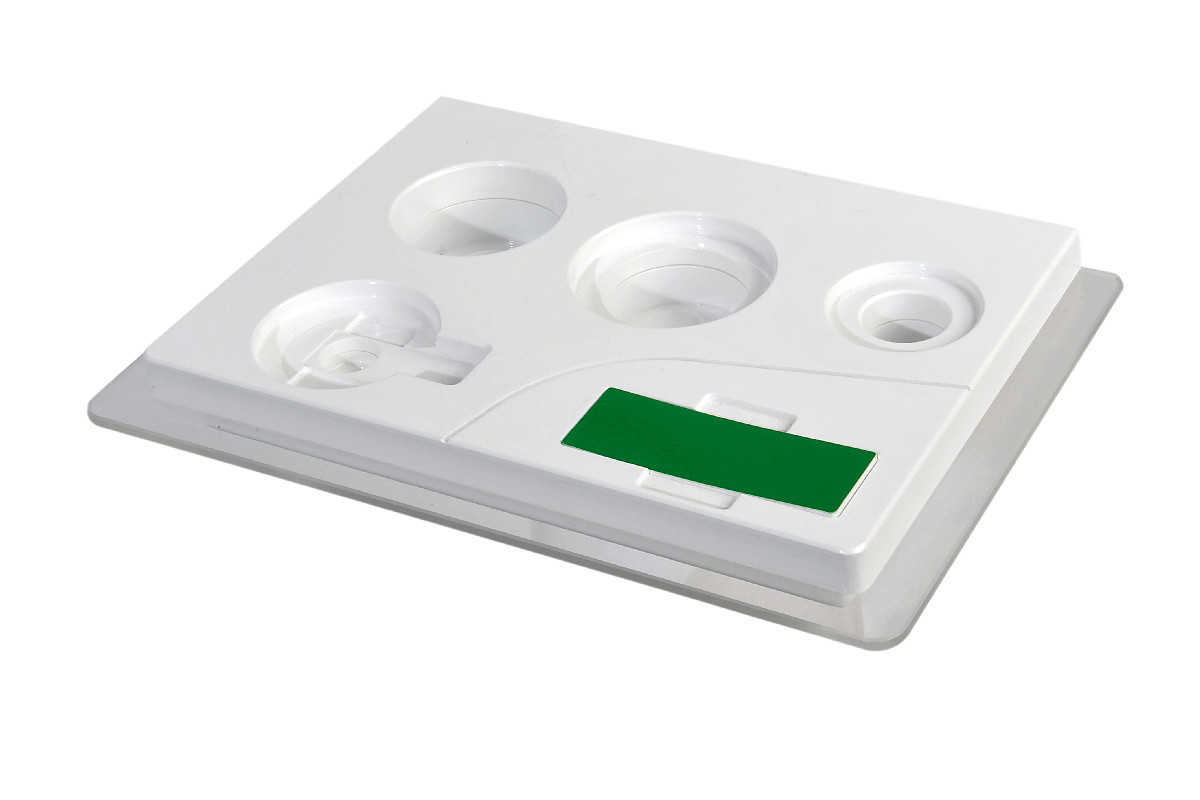
Custom plastic container and bin manufacturer
Custom plastic containers and bins that fit the rack you already have.
Standard containers do not always come in the size you need. At Toolless we custom-make your containers and bins so they fit any rack, and we extend the design to a custom tray for each drawer on that rack. Because every part starts as a flat pattern in sheet, a bin that is 20 mm narrower or a tray with one more divider is a program change, not a new tool.
We have made many iterations of containers: condensation pans, drip trays, storage bins, drawer inserts and parts trays with dividers. Whatever the use or the name, the same bend-and-bond process that builds our custom plastic enclosures makes a rigid, leak-resistant container in the size you specify.
Types of container
Four containers we build most.
Plastic sheet does not rust, does not dent and weighs a fraction of a metal pan, which is why it suits anything that holds liquid or slides in and out every day.
Storage bins
Open-top bins sized to a shelf or rack pitch, with a bent lip for stiffness and a label recess or printed identification on the front.
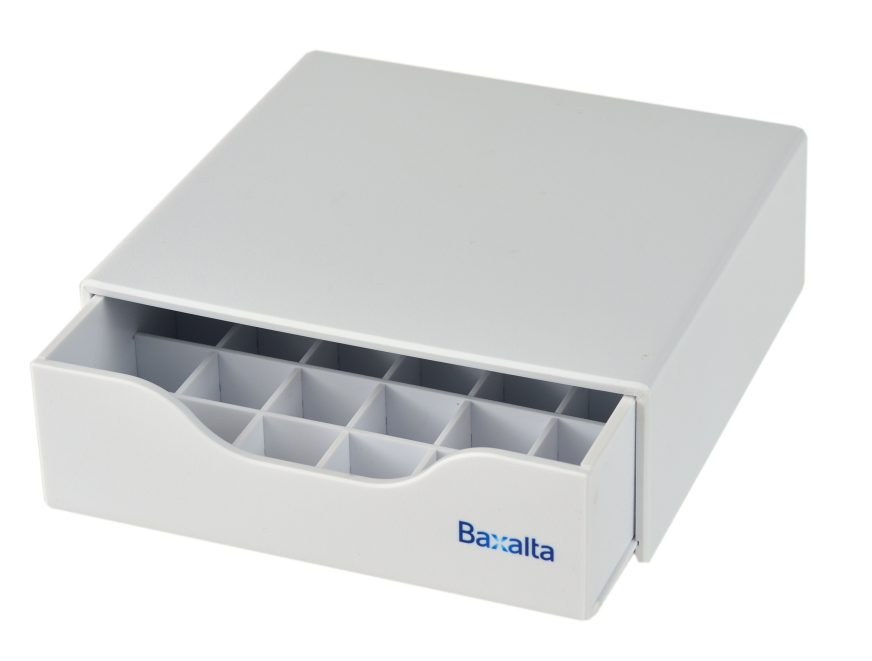
Drawer trays and dividers
One tray per drawer, with dividers bonded in to match the parts or instruments it holds, machined to the drawer's inside dimensions.
Drip and condensation trays
Shallow pans under equipment, coolers and dispensers, with solvent-bonded corners that fuse into one wall and a drain fitting where you need it.
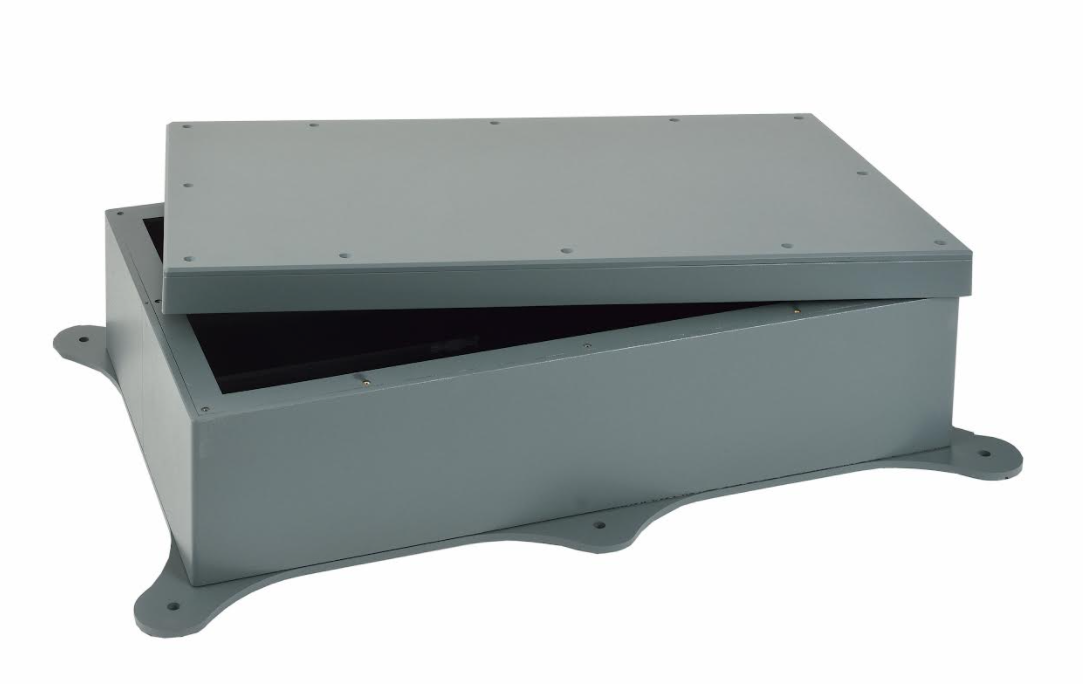
Lidded containers
Boxes with a bent or separate lid, mounting flanges and inserts, for kits, samples and components that travel with the product.
How we make them
Bent where possible, bonded where not, with no mold anywhere.
A container is a flat pattern first. The CNC router cuts the blank, the bend lines are V-scored on our saw and formed in the thermal bender, and the remaining corners are joined with a tongue-and-groove joint and solvent bonding. A long side becomes a single bent wall, which leaves fewer joints to seal and a stiffer tray.
- Bends up to 40 inches long, so a full-width drawer tray is one piece
- Solvent-bonded corners that fuse the plastic rather than gluing it
- Dividers, feet, handles and flanges bonded in as part of the assembly
- ABS for general use, polycarbonate for heat and impact, PETG and acrylic where the contents should be visible (materials selection)
Design notes
Rules of thumb for a bent container.
Give us the inside dimensions and what the container holds, and we take care of the bend allowances and joints. The figures come from our design details page.
- Sheet gauge
- 3 mm for most bins and trays; 4 mm and 6 mm for long or loaded containers
- Dimensions
- All measurements to inside walls; machining tolerance ±0.2 mm (.008”)
- Bend limits
- Up to 40 inches long; 115° standard, 45° reverse; long bends in 6 mm sheet tend to warp, so we split them or add an end cap
- Corners
- Inside radius square for a 90° bend; outside radius equal to material thickness; a .5 mm chamfer on the tongue hides the seam
- Joints
- Tongue 1.8 mm wide by 1 mm deep, groove 2 mm by 1.2 mm, solvent bonded and not in tension
- Finish
- Pre-colored sheet, painted colors through our partner, digital printing for labels
Examples
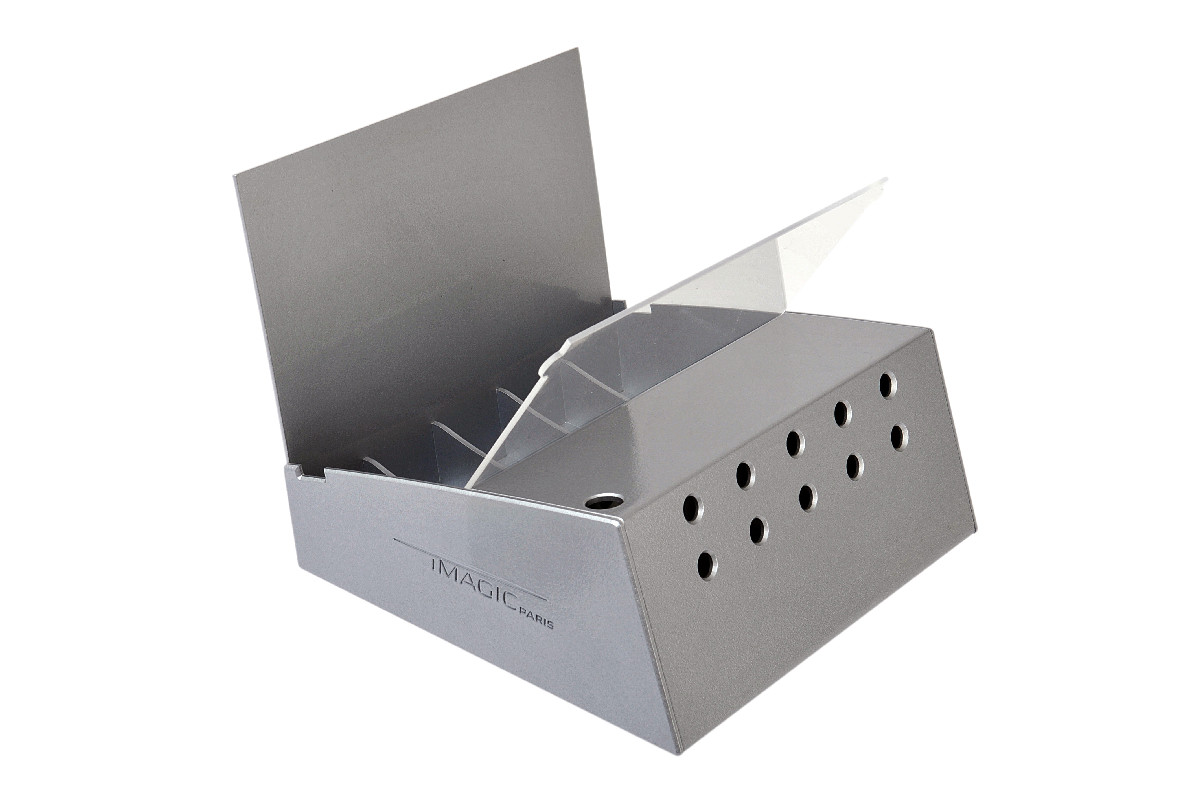
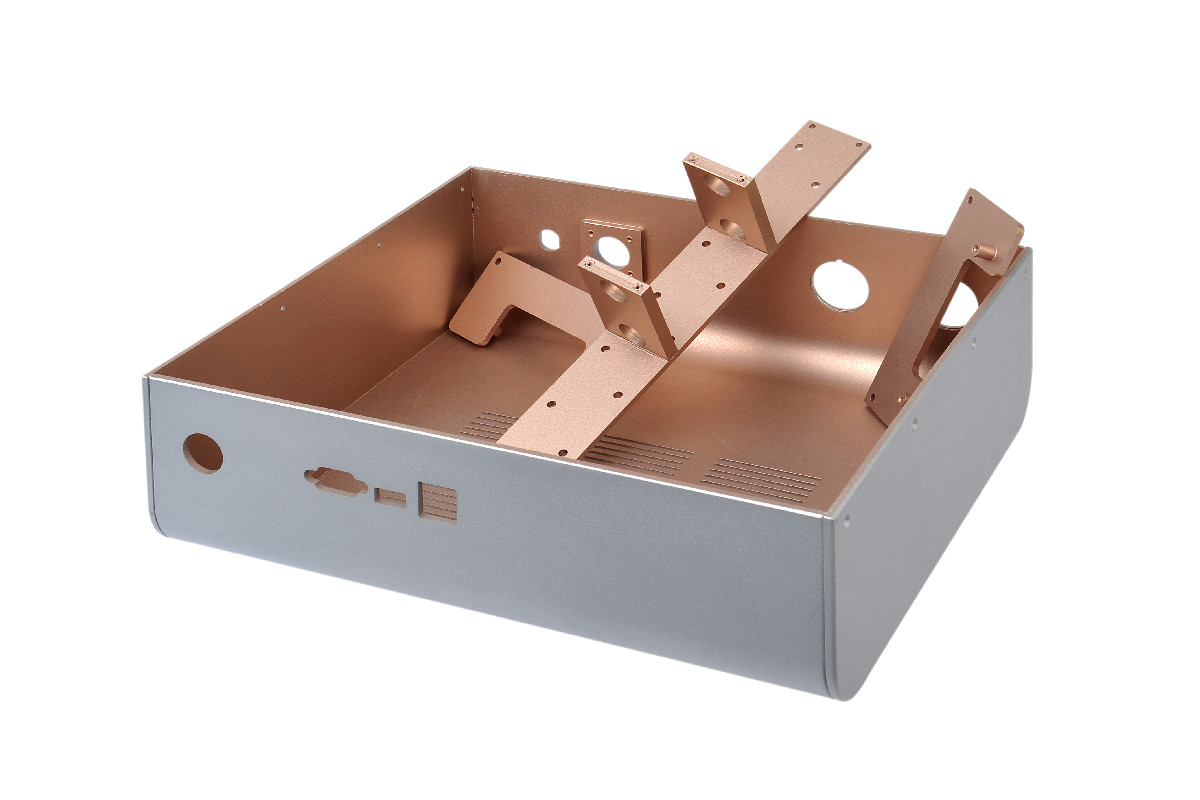
Containers, trays and bins from the shop floor.
More in the plastic parts gallery.
How to order
Three steps from rack dimensions to bin.
Send the space
Inside dimensions of the rack, drawer or footprint, what the container holds, whether it sees liquid, and the quantity. A CAD file helps; a sketch works.
Approve the model
An engineer returns a 3D model with bends, dividers and flanges placed, in STEP, IGES or STL for a fit check.
Prototype, then run
One container to test in the rack, then production from the same program, with reorders through the blanket order program.
More custom plastic parts
Made from the same sheet, on the same machines.
Bezels and shrouds
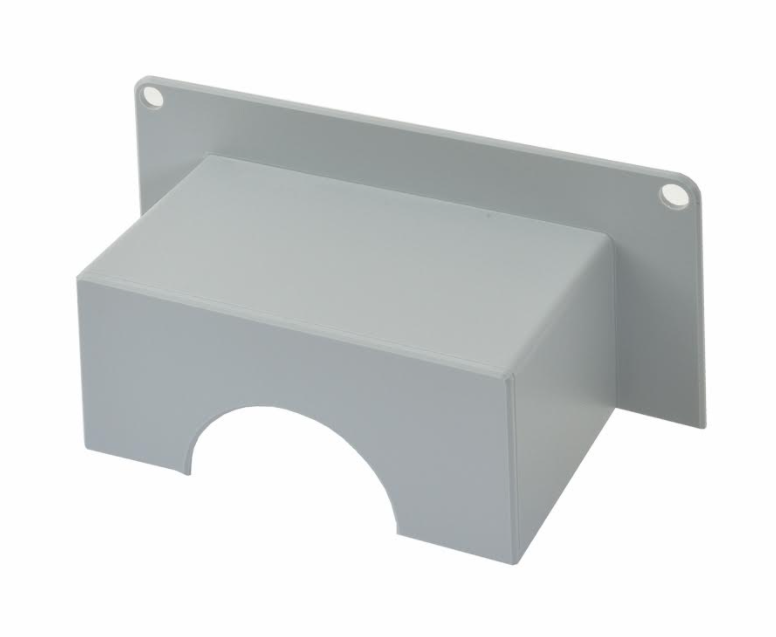
Front bezels and folded shrouds with reinforced bends and printed branding.
Learn moreCustom plastic panels
Flat front and rear panels with cutouts, printed legends and mounting holes.
Learn moreCustom plastic covers
Lids, access covers and vented plates milled from 2 mm to 1 inch sheet.
Learn moreCustom plastic brackets
Bent or flat brackets and shields with inserts and standoffs.
Learn morePlastic parts gallery
Plates, bezels, brackets and panels we have machined for customers.
See the galleryCustom plastic enclosures
Complete housings built with the same bend-and-bond process.
Learn moreWhy engineers choose Toolless
Trusted for enclosures since 1998.
Startups, OEMs and medical device makers across the USA, Canada and Australia come back for the next run. Read more testimonials.
- Years without molds
- 25+
- Certified quality system
- ISO 9001
- Units per order
- 1–10,000
- Sq ft in Everett, WA
- 13,000
“We initially considered injection molding, but with our volume the cost of tooling would never be recovered. It took only a week to settle on a design and get a prototype, and we were in production a week later.”
“I spent 9 years as a quality engineer at Rockwell and tend to be a perfectionist. Your professionalism and diligence in helping evolve our cover is greatly appreciated.”
“After a number of orders, Toolless have become our preferred supplier. Even though we are located in Australia, all deliveries have been fast and hassle free.”
Start your enclosure
Send the board. We’ll send the box.
Quotes come from an engineer, not a form robot. Attach CAD, photos or a sketch and we reply within one business day.