
No mold technology
Custom Plastic Housings Without Moulds
A plastic enclosure made from flat, pre-colored sheet by CNC machining, V-groove scoring, thermal bending and solvent bonding, with no mould, no tool and no jig anywhere in the chain. The same process that ships one prototype ships five thousand units.
How it is made
Custom plastic housings without moulds, from sheet to box in ten steps.
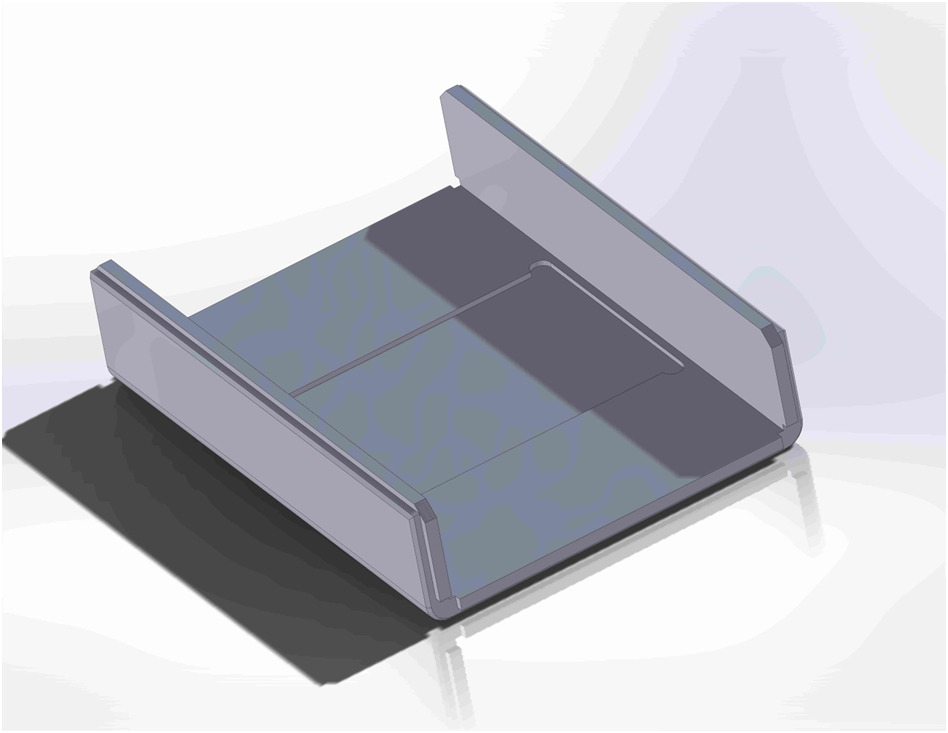
Customisable plastic casings without a mould start as a flat pattern. A CNC router machines every opening, vent and recess into pre-colored sheet, then the pieces are cut out and the joints routed as a modified tongue-and-groove. A custom table saw scores V-shaped bending cuts halfway through the sheet, a computerized thermal bender folds the panels, brass inserts are heat-staked into bosses, and the assembly is solvent bonded into one rigid housing. Printing, painting, EMI coating and hardware follow, then inspection.
The process was invented in France in 1985 by engineer Jean-Claude Antoine for stage-lighting housings, adapted from sheet-metal and cabinet-making techniques. Toolless has run it in Washington since 1998. Because nothing in the chain is built for one design, the non-recurring engineering is a CAD model and a program, and the first unit can ship in days.
Injection molding alternative
Toolless against injection molding and 3D printing.
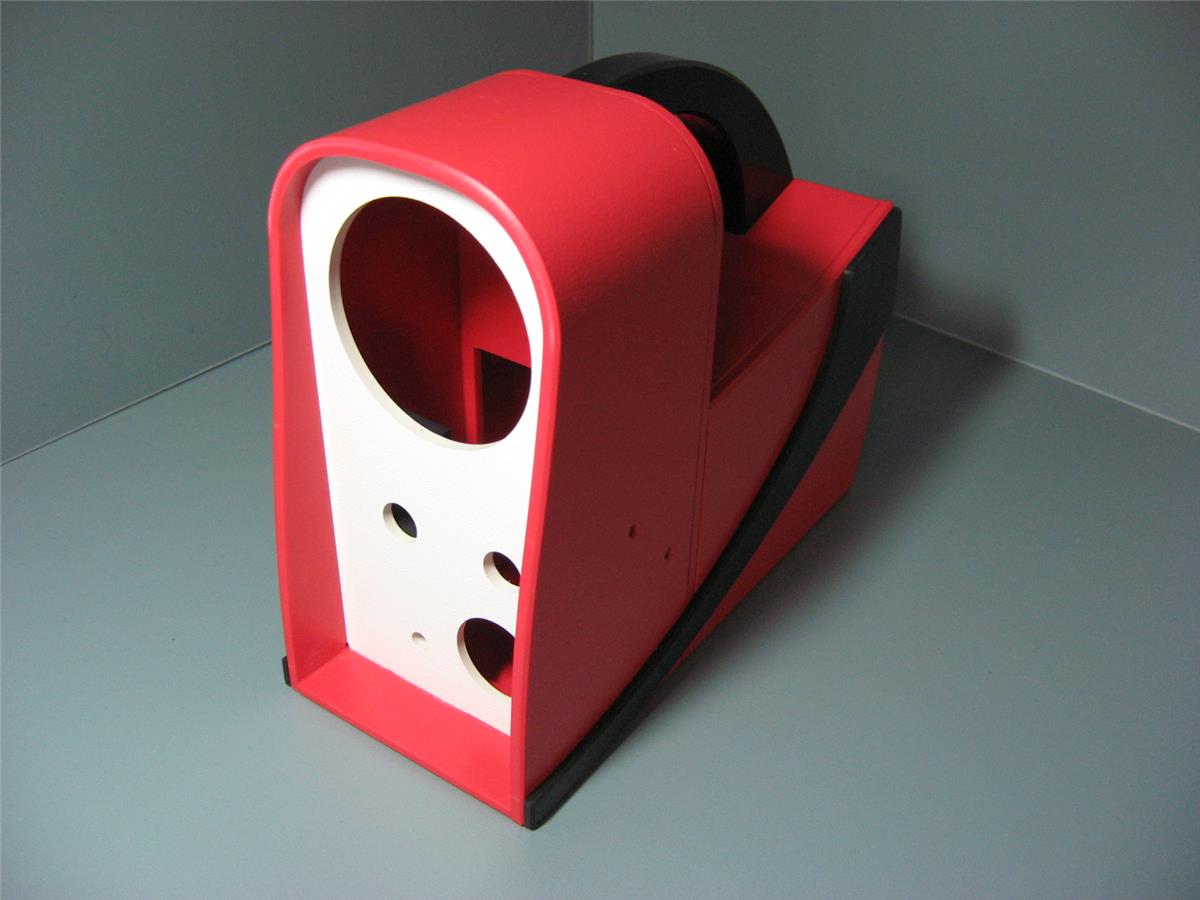
Both comparisons use an ABS enclosure of approximately 8” × 5” × 2”. Injection molded enclosures put the investment in a tool; a printed one has no tool and no production path; a Toolless housing has neither tool nor ceiling.
What you gain
Four things a mould takes away, and the process gives back.
A mould commits you to a geometry, a quantity and a schedule. Sheet fabrication leaves all three open.
Freedom to change
Every customer revises a design at least once in a product's life. A moved port, a larger display or a new boss is a program edit. Simple changes are made on the fly, in some cases during a run. See flexible changes.
Freedom of quantity
No minimum order. One or two units with a setup charge, 100 to 10,000 as the ideal range, and blanket releases sized to what you sell instead of what a mould needs to pay for itself.
Time
Quotes within 48 hours, prototypes in 5 days to 3 weeks, production three weeks after PO. There is no eight-week wait for a mould to be cut and standardized.
Ownership of the design
The engineering package includes a full 3D model set, approved by you before cutting. The design belongs to you and cannot be sold as-is to any other customer.
Honest limits
What the sheet process does and does not do.
Joint lines exist and we do not hide them. We control where they fall and use a 0.5 mm chamfer on the tongue edge to turn the seam into a deliberate cosmetic line. Bends run the full width of a panel because the V-groove is cut on a table saw, so we cannot bend up all four sides of one piece like a brake press; a box is made from bent sections joined by tongue-and-groove. Compound curves are formed in one direction on our rolling equipment. The maximum bend length is 40 inches, and larger housings combine pieces or a metal frame.
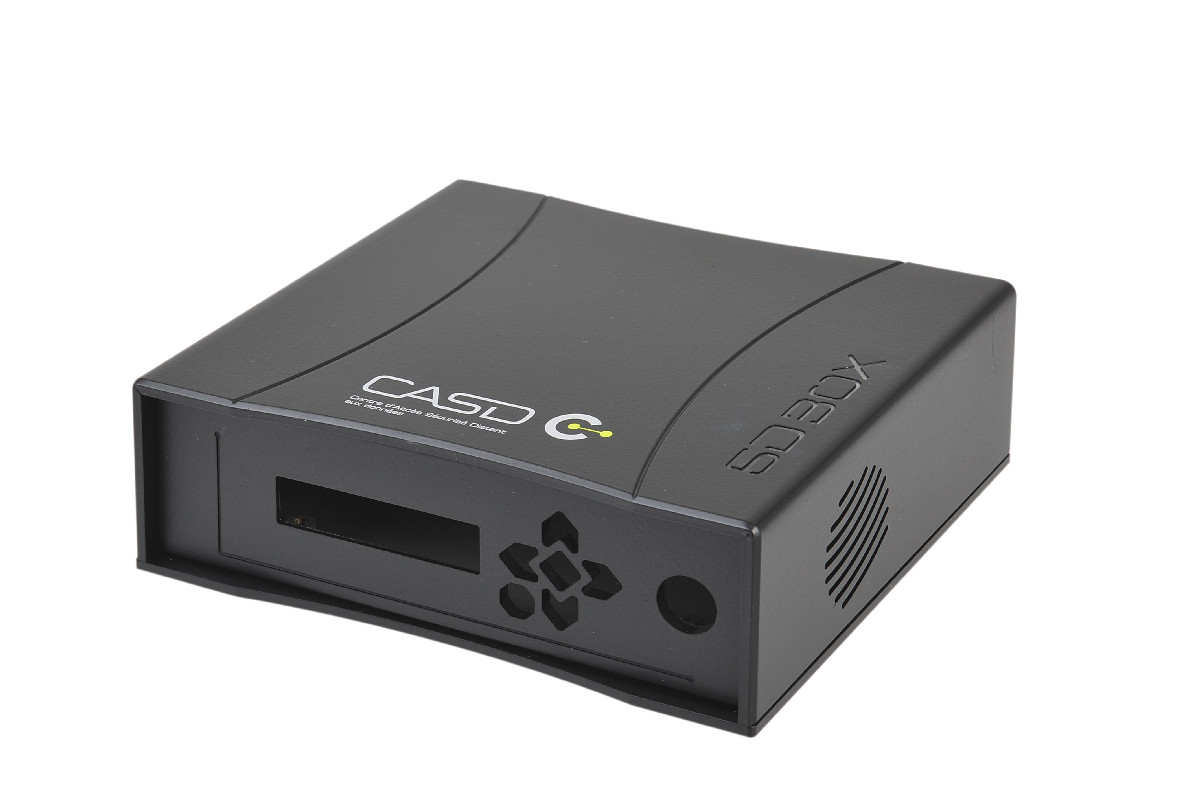
Within those rules the housing is as strong as an injection-molded part from similar material, passes the usual drop tests, and carries every feature a molded part would: bosses and brass inserts, acrylic windows, light pipes, hinges, latches, magnets, two-tone panels, EMI coating and full-color UV printing. Materials run from general-purpose ABS to UL94 V-0 grades, polycarbonate, PETG and acrylic, 2 mm to about 12 mm thick.
Questions we get asked
No-mould enclosure FAQ.
Answers from the engineers who quote these jobs. For anything not covered, contact us or read the full FAQ.
Is a housing made without a mould as strong as a moulded one?
As strong as injection-molded parts made from similar materials. Our enclosures withstand the usual drop tests and have similar mechanical integrity. Where a housing must pass a specific test, we add reinforcement at the bonded joints, thicker sheet, corner doublers and ribs.
Can you hide the joint lines?
Not without causing bigger problems, so we do not. We use the joint lines as an aesthetic feature and control where they fall to maintain the best look and optimize cleanability.
At what quantity does a mould start to make sense?
Injection molding and pressure forming take over past roughly a thousand pieces per run for a stable design. Below that, and for any product whose design is still moving, the sheet process keeps the investment small. Many customers run several revisions of 500 units before releasing tooling.
Can you use my material?
In general, if the material can be thermoformed, we can work with it. The best materials are ABS, styrene and polycarbonate. Custom colors are matched with a minimum purchase of around 2,000 lb of material.
Related
Go deeper into the process.
Design rules, the technology matrix and the products built this way.
Technology matrix
Toolless against injection molding and pressure forming on thirteen criteria.
ReadCustom plastic enclosures
The product page: what we build, for whom, and how to start.
Learn moreRapid prototyping
A prototype in days that is also the first production article.
Learn moreLow volume manufacturing
Runs of 100 to 10,000 units without a mould.
Learn moreWhy engineers choose Toolless
Trusted for enclosures since 1998.
Startups, OEMs and medical device makers across the USA, Canada and Australia come back for the next run. Read more testimonials.
- Years without molds
- 25+
- Certified quality system
- ISO 9001
- Units per order
- 1–10,000
- Sq ft in Everett, WA
- 13,000
“We initially considered injection molding, but with our volume the cost of tooling would never be recovered. It took only a week to settle on a design and get a prototype, and we were in production a week later.”
“I spent 9 years as a quality engineer at Rockwell and tend to be a perfectionist. Your professionalism and diligence in helping evolve our cover is greatly appreciated.”
“After a number of orders, Toolless have become our preferred supplier. Even though we are located in Australia, all deliveries have been fast and hassle free.”
Start your enclosure
Send the board. We’ll send the box.
Quotes come from an engineer, not a form robot. Attach CAD, photos or a sketch and we reply within one business day.