
Low volume manufacturing
Low Volume Plastic Enclosure Manufacturing
Production runs of 100 to 10,000 custom enclosures without a mold, made in Everett, Washington on the same program that cut your prototype. Small batch enclosures at molded-part quality, released on your schedule with a three-week lead time after PO.
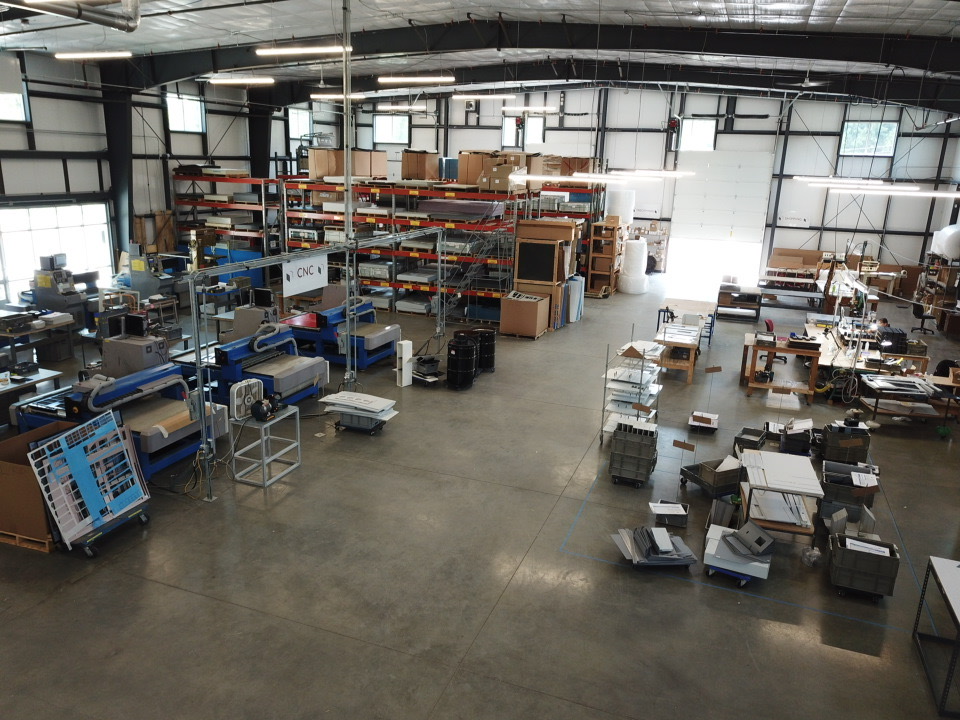
The quantity gap
Low volume plastic enclosure manufacturing for the runs a mold cannot justify.
Injection molding and vacuum forming become expensive and difficult below a thousand units, and a mold commits you to one geometry the day it is cut. Most electronics products ship in dozens to a few thousand, and most designs change at least once in their life. Toolless was built for that range. Every enclosure is CNC machined, V-grooved, thermally bent and solvent bonded from pre-colored sheet, so there is no tooling to amortize and a revision is a program edit.
The process is ideal between 100 and 10,000 units. One or two units are possible with a setup charge, and blanket orders from 10 to 10,000 units give injection-molding per-unit pricing without the mold. Read the molding comparison for the numbers.
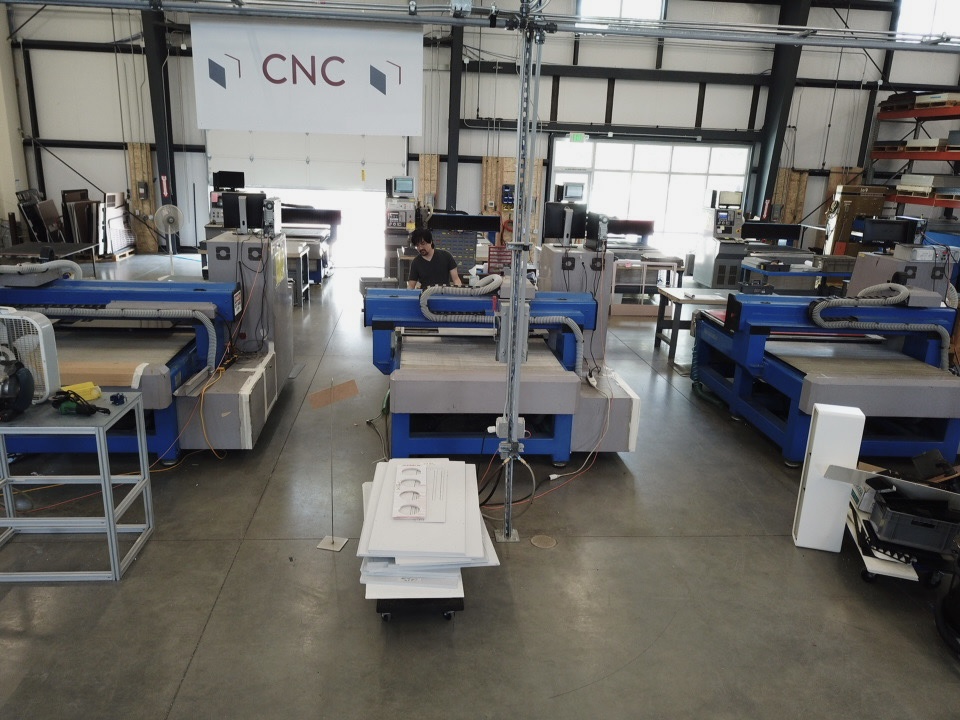
Repeatability
Why unit five hundred matches unit one.
Repeatability in a mold comes from steel. In a Toolless run it comes from the program, the single-cutter method and an ISO 9001:2015 quality system that inspects every lot.
Program, not setup
Every feature is generated from CAD and a CNC program, not from an operator's setup. The part cut for a repeat order this year matches the prototype from last year, to ±0.2 mm on the flat pattern.
One cutter, 95% of cuts
A single 2 mm carbide cutter makes 95% of the cuts in the shop. No tool changes and no cutter resets mean one person runs up to ten machines, and setup for a new part takes 30 seconds including the sheet change.
Self-locating joints
Tongue-and-groove joints are designed to a net fit with a nominal 0.2 mm clearance, so the pieces hold together without clamping or fixturing during solvent bonding. Assembly needs no measuring.
Pre-colored sheet
Color comes from the material, not a paint booth. White, black, light grey and dark grey ABS are stocked in 3, 4, 6 and 8 mm; custom colors are matched on programs of around 2,000 lb of material.
Inspection under ISO 9001:2015
Certified through PRI Registrar, with a quality-control lab on site. The majority of our employees have been with the company for more than ten years.
Finish on the line
Two digital UV printers, one dedicated to production, print legends and logos on every unit. Paint, EMI coating, latches and hinges are applied as secondary operations before inspection.
Three ways to order
Blanket releases, re-orders or one large run.
Volume quantities from 10 to 10,000 units earn volume pricing. Which method fits depends on how predictable your demand is and how much inventory you want to carry, which for most customers is none.
Blanket order program- Single large order
- Order the total quantity when you need it. Lead time is three weeks after receipt of PO, and runs up to 10,000 units depending on complexity.
- Re-order agreement
- Order and re-order through the year with shorter lead times on repeats and production priority over new orders.
- Scheduled shipments
- Define a quarterly, monthly, annual or bi-annual delivery schedule. Product stays on your shelf without inventory carrying costs.
- Design changes between releases
- Revisions are a program edit. Simple changes are incorporated on the fly, in some cases during a production run.
- Quantities
- Ideal 100 to 10,000; 1 or 2 units with setup charge; blanket orders 10 to 10,000.
Custom enclosure fabrication
Enclosure fabricators who machine from raw sheet.
Many enclosure fabricators modify pre-manufactured boxes. Toolless machines every enclosure from raw sheet in house, which removes the middleman and keeps control of quality and lead time. The process was invented in France in 1985, adapted from sheet-metal and cabinet-making techniques, and Toolless has run it in Washington since 1998.
Materials cover general-purpose ABS (80% of production), Royalite flame-retardant ABS and Boltaron 4335 (both UL94 V-0), polycarbonate TUFFAK, PETG and acrylic, in sheet from 2 mm to about 12 mm. The result is as strong as an injection-molded part from similar material and passes the usual drop tests, with thicker sheet, corner doublers and ribs added where a product demands more.
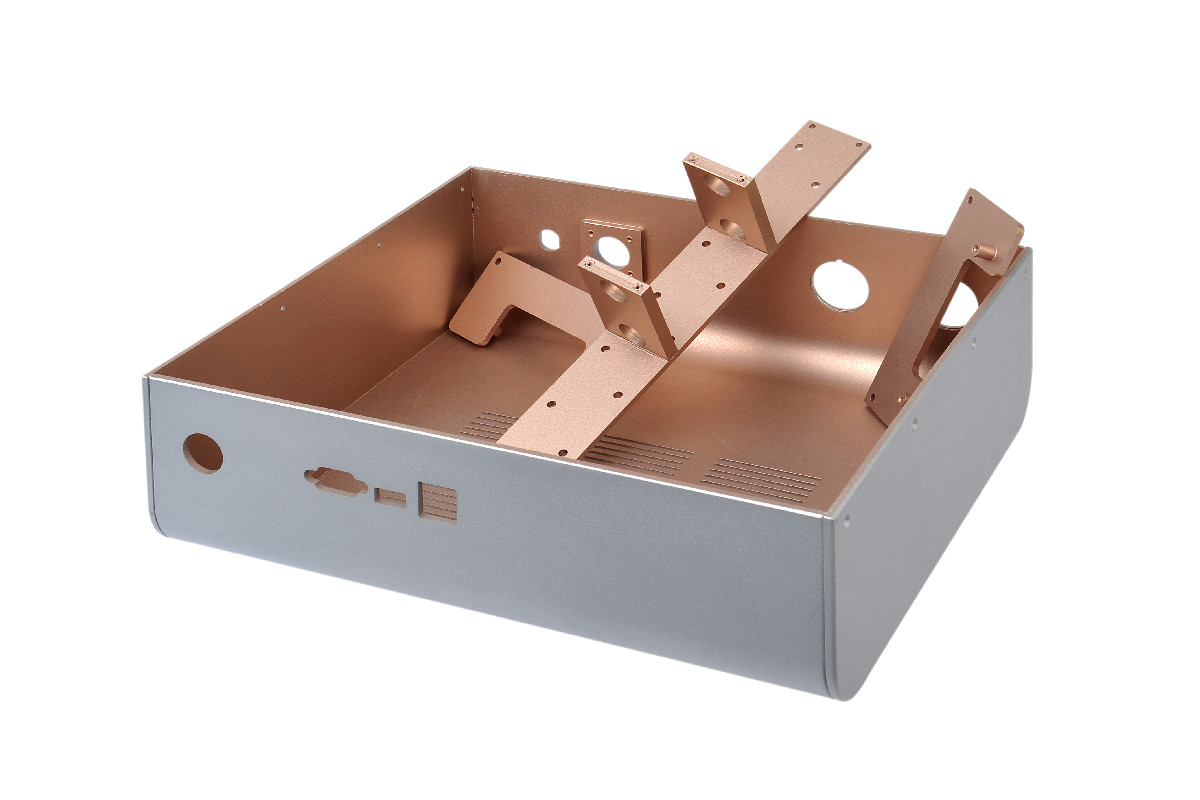
Proof at volume
500 ventilator housings in two weeks.
In 2020 Toolless ramped production of housings for Ford's COVID-19 ventilator program and shipped 500 units in a fortnight from a standing start. Runs of 500, a revision, then 500 more are routine for customers testing a market before they scale up.
Customer
“This is an amazing operation that you guys have.”
Walt Besio, CRE Medical. More on the testimonials page.
Questions we get asked
Low volume manufacturing FAQ.
Answers from the engineers who quote these jobs. For anything not covered, contact us or read the full FAQ.
What quantity can Toolless produce?
The process is ideal for quantities between 100 and 10,000 units, depending on the application, and larger programs are welcome. One or two units are possible with a setup charge. Blanket orders cover 10 to 10,000 units.
How long does a production run take?
Three weeks after receipt of PO for volume runs. Production runs of 3 to 6 weeks are quoted when shop loading is high, and re-order agreements give repeats priority over new orders.
Is this an interim process before injection molding?
Yes, and it is especially appropriate while the design is not yet stable. We regularly produce 500 units, make changes, build 500 more, make more changes and build another 500 before a customer releases tooling.
How easy is it to make changes between runs?
Changes involve programming on a computer, not modifying hard tools and molds, so the cost is small. Simple changes are incorporated on the fly, even during a production run.
Related
Before and after the production run.
Prototyping, ordering, quality and the comparison with molding.
Rapid prototyping
A prototype in 5 days to 3 weeks that becomes the first production article.
Learn moreBlanket order program
Volume pricing from 10 units up, released on your schedule.
Learn moreISO 9001:2015
The quality system behind every lot we ship.
Learn moreTolerances and repeatability
Machining tolerances and the single-cutter method behind them.
ReadStart your enclosure
Send the board. We’ll send the box.
Quotes come from an engineer, not a form robot. Attach CAD, photos or a sketch and we reply within one business day.