
Test equipment enclosures
Plastic Enclosures for Testing Equipment
Benchtop and handheld housings for testers, analyzers, calibrators and data loggers, machined from ABS or polycarbonate sheet to the same ±0.2 mm every unit. A display window, a keypad recess and a shielded interior are machined features, not tooling.
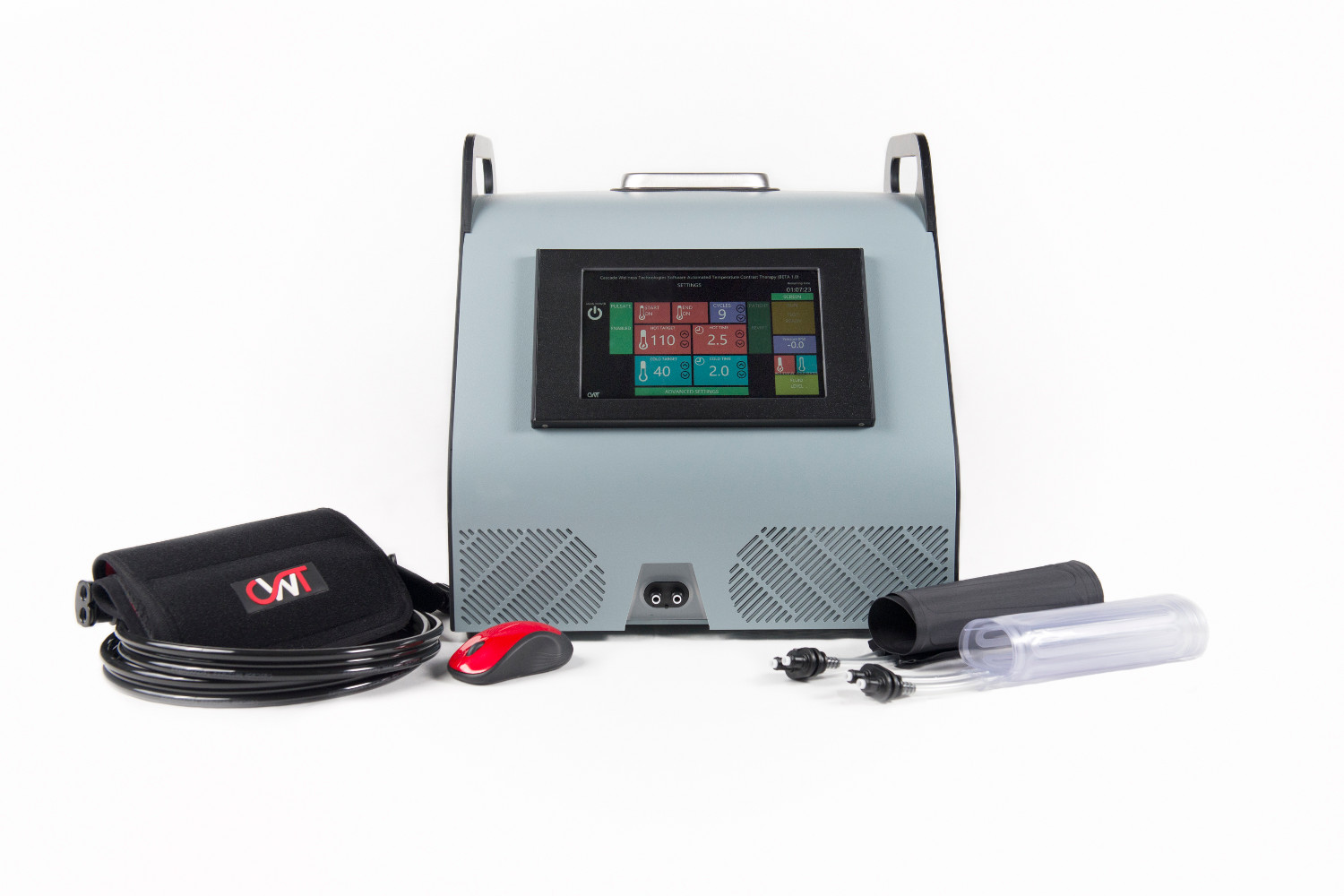
Housings for instruments
Plastic enclosures for testing equipment that hold their dimensions.
Test equipment is judged on repeatability, and its housing has to match. Every Toolless enclosure starts as a flat pattern machined on a CNC router to ±0.2 mm, then scored, thermally bent and solvent bonded. Because every feature comes from a program rather than an operator's setup, the display opening on unit five hundred sits where it sat on the prototype.
Our instrument portfolio covers gas chromatography, purge systems, calibration devices and sampling pressure testers, alongside handheld meters and bench analyzers. The engineers who quote your job have worked the process for more than 15 years and will walk you through where a window, a port or a fan belongs before the 3D model is drawn.
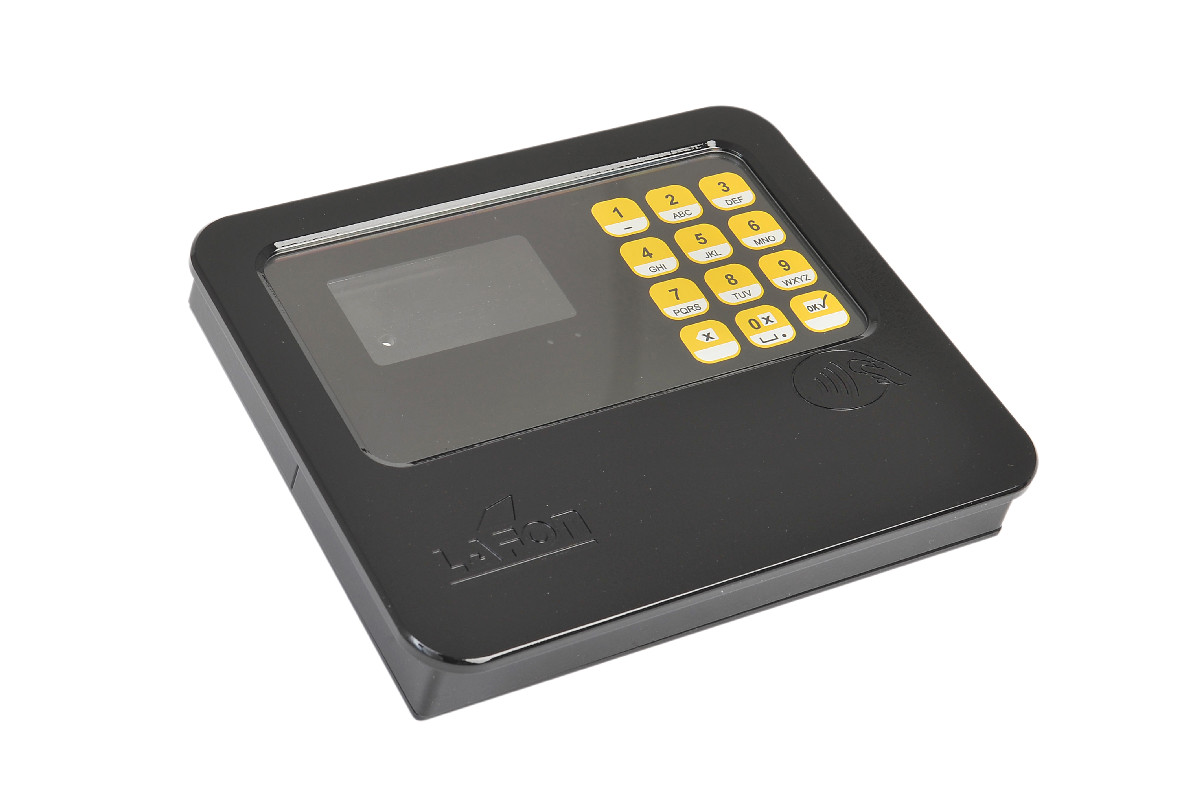
Specifications
What goes into an electronic enclosure for testing equipment.
The dimensions our shop holds and the hardware it installs. Full machining, edge and bending rules are on the designs and details page.
Tolerances and repeatability- Machining tolerance
- ±0.2 mm (.008”) on flat patterns; ±0.4 mm reverse-to-front features
- Sheet thickness
- 2 mm to 12 mm; ABS stocked in 3, 4, 6 and 8 mm
- Materials
- General-purpose ABS (UL94 HB), Royalite FR ABS (UL94 V-0), Boltaron 4335, polycarbonate TUFFAK, PETG, acrylic
- Windows
- Acrylic, solvent bonded into a rear recess, flush or chamfered; polycarbonate windows by bezel
- Keypads and overlays
- Machined recesses; .010” clearance per side for keypads; .015” overlay stock hides machine marks
- Vents
- Machined slot patterns, 2 mm minimum width; fan mounts on through holes or bosses
- Fastening
- Self-tap bosses or heat-staked brass inserts; 4-40 and 6-32 inserts stocked
- Shielding
- EMI/RFI conductive coating applied inside the housing and tested for conductivity
- Marking
- Full-color UV digital printing, white ink, raised TEXTUR3D prints, engraving
Bench and field
Two form factors, one process.
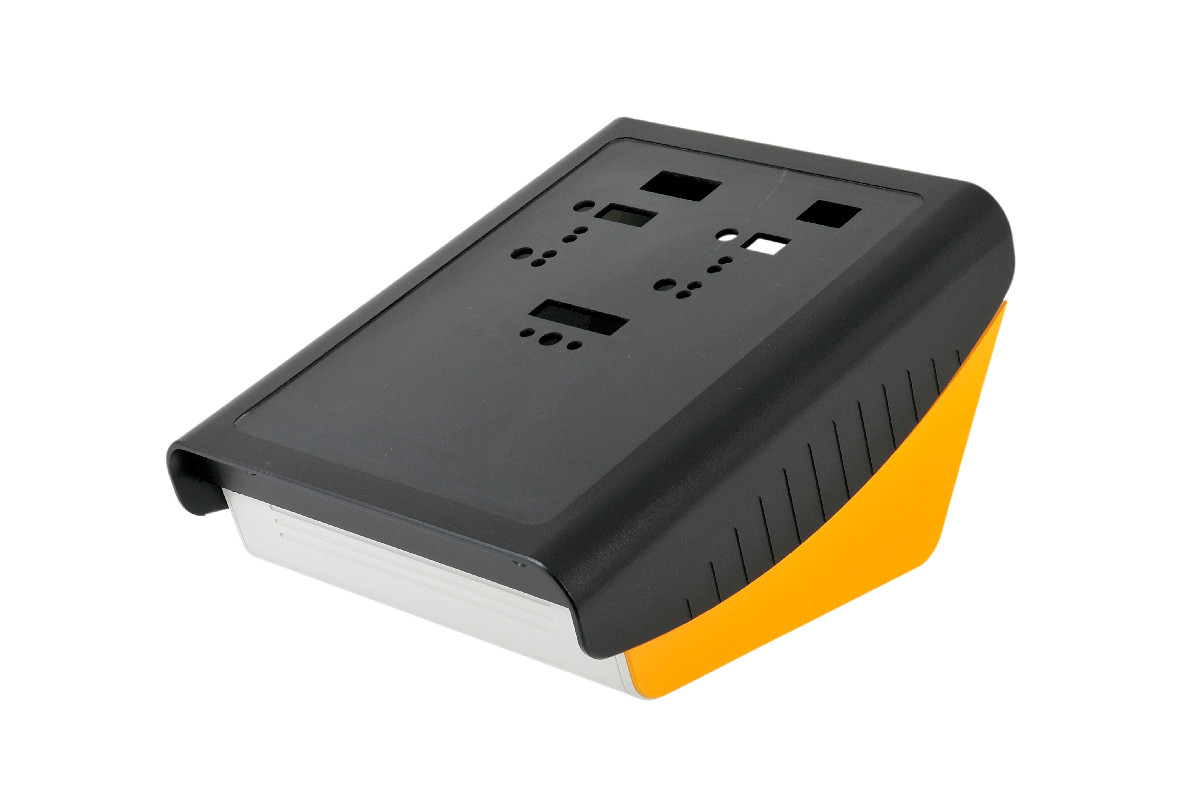
A benchtop analyzer wants a sloped front so the display reads from a seated position, a rear panel dense with connectors, and rubber feet recessed into the base so the unit does not creep across the bench. A field tester wants a handle or strap, a battery door, and a housing that survives the drop from a truck tailgate. Both come from the same sheet process, and both are drop tested before release.
Compound curves are formed in one direction on our rolling equipment, which is how a test equipment enclosure gets a rounded top edge without a mold. Joint lines run where we place them, and we use them as a design feature rather than trying to hide them.
Handheld instrument enclosures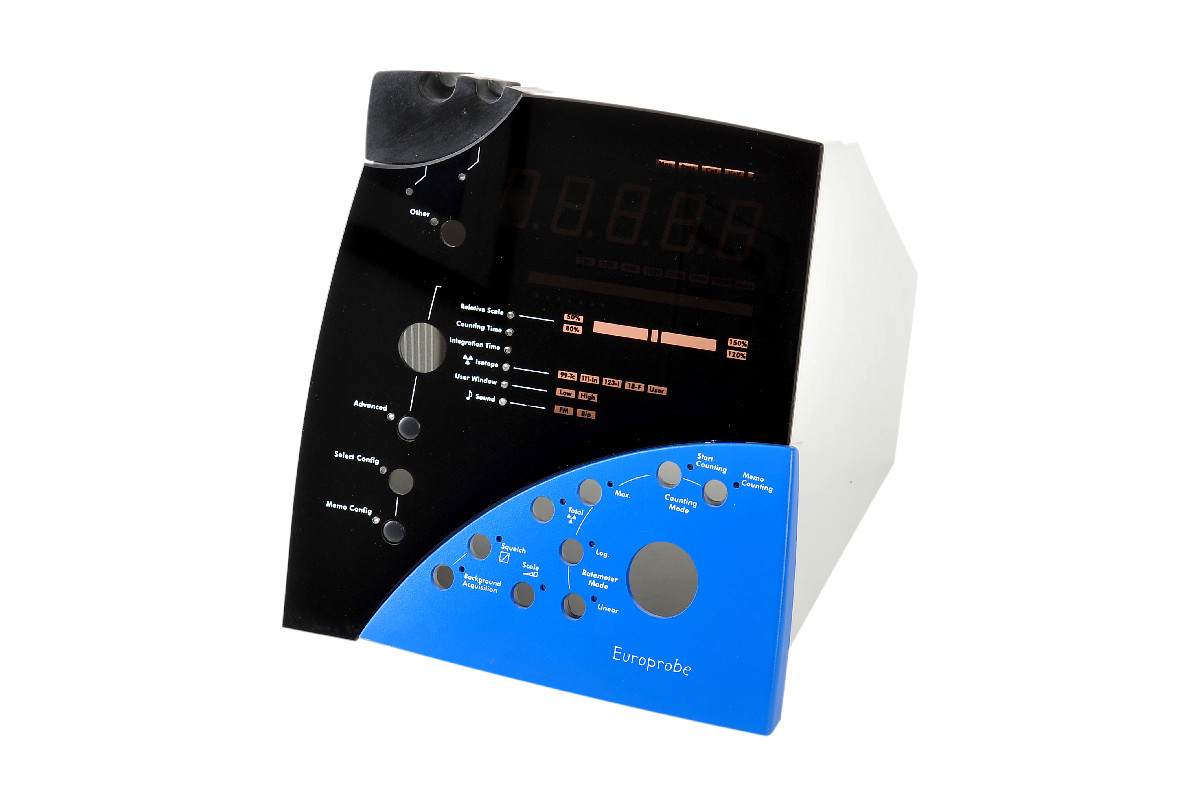
Why sheet, not a stock box
Four reasons test labs specify a custom housing.
A modified catalog box carries someone else's dimensions. A machined enclosure carries yours.
Connector placement
Ports, BNCs and terminal blocks are machined where the board puts them, with countersinks and recesses for panel-mount hardware.
Shielded interior
Conductive coating on the inside walls helps sensitive measurement circuits pass emissions testing. Conductivity is verified before the housing moves on.
Revisions without tooling
A firmware update that adds a button, or a new sensor that needs a port, is a program edit. Small changes are made within a day.
Quantities that match the market
Test equipment ships in dozens to a few thousand. The process is ideal from 100 to 10,000 units, with 1 or 2 units possible for evaluation.
Engineering guides
Further reading on enclosures for testing equipment.
Five articles from our engineering blog on selecting, comparing and designing test equipment housings.
How to choose
Selecting the right plastic electronic enclosure for testing equipment.
ReadPlastic versus metal
Comparing plastic and metal enclosures for testing equipment.
ReadTop benefits
Why plastic housings suit measurement and test hardware.
ReadDesign trends
Custom design trends in plastic electronic enclosures for testing equipment.
ReadInnovations
Materials, marking and thermal features in current test enclosure design.
ReadEngineering blog
All articles on enclosure design, materials and manufacturing.
BrowseQuestions we get asked
Test equipment enclosure FAQ.
Answers from the engineers who quote these jobs. For anything not covered, contact us or read the full FAQ.
Can you shield the enclosure against EMI?
Yes. A conductive coating is applied to the inside of the housing as a secondary operation. We test the paint and plastic for conductivity before manufacturing continues.
What file formats do you accept for the board and the housing?
STEP, IGES, SAT, SolidWorks, STL and DXF. We model in SolidWorks and return 3D files in prt, igs, stp, stl or sldprt for your approval before any sheet is cut.
How long does a prototype take?
Five days to three weeks depending on complexity and designer availability. Quotes go out within 48 hours of receiving your design, and the prototype is the first article for production.
Is a Toolless enclosure as strong as a molded one?
As strong as injection-molded parts made from similar materials, with comparable drop performance. Where a housing must pass a specific mechanical test, we reinforce the bonded joints and step up the sheet thickness.
Related
More on instrument housings.
Portfolio, materials and the medical and laboratory work that shares this process.
Instrument portfolio
Chromatography, purge, calibration and pressure test housings we have built.
See the galleryElectronic enclosures
Project boxes and housings built around a circuit board.
Learn moreMedical enclosures
Clinical and diagnostic housings built to the same tolerances since 1994.
Learn moreMaterials
Stocked ABS, FR ABS, Boltaron, polycarbonate, PETG and acrylic with data sheets.
Learn moreFrom the portfolio
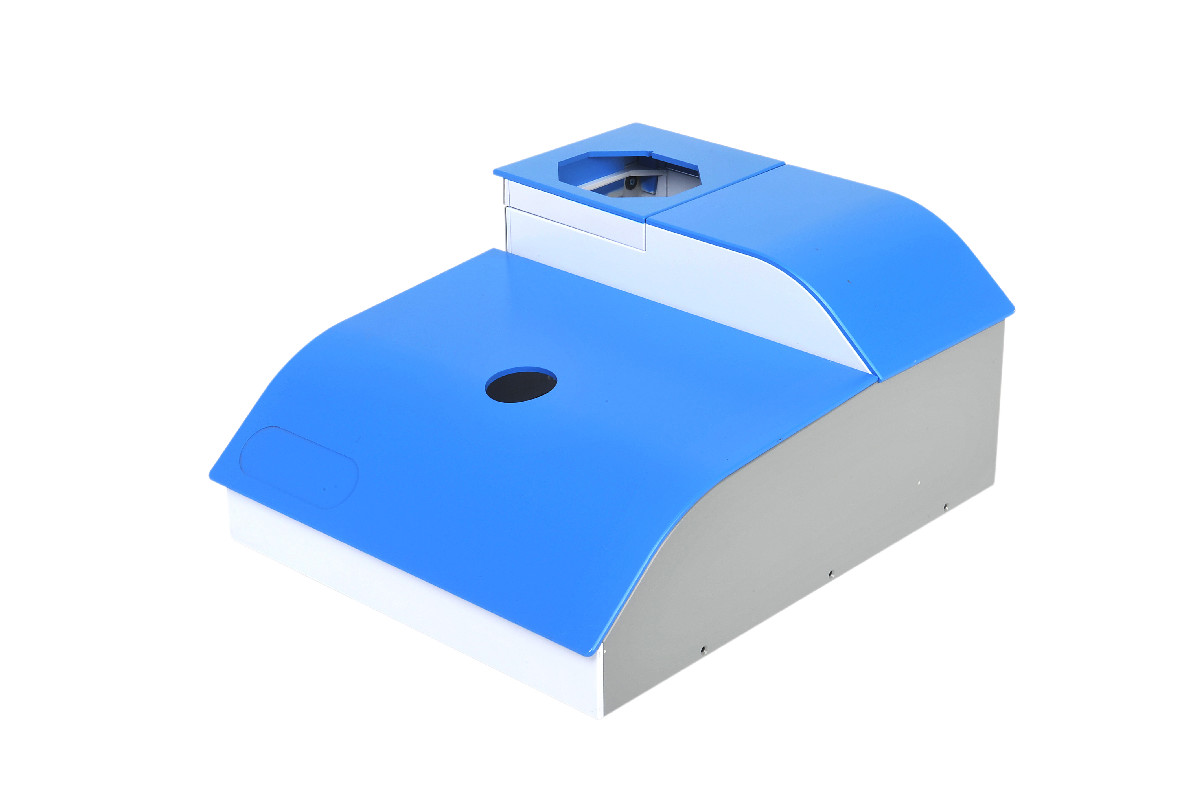
Instrument and test housings we have built.
Why engineers choose Toolless
Trusted for enclosures since 1998.
Startups, OEMs and medical device makers across the USA, Canada and Australia come back for the next run. Read more testimonials.
- Years without molds
- 25+
- Certified quality system
- ISO 9001
- Units per order
- 1–10,000
- Sq ft in Everett, WA
- 13,000
“We initially considered injection molding, but with our volume the cost of tooling would never be recovered. It took only a week to settle on a design and get a prototype, and we were in production a week later.”
“I spent 9 years as a quality engineer at Rockwell and tend to be a perfectionist. Your professionalism and diligence in helping evolve our cover is greatly appreciated.”
“After a number of orders, Toolless have become our preferred supplier. Even though we are located in Australia, all deliveries have been fast and hassle free.”
Start your enclosure
Send the board. We’ll send the box.
Quotes come from an engineer, not a form robot. Attach CAD, photos or a sketch and we reply within one business day.