Two numbers pick the process for an electronics housing: how many units the product will sell over its life, and how likely the design is to change before it gets there. Print one to five units for a fit check. Fabricate from sheet from the first prototype into the thousands, especially while the design is still moving. Mold when the design is frozen and the lifetime volume pays for the tool.
This post sets out the volume bands, the comparison figures we publish for an ABS housing of about 8 × 5 × 2 in, what each process cannot do, and the signals that it is time to move from one to the next.
The process by quantity
The table assumes a typical electronics housing in ABS: a board, a few connectors, a display or some indicators. Size and complexity move the break points, but they rarely change the order.
| Lifetime units | 3D printing | Fabricated sheet | Injection molding |
|---|---|---|---|
| 1 to 5 | Best for a fit check: overnight, no tool | Prototype in 3 to 21 working days; setup charge on one or two units; the prototype is the first article | Not viable: the tool comes before the first part |
| 10 to 100 | Every unit is another print, with its own variation | Blanket orders start at 10 units, with setup spread across releases | Tool cost dominates the unit price |
| 100 to 1,000 | Not reasonable at production cost or lead time | The most economical range starts here | Expensive and difficult below about 1,000 |
| 1,000 to 10,000 | Not used | Still economical, and the safer choice while the design changes | Competitive once the design is stable |
| Above 10,000 | Not used | Past the range where it is most economical | Usually the lowest cost per part |
Where 3D printing earns its place
A printer is the fastest way to answer a physical question. Does the board sit on its standoffs, does the USB plug clear the wall, does the housing feel right in the hand? Depending on size, a part prints overnight and is on your bench in the morning. On our printing comparison, a printed equivalent of the 8 × 5 × 2 in housing runs $300 to $950 depending on complexity.
The limits appear when you need more than one, or need the one to be the product. Most printed parts are weaker across their layers than along them, and dimensions and surface vary from print to print. Each further unit is another print at the same cost and time. A printed prototype is also not a first article for anything: the part you approved was made by a different process from the one that will build production.
Use the printer for quick fit checks of the board and connectors, then stop iterating there.
Where fabricated sheet housings fit
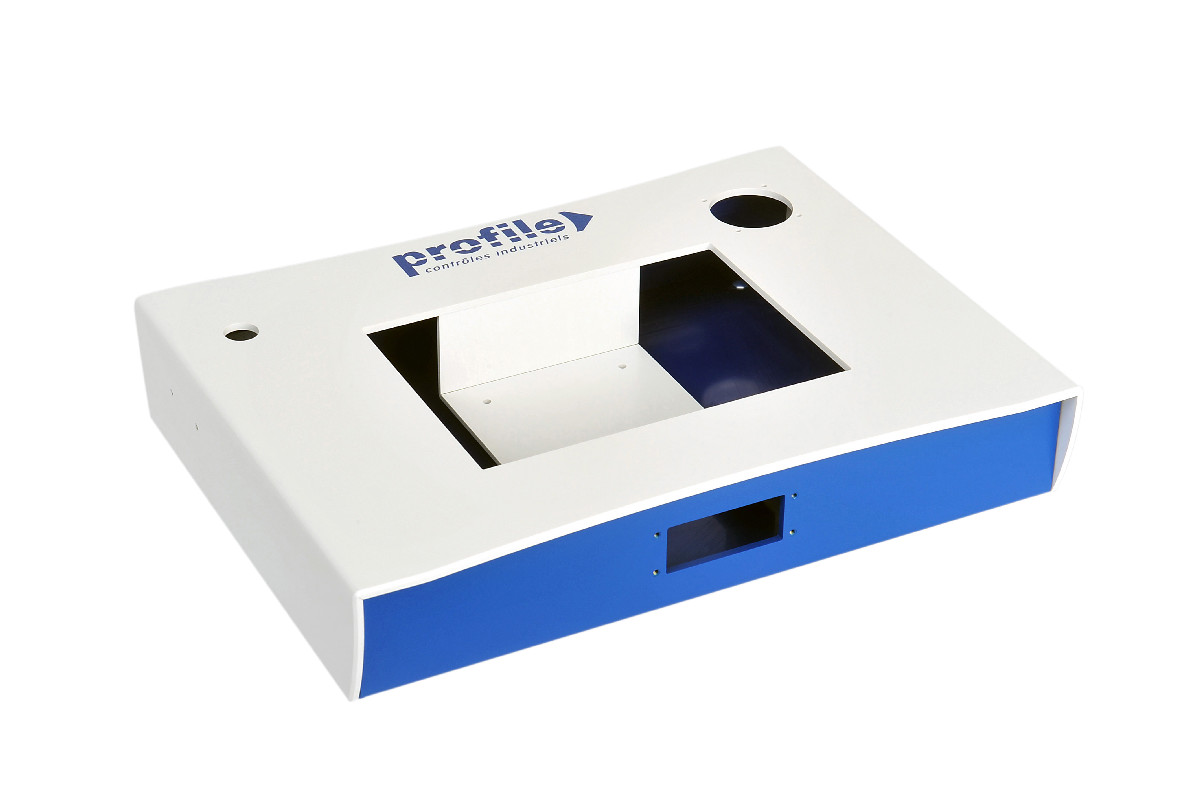
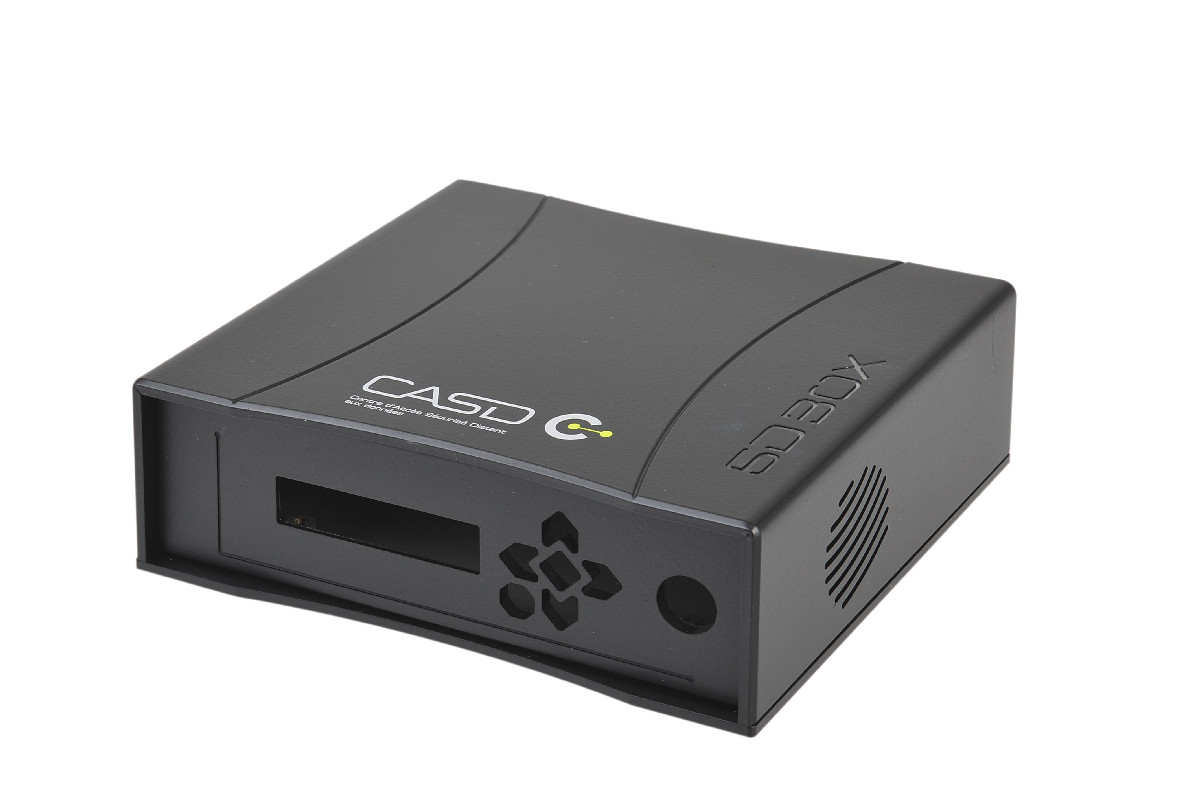
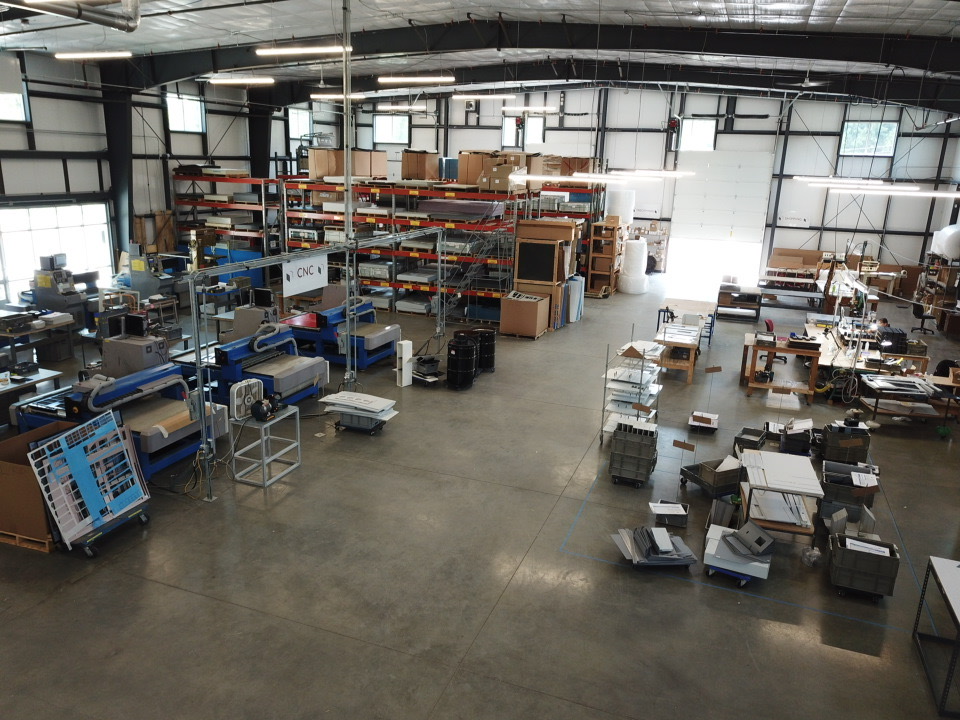
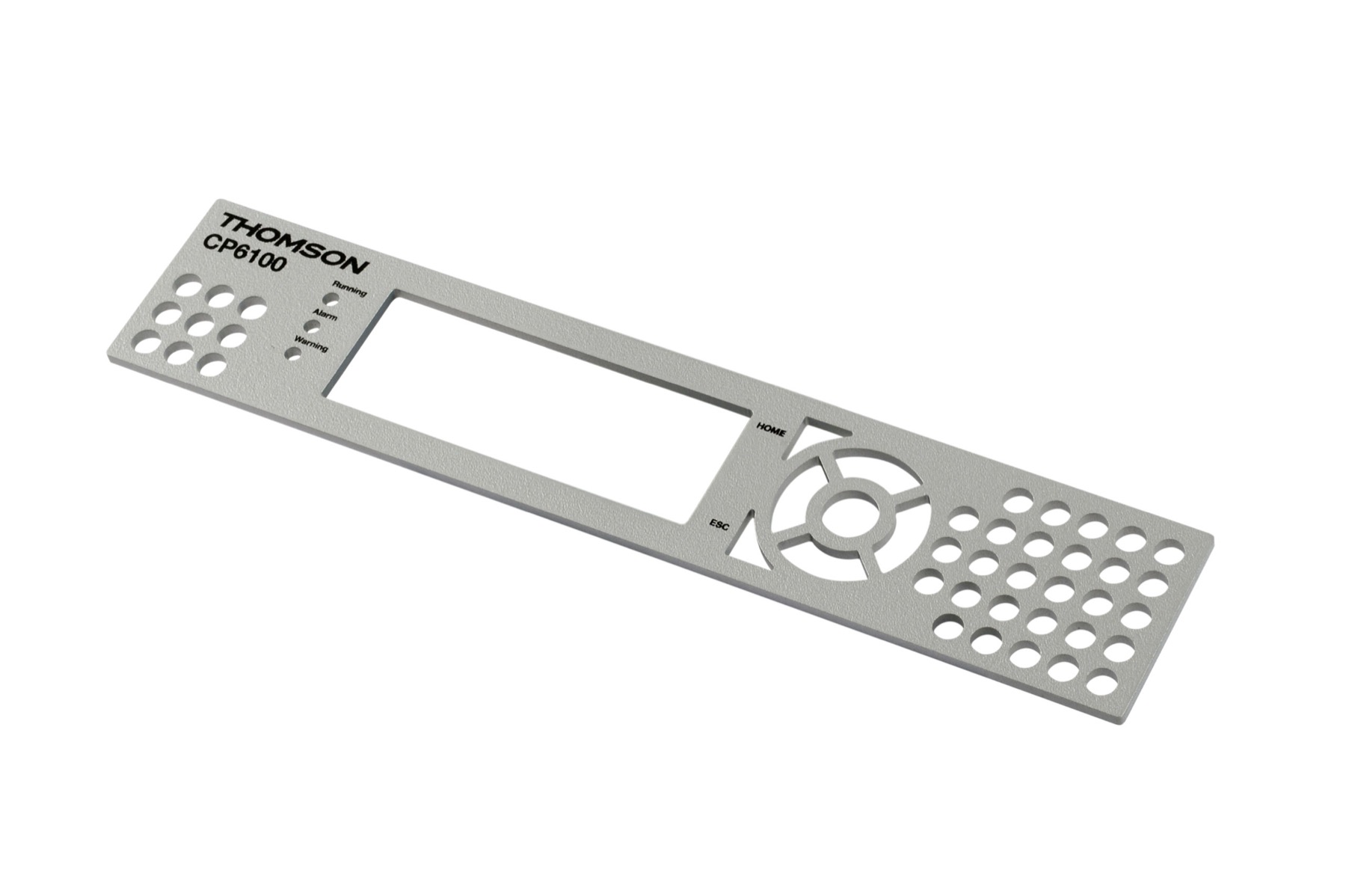
A fabricated housing starts as flat, pre-colored sheet. A CNC router machines every opening, vent and recess into the flat pattern, a saw scores V-grooves for the bends, a thermal bender folds the walls, and the pieces are solvent bonded into one rigid shell. The only things built for your design are a CAD model and a CNC program, so there is no tool to pay for or wait for.
That is where the numbers on our no-mold process page come from: a prototype of the example housing at around $500, in 3 to 21 working days depending on complexity, and production three weeks after PO. The prototype comes from the production program, so it is your first article, and a moved connector or a new boss is a program edit. The bonded housing is as strong as an injection-molded part in similar material.
The limits are real. Joint lines are visible, and we place them rather than hide them. Bends run the full width of a panel, so a box is built from bent sections plus bonded pieces instead of being folded up on four sides like sheet metal. Curves are rolled in one direction only, and the longest bend is 40 in. If the industrial design depends on compound curves, deep draws or molded-in snap fits, sheet fabrication is the wrong process for the production part.
When injection molding earns its tool
Molding puts the investment up front. For a housing the size of our example, the mold runs into thousands of dollars and takes a minimum of eight weeks to cut and standardize before the first part. In return you get the lowest piece price at volume and shapes sheet cannot make: drafted, flowing forms, ribs, snap fits and bosses molded in place, texture in the tool.
The cost is commitment. A mold is fixed to one geometry the day it is cut. A change that adds plastic to the part removes steel from the tool and is usually manageable; a change that removes plastic, such as a new or moved cutout, means adding steel by welding or a new insert. Either way the tool comes out of production for rework, and a product whose board is still being revised pays that again with each revision. The molding comparison lays the two cost structures side by side.
Plan for one more step. A design drawn for sheet fabrication does not transfer to a mold: molded parts need draft, even wall thickness and different boss and joint details. Moving to molding is a redesign, and it is cheapest to do once, after the design has settled. Vacuum and pressure forming follow the same logic with a less expensive tool, and suit larger shells and covers at runs above about a thousand.
Three questions that move the crossover
- How settled is the design? If a board revision, a new display or a customer request is likely within a year, each change is a program edit in sheet and a mold modification in steel. Many of our customers build runs of 500, revise, and build 500 more several times before they release tooling.
- What is the lifetime volume, not the first order? A tool amortizes over every unit the product will ever sell. Ten thousand units of a design that will not change is a molding program. A few hundred units a year of a design that changes every year is not.
- What does the calendar cost? Eight weeks for a mold against 3 to 21 working days for a fabricated prototype matters most when a trade show, a pilot customer or a funding milestone is waiting.
Open Flight Solutions faced the volume question with the FlightBox ADS-B receiver case:
“We initially considered injection molding, but with our volume the cost of tooling would never be recovered. Toolless converted our prototype model, built for 3D printing, into an incredibly strong and attractive design at a price that fit our budget. It took only a week to settle on a design and get a prototype, and we were in production a week later.”
Steve Sokol, Founder, Open Flight Solutions
A path many electronics products follow
The three processes work better as stages than as rivals. This sequence keeps money out of tooling until the product has earned it:
- Print a quick fit check of the board, connectors and display while the layout is still moving.
- Send the model for a fabricated prototype. You approve a 3D model before anything is cut, and the part that comes back is the production article.
- Build the first production on a blanket order, released on your schedule so stock does not sit on your shelf.
- Fold field feedback and board revisions into the next release as program edits.
- When the design stops changing and the forecast justifies a tool, redesign for molding. For a low-volume industrial or instrument product that point may never come, and the fabricated housing stays in production.
If you are not sure which band your product sits in, send the model and your expected annual quantity through our CAD upload page. An engineer replies within one business day and will say so if a mold is the better buy.