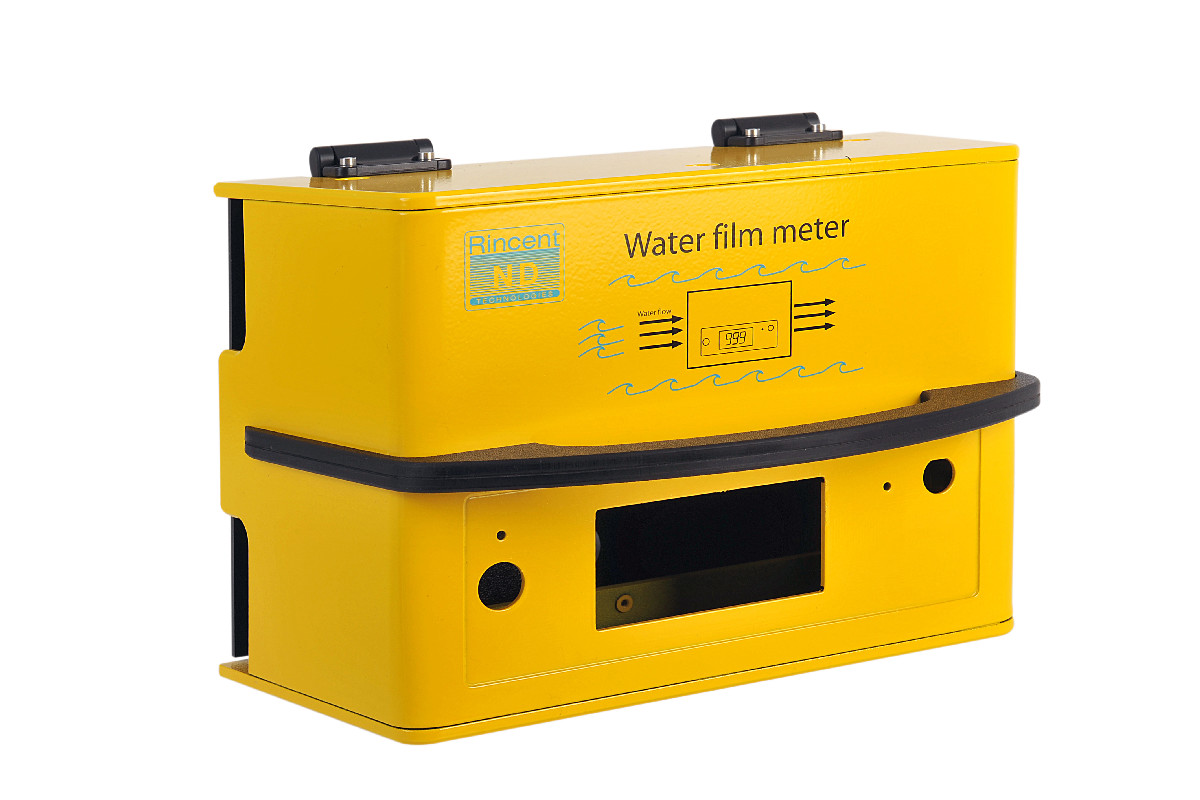
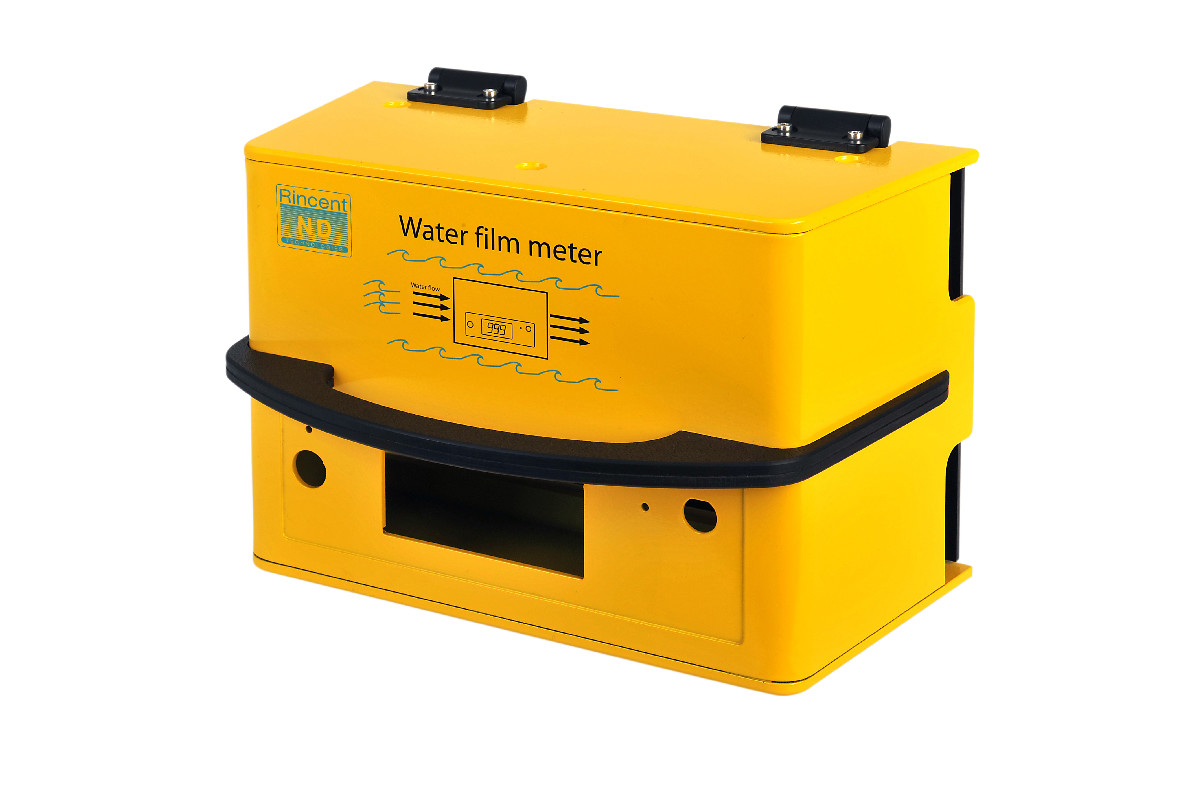
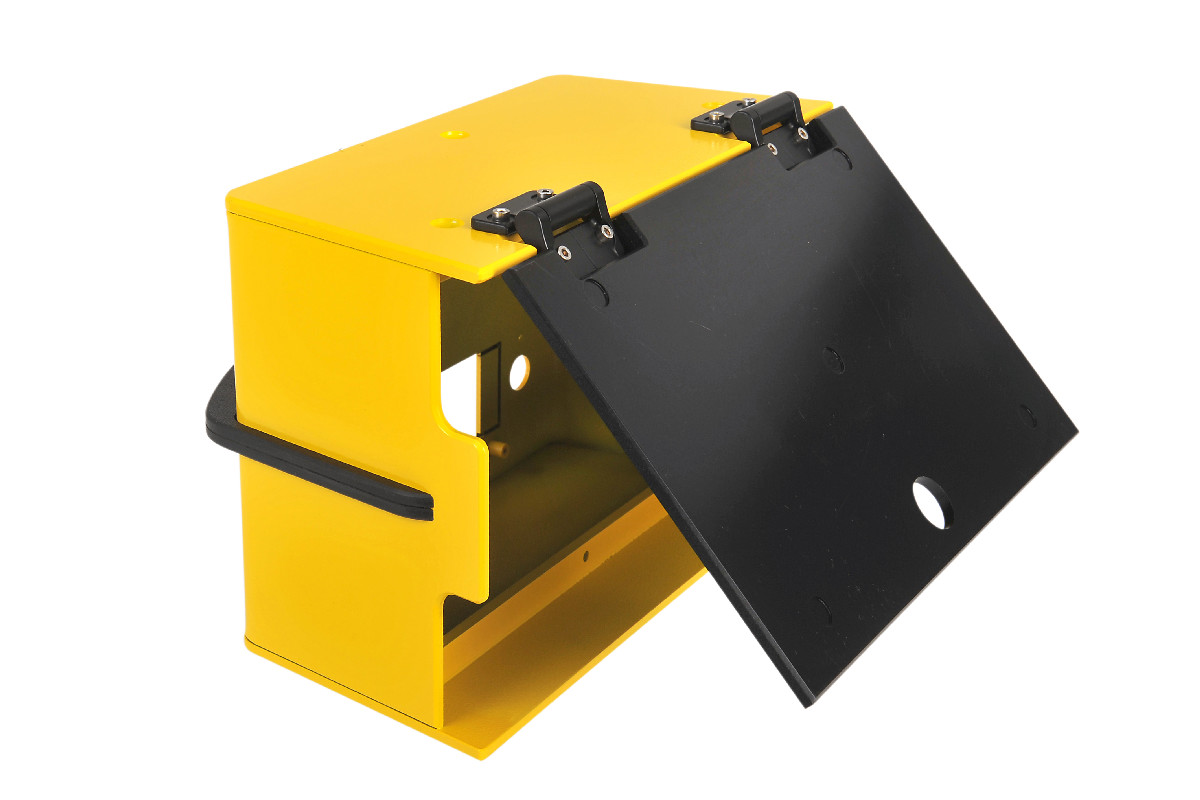
The material for a battery enclosure follows from three things: how much energy the pack stores, how much load the housing carries, and how much heat has to leave the cells. Large packs and packs that carry structural loads belong in aluminum or steel. Small and portable packs, such as those inside a handheld instrument, a backup module or a charger, are usually better in plastic.
We fabricate plastic enclosures only, so this post is written from that side of the fence, with the cases where metal is the better choice stated plainly. The second half compares the plastics we stock for battery work.
What a battery enclosure has to do
- Hold the cells against shock, vibration and the weight of the pack itself.
- Move heat away from the cells during charge and discharge, or keep them warm enough to charge in the cold.
- Insulate terminals, bus bars and wiring from the user and from each other.
- Limit fire spread to the degree the product standard demands.
- Keep out water, dust and fingers.
- Survive drops and handling, and carry the required markings.
Metals and plastics trade these off in opposite directions, so the decision comes down to which two or three of them dominate your pack.
Where aluminum and steel are the right answer
Heat is the first reason. Aluminum alloys conduct heat roughly a thousand times better than ABS, so an aluminum case or base plate can pull heat out of the cells and spread it to the outside. Packs with high charge or discharge rates, or with cells bonded to a cold plate, need that path, and a plastic wall cannot supply it.
Strength is the second. Where the pack is part of a vehicle frame, a cart chassis or a floor-standing cabinet, metal carries the load at a wall thickness plastic cannot match. Fire is the third: steel keeps its strength at temperatures where aluminum softens and thermoplastics have melted, one reason large stationary cabinets are usually steel. Metal also shields the power electronics by default.
The costs are real. A metal case is a conductor, so every terminal, bus bar and wire needs insulation from it, often with an added liner. It is heavier. It blocks the radio of a wireless battery management system, which then needs an external antenna. And aluminum with steel fasteners invites galvanic corrosion in damp locations.
Where plastic is the better choice
For a small pack the requirements turn around. An insulating case cannot short a terminal to the housing, so the liner disappears. Bluetooth and cellular signals pass through the wall. Nothing corrodes. The sheet arrives pre-colored, and polarity marks and warnings are printed straight onto it. Weight drops too, as the figures for one square meter of typical enclosure wall show.
| Wall | Density | Mass per square meter | Thermal conductivity, approx. |
|---|---|---|---|
| 3 mm ABS | 1.05 g/cm³ | 3.2 kg | 0.2 W/m·K |
| 2 mm aluminum | 2.70 g/cm³ | 5.4 kg | 140 to 200 W/m·K, by alloy |
| 1.2 mm carbon steel | 7.85 g/cm³ | 9.4 kg | about 50 W/m·K |
At low volume, the tooling argument for plastic holds only against processes that need tooling. A die-cast or molded housing needs a tool, and a mold takes at least 8 weeks to make. Our process has none, and a prototype of an ABS enclosure about 8 × 5 × 2 in costs around $500. Brake-formed sheet metal needs no tooling either, so against a sheet metal shop the case for plastic rests on insulation, weight, radio and appearance rather than price. Our comparison with molding has the full figures.
Plastic has limits that matter for batteries. It cannot spread heat, so the cells must run cool enough on their own or vent through slots of 2 mm minimum width. Thermoplastics creep under sustained load, so a heavy pack should rest on the floor of the housing or on ribs, with screws in heat-staked brass inserts and no solvent joint loaded in tension. For heavy packs we step up to 6 or 8 mm sheet and add corner doublers and ribs, as our custom battery enclosures page describes.
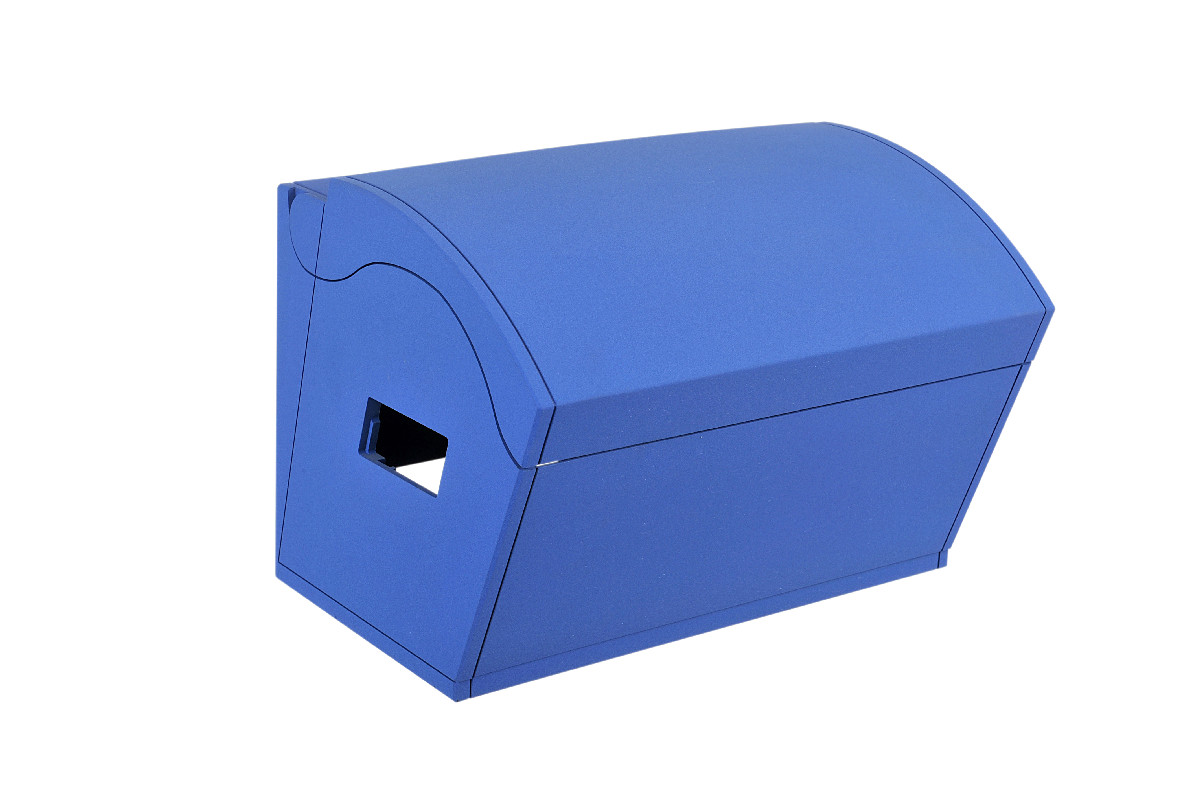
Choosing among the plastics
| Material | UL 94 | Strengths | Cautions | Typical battery use |
|---|---|---|---|---|
| General-purpose ABS (ALLEN 552/LXS) | HB | High impact strength, lowest cost, 3 to 8 mm, four stock colors | Not flame rated | Chargers, docks and low-energy packs where V-0 is not required |
| Royalite FR ABS | V-0 | Flame rating with the processing and look of ABS | Stocked in 3 mm, black or white | Housings around cells and charge circuits |
| Boltaron 4335 | V-0 | Impact, abrasion and chemical resistance, rigidity; priced in line with FR ABS | An acrylic/PVC alloy, so it contains chlorine | V-0 housings that see rough handling or cleaning chemicals |
| Polycarbonate TUFFAK GP | HB | Outstanding impact strength, high-temperature resistance, UV-stabilized, transparent | Does not solvent bond; prone to solvent stress cracking | Outdoor or high-impact packs; windows behind a bezel |
| Acrylic OPTIX | See data sheet | Crystal clear, bonds well | Far less impact resistant than polycarbonate | State-of-charge windows bonded from the rear |
For battery enclosures most of our customers specify Royalite or Boltaron. General-purpose ABS suits chargers and low-power devices, and it is the material in about 80 percent of our production overall. Where you need both V-0 and impact strength, the usual construction is a V-0 body with a polycarbonate window held in a bezel, because polycarbonate cannot be bonded in. Data sheets for every sheet are on our materials page.
Two checks before you commit. If your specification calls for halogen-free materials, raise it early: Boltaron 4335 contains chlorine, and the flame retardant in any FR grade has to be confirmed from its data sheet. If electrolyte leakage is in your failure analysis, test the actual electrolyte on a sample of the sheet. Lithium-ion electrolytes are organic carbonate solvents, and polycarbonate in particular is sensitive to solvents.
What a V-0 rating does and does not tell you
UL 94 V-0 is a small-flame test on a vertical strip of material. The sample gets two 10-second applications of a small burner flame; to pass, it must stop flaming within 10 seconds each time, and nothing that drips may ignite cotton below it. The rating is listed at a thickness, so confirm that the data sheet covers the gauge you are using.
It is a material property, not a statement about the pack. A V-0 housing will not contain a lithium-ion cell in thermal runaway; containment at that level comes from cell spacing, venting and barriers, judged by the product standard the device must pass. Our guide to battery enclosure safety standards maps which standard applies to which product. You certify the device; we build the housing to your design in the material you specify.
Combining metal and plastic
Many good packs use both. A plastic housing can enclose a metal cell carrier or heat spreader from your metal supplier, giving the thermal path of metal with an outside that is insulating, light and printable. Large housings can be built from plastic panels over a metal frame. A metal pack can take plastic end caps, terminal covers or a display bezel. In each case we make the plastic parts and design them around your metal ones from the CAD model.
Send the cell layout, the target standard and the quantity through our request for quote form, and an engineer will confirm the material during the review. Quotes go out within 48 hours.