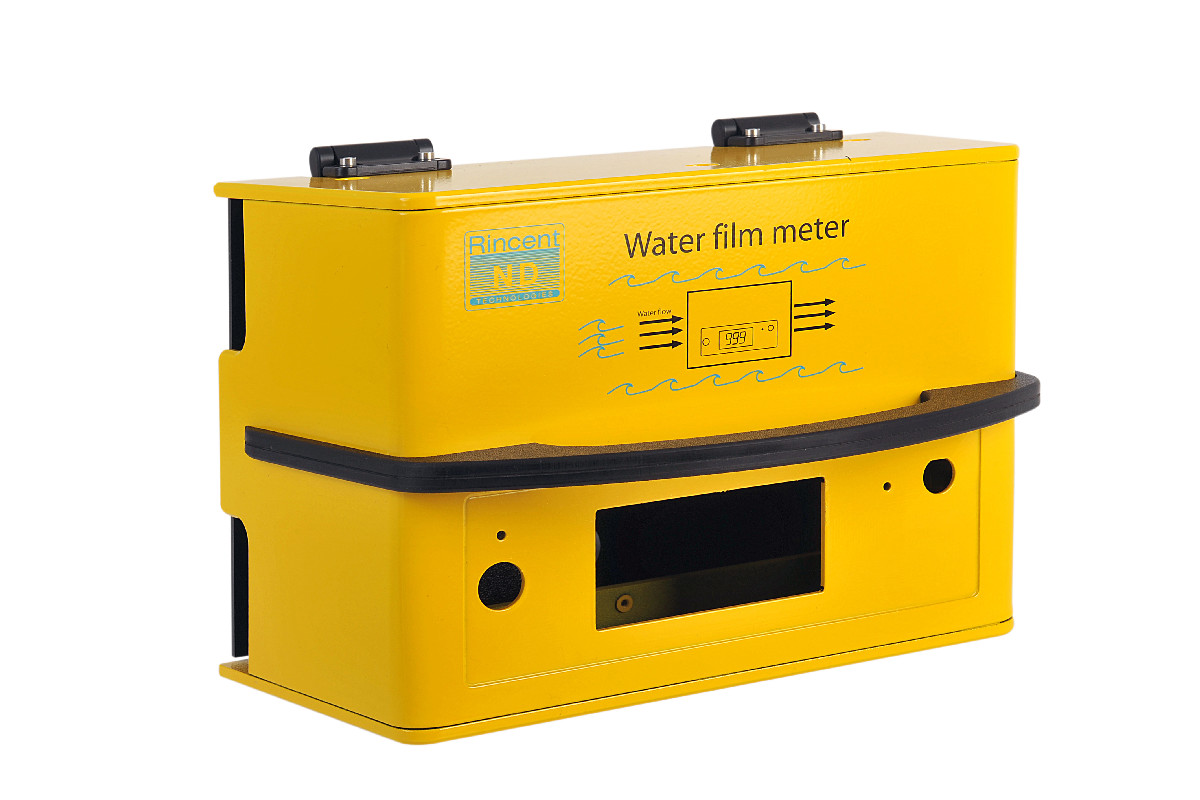
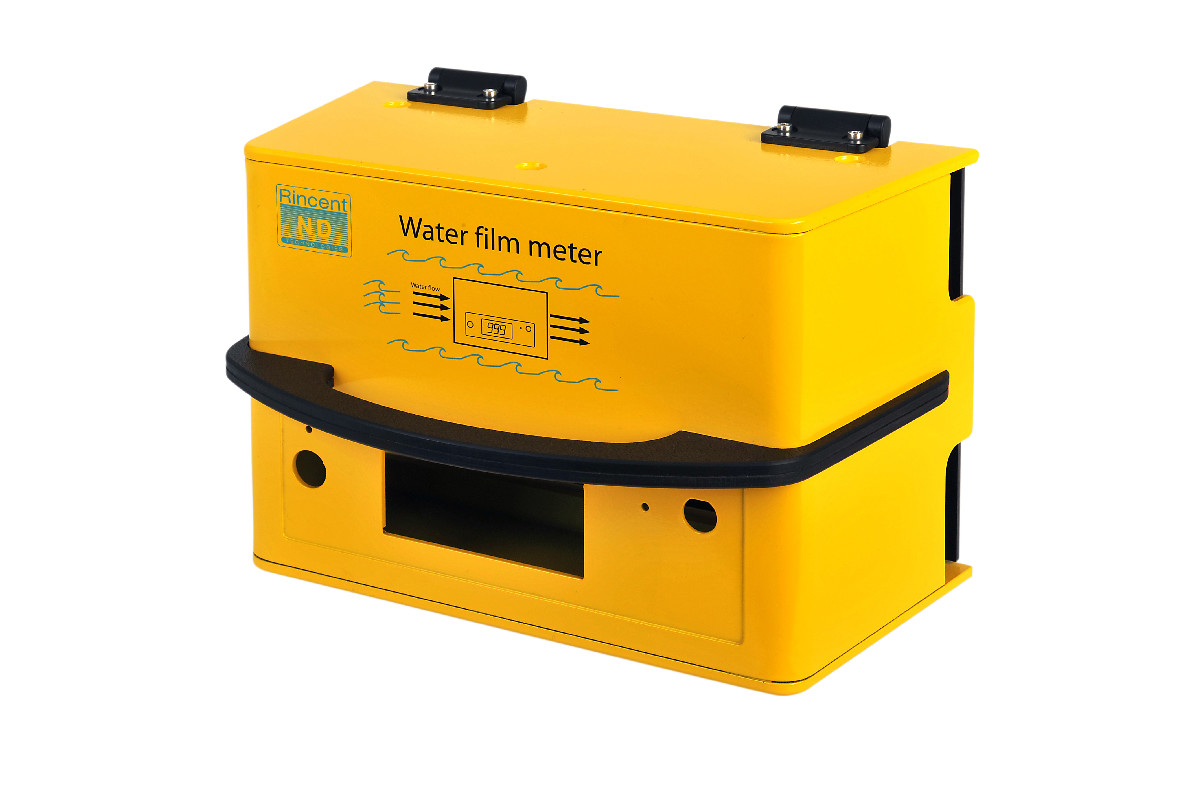
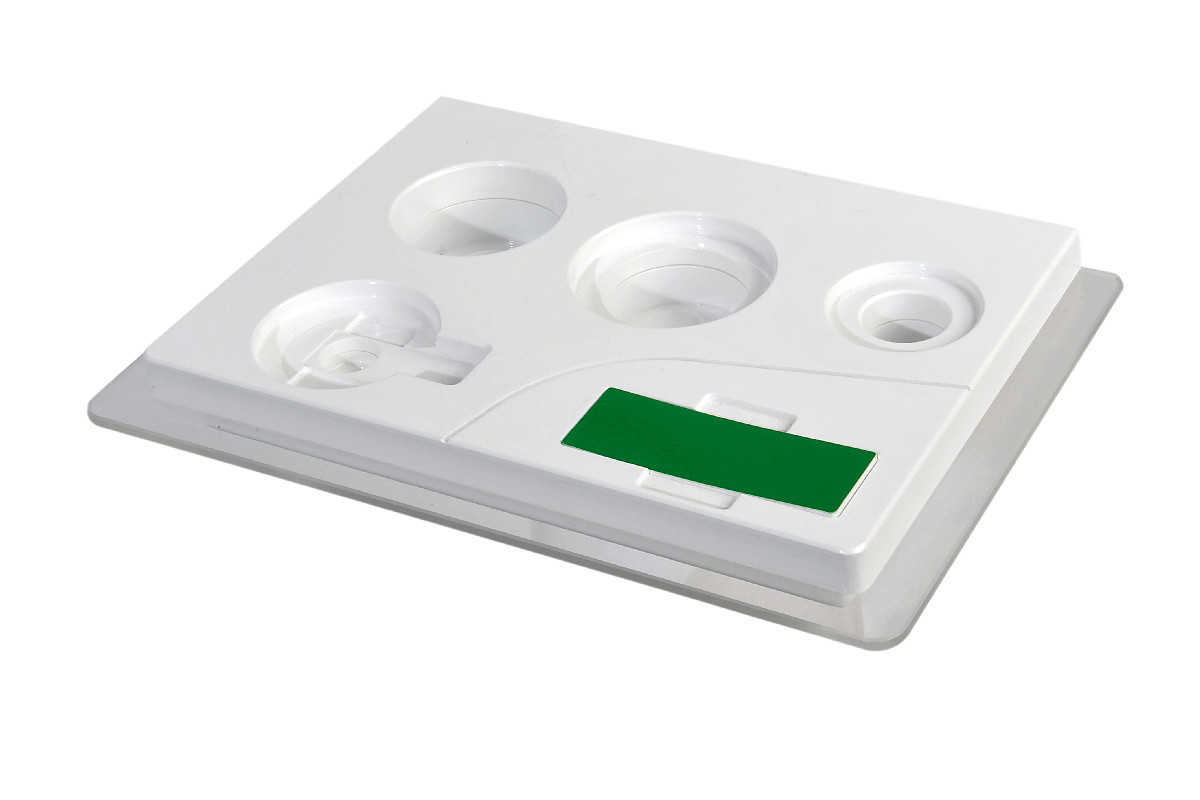
Battery products are moving in a handful of directions that change what the enclosure has to do: packs that swap between products, charge levels shown on the housing, battery doors that users open themselves, labels that last as long as the product, pack sizes built as families, and housings that can be repaired. Two of these are now written into regulation. This post takes them one at a time, with the housing details that make each one work.
The examples assume a fabricated plastic housing, which is how we build custom battery enclosures, but most of the notes apply to any process.
Swappable packs
Cordless power tools set the pattern: one pack fits every tool in a range and changes in seconds. The same idea now shows up in portable instruments, carts and field equipment, where a spare pack on the charger means no downtime. A swappable pack has two housings, the pack’s own case and the bay that receives it, and they have to be designed together.
- Let rails do the aligning. Guide the pack on rails or in a slot with lead-in chamfers, and use sprung or floating contacts to absorb what is left. Set the rail clearance allowing ±0.2 mm on each machined edge.
- Key the shape. Different rail widths or a one-sided tab make the pack go in one way only, for almost no added cost in a machined part.
- Buy the latch. A slide-in part with no fastener needs a frame or an undercut, and a good snap is hard to make in bonded sheet. A spring latch from a hardware catalog gives a positive stop and a click the user can feel.
- Put the strength in the pack. The pack gets dropped every time it is handled; the bay does not. Spend thicker sheet and corner doublers on the pack and keep the bay light.
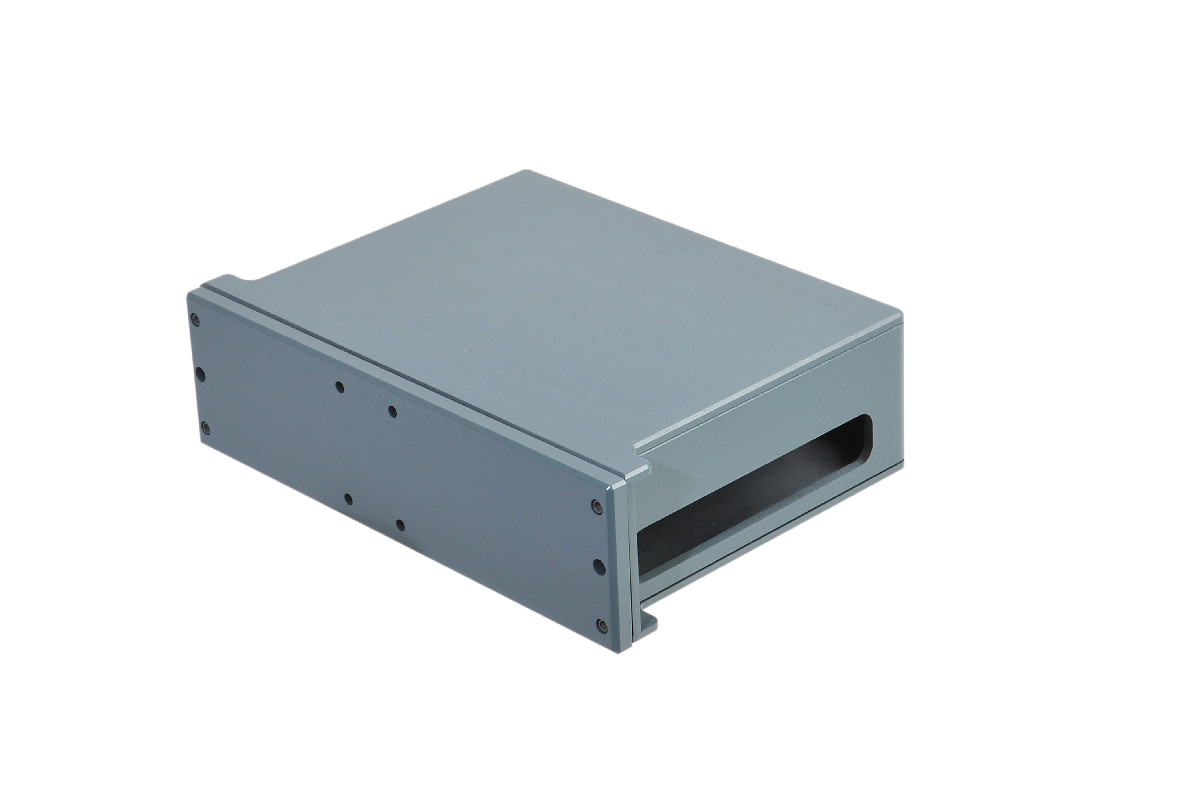
Charge level readable from outside
A charge check should not need a cable or an app. The usual answer is a row of LEDs and a test button on the pack, or a small display on the product. Light pipes carry the light from LEDs on the board to the housing surface, so the LEDs stay on the PCB where they are cheap to place. Space neighboring pipes apart, or separate them with an opaque wall, so one lit LED does not bleed into the next.
Displays sit behind a window: acrylic bonded into a recess from the rear, or polycarbonate held by a bezel, because polycarbonate does not solvent bond. Print the scale or icons beside each indicator so its meaning does not depend on a manual. If the pack reports its state over Bluetooth instead, plastic helps, since it passes the radio signal a metal case would block; keep any EMI coating clear of the antenna area.
Battery doors users can open safely
Two rules are pushing the battery door toward the user. Under the EU Batteries Regulation, from February 2027 portable batteries built into products must be removable and replaceable by the end user with commercially available tools, with exceptions for some product categories. In the US, Reese’s Law made UL 4200A mandatory for consumer products containing button or coin cells: the compartment must need a tool, or two independent and simultaneous movements, to open.
The housing details are well known; what has changed is how many products need them.
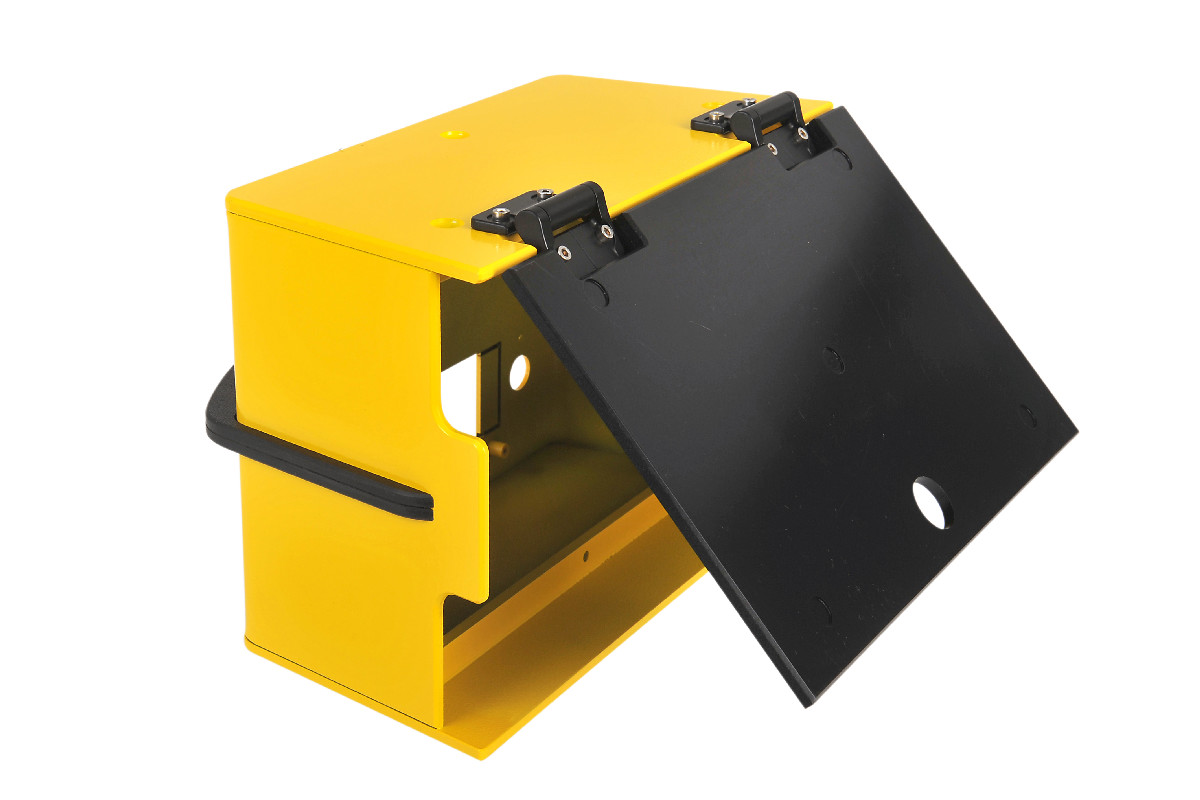
- A door that opens throughout the product’s life should close onto heat-staked brass inserts, not self-tapping bosses, and a captive screw cannot get lost.
- Hinges keep the door attached to the product. For occasional access, a simple door held by tape or hook-and-loop is enough; for a pack changed every shift, use a frame that holds the cells firmly and a turn latch.
- Print the polarity and the battery type inside the bay, where the user looks while changing them.
Safety labels that last as long as the product
Battery markings are often a sticker applied at the end of the line. The EU regulation is phasing in more label content and a QR code, and a warning on a door that users open themselves has to stay legible through years of handling.
The answer is to make the marking part of the housing. We print directly onto the sheet with full-color digital printing, including white ink on dark panels and raised prints that can be felt, and the ink adheres better than silk screen. For text that must survive abrasion, engraving is the alternative. Place the artwork in the CAD model so every legend lines up with the opening it describes, and leave a recess for a nameplate if serial numbers or other per-unit data must go on the part.
Pack families instead of single packs
A common pattern is one battery offered in two or three capacities: the same cells in more parallel groups, and the same housing in more lengths. With a mold, each size means another tool. In fabricated sheet, a length change is a program variant.
Design the family so that only the bent wrap changes length, while the end panels, the door, the connector panel and the printed labels stay identical. One set of drawings then covers the family, each size can be ordered in the quantities it sells, and the longest variant only has to stay within the 40-inch maximum bend length. Our blanket order program schedules releases of 10 to 10,000 units against your build plan.
Bonded where it stays shut, fastened where it opens
Serviceability is the last shift and the natural partner of the EU rule above: a product whose battery can be replaced should not have to be broken open to reach it. Solvent bonding fuses the joints into one wall, which is what makes the housing strong, but it also makes them permanent. Decide early which faces never need to open and bond those; put everything a technician must reach, such as the protection board, the fuse or the cell module, behind a fastened panel on brass inserts.
Because every part is cut from a stored CNC program, a cracked door or a damaged panel can be ordered again years later as a single part, without a mold to keep in storage. One or two pieces carry a setup charge.
If your next battery product is heading in one of these directions, send the pack and the bay as a 3D model and we will return a housing design for your approval. Send your CAD files and the quote follows within 48 hours.