The enclosure for a research device is mostly decided before anyone opens CAD. Eight answers fix the material, the wall gauge, the openings and the schedule: who uses it, what cleans it, how much heat it makes, which flame class it needs, what must be seen through it, how many you need, which regulatory path it is on and when you need it. Answer them first and the model starts from the right material and layout.
The table is the short version. Each question is explained below with what it changes in the design.
| Question | What the answer changes |
|---|---|
| 1. Who uses it, and where | Gauge, reinforcement, fasteners, printed instructions |
| 2. What cleans it | Material, seam placement, labels |
| 3. How much heat it makes | Vented or sealed, fan, material heat limit |
| 4. Which flame class it needs | HB or V-0 sheet, window mounting |
| 5. What must be seen through it | Acrylic or polycarbonate windows, light pipes, clear panels |
| 6. How many, over what period | Standard or custom body, color, ordering method |
| 7. Which regulatory path | When to freeze the design, labeling, revision records |
| 8. When it is needed | Number of prototypes, what to fix first |
1. Who uses it, and where it lives
A bench instrument run by trained staff, a unit wheeled between clinic rooms and a device sent home with a patient need three different housings. On the bench, reachable controls and rear connectors matter most. In a clinic the housing sits near patients, is cleaned between them and gets knocked by carts. At home the user is untrained and the device is dropped and shipped; a device headed for that market will be assessed against IEC 60601-1-11, the collateral standard for the home healthcare environment.
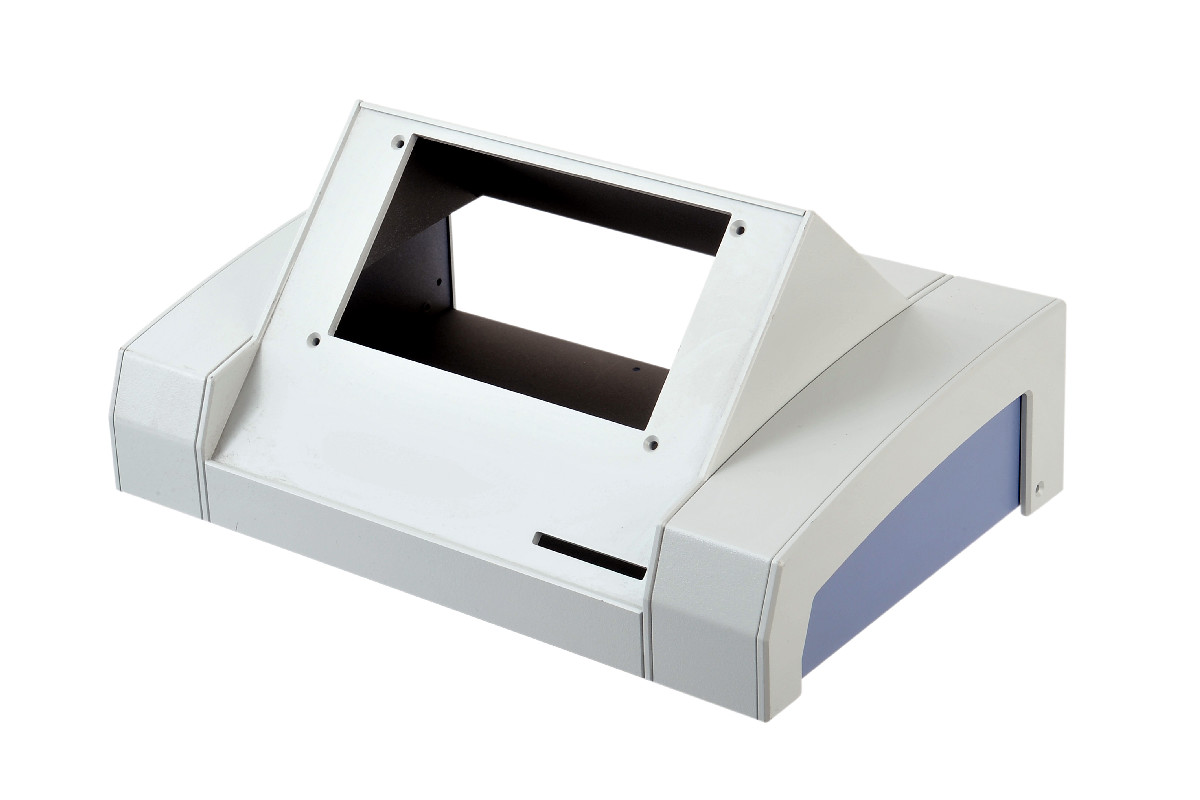
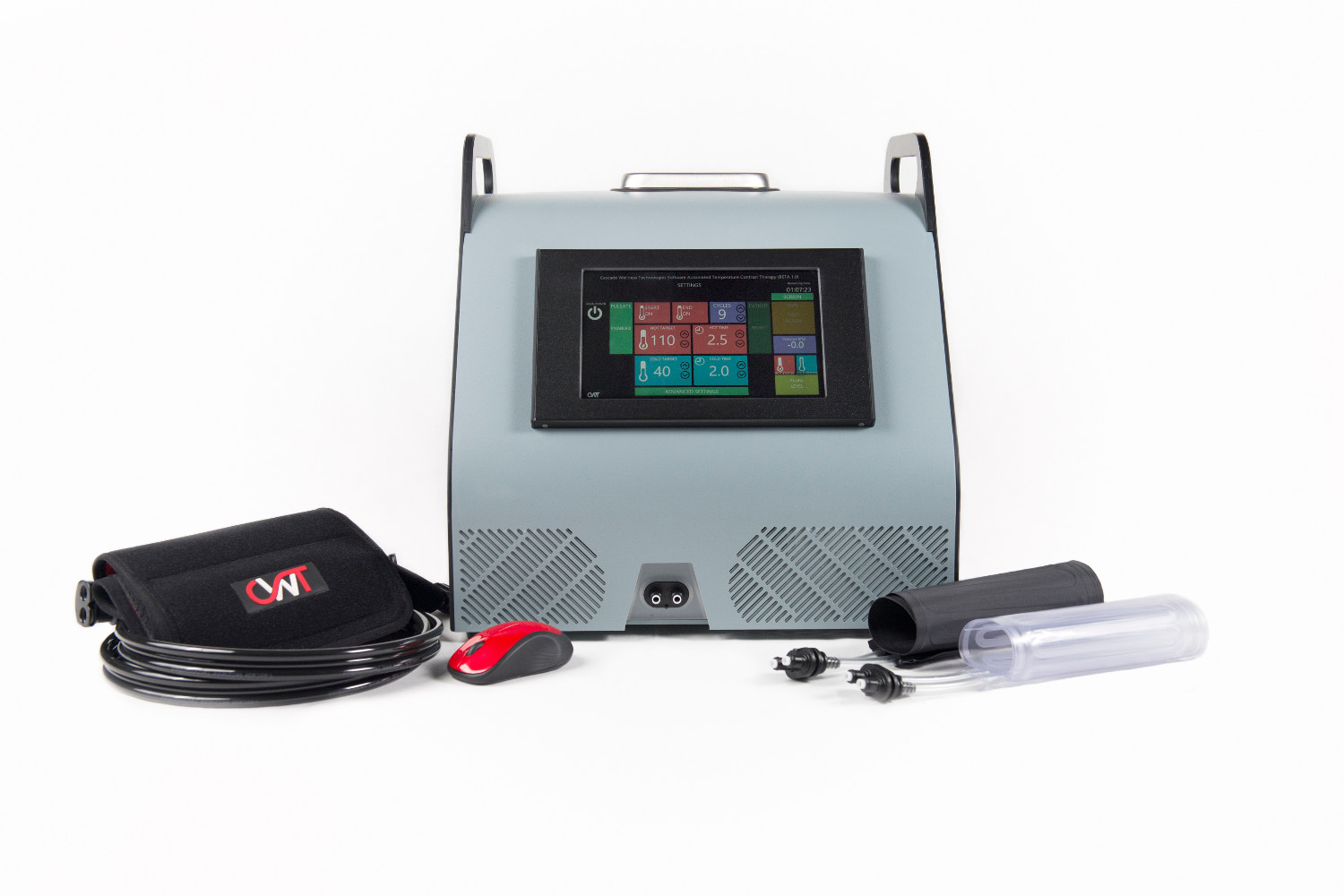
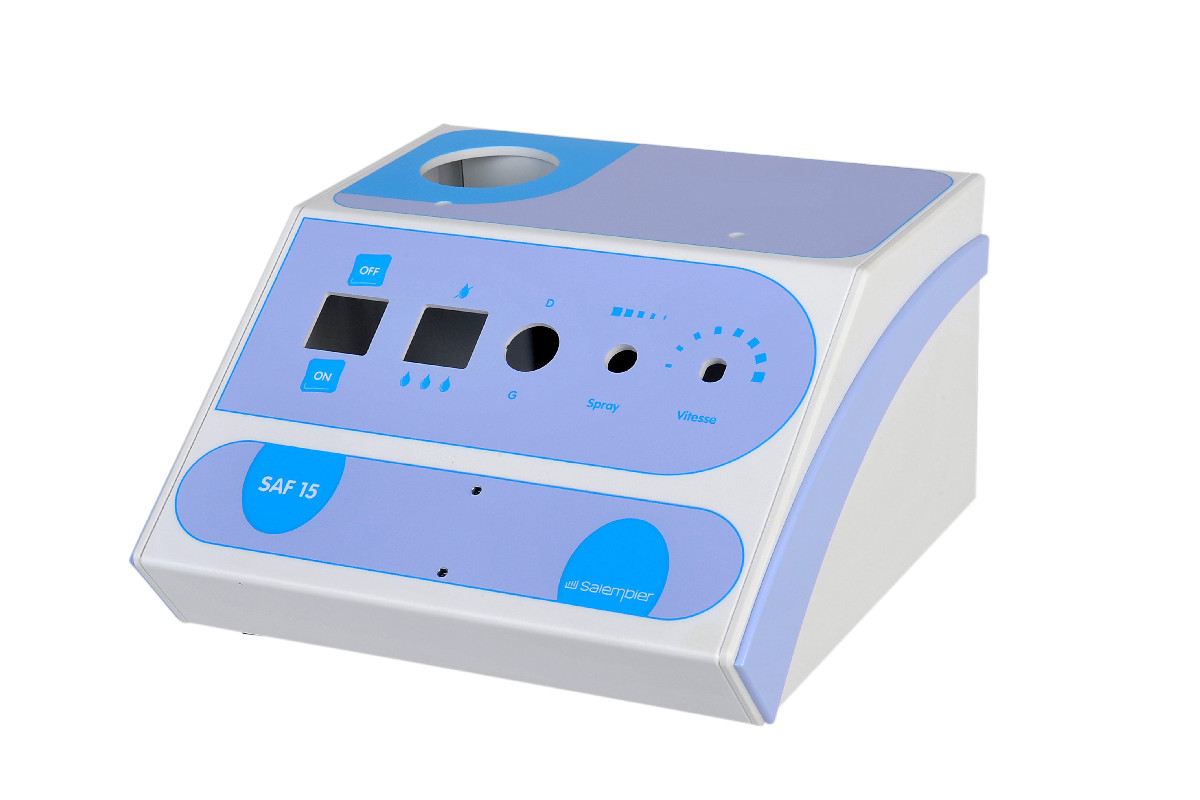
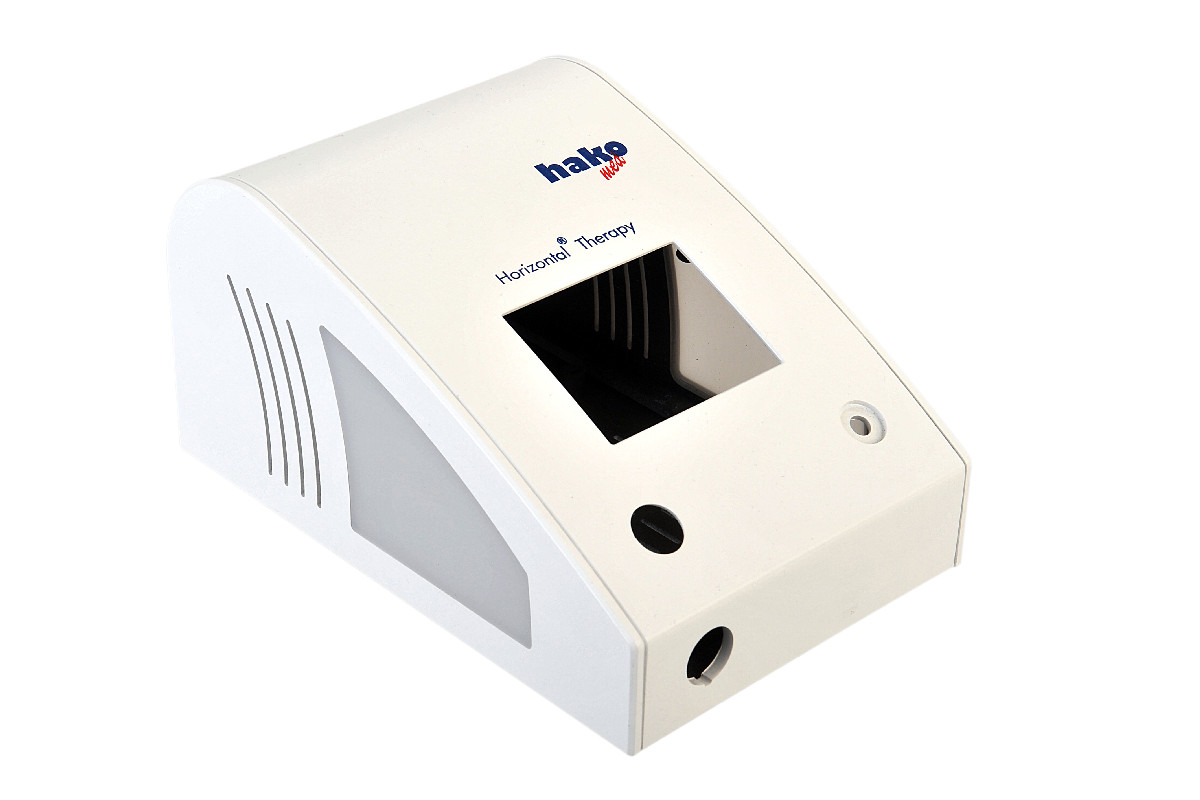
What it changes: wall gauge (3 mm for most housings, 4 to 8 mm where a span must be stiff or survive drops), corner doublers and ribs for portable units, fasteners, and for home use, setup instructions and connector labels printed on the housing itself. If only a technician should open it, use tool-required or security screws. Our laboratory equipment enclosures page shows the bench and clinical housings we build.
2. What it will be cleaned with
Name the actual product, not “disinfectant”. Alcohol wipes, quaternary ammonium wipes, hydrogen peroxide and bleach solutions each treat plastics differently. Alcohol can craze stressed acrylic, polycarbonate is weak against strong alkalis and some solvents, and ABS handles most water-based cleaners. Boltaron 4335 lists chemical resistance among its strengths. Test the real wipe on a bent and bonded sample, not a flat offcut.
What it changes: the material; where joint lines fall (we place them where a wipe reaches, with a 0.5 mm chamfer on the tongue edge that turns the seam into a deliberate cosmetic line); and labels, which should be printed on the part so there is no edge to lift.
3. How much heat it makes
Estimate total power and find the hot parts: the power supply, a heater, a light source, the processor. Plastic conducts heat poorly, and a metal enclosure would spread heat better, so beyond a modest load a plastic housing needs vents or a fan. Vent slots are machined at 2 mm minimum width with cross supports left in, and a fan needs inlet area matched to outlet area.
What it changes: sealed or vented; where the vents go (on faces that are not wiped or splashed, and not where fluid can run in); and whether a heat-sensitive sensor needs its own compartment away from the supply. If internal temperatures approach the limit of ABS, polycarbonate tolerates more heat.
4. Which flame class it needs
General-purpose ABS is UL 94 HB. When the housing is the fire enclosure for mains circuits or a large battery, the safety standard the device is assessed to (IEC 60601-1 for medical electrical equipment, IEC 61010-1 for laboratory equipment) sets the material requirement. We stock two UL 94 V-0 sheets: Royalite flame-retardant ABS, 3 mm in black or white, and Boltaron 4335.
What it changes: the sheet, the colors and gauges available, and the windows. The stocked clear sheets, polycarbonate and PETG, are rated HB, so agree window size and mounting with whoever signs off safety. Decide the flame class before the first prototype, so the unit you test is in the material you will build. Ratings and data sheets are on our materials page.
5. What must be seen through it
List everything someone must see: a display, status LEDs, a fluid path or sample chamber, a label on an internal part. Each has a standard answer. Acrylic windows bond into a rear recess, flush or chamfered. Polycarbonate windows, chosen for impact, mount behind a bezel. Light pipes bring LEDs to the surface without a window. A fully clear housing can be made in polycarbonate or acrylic, with joint lines that show.
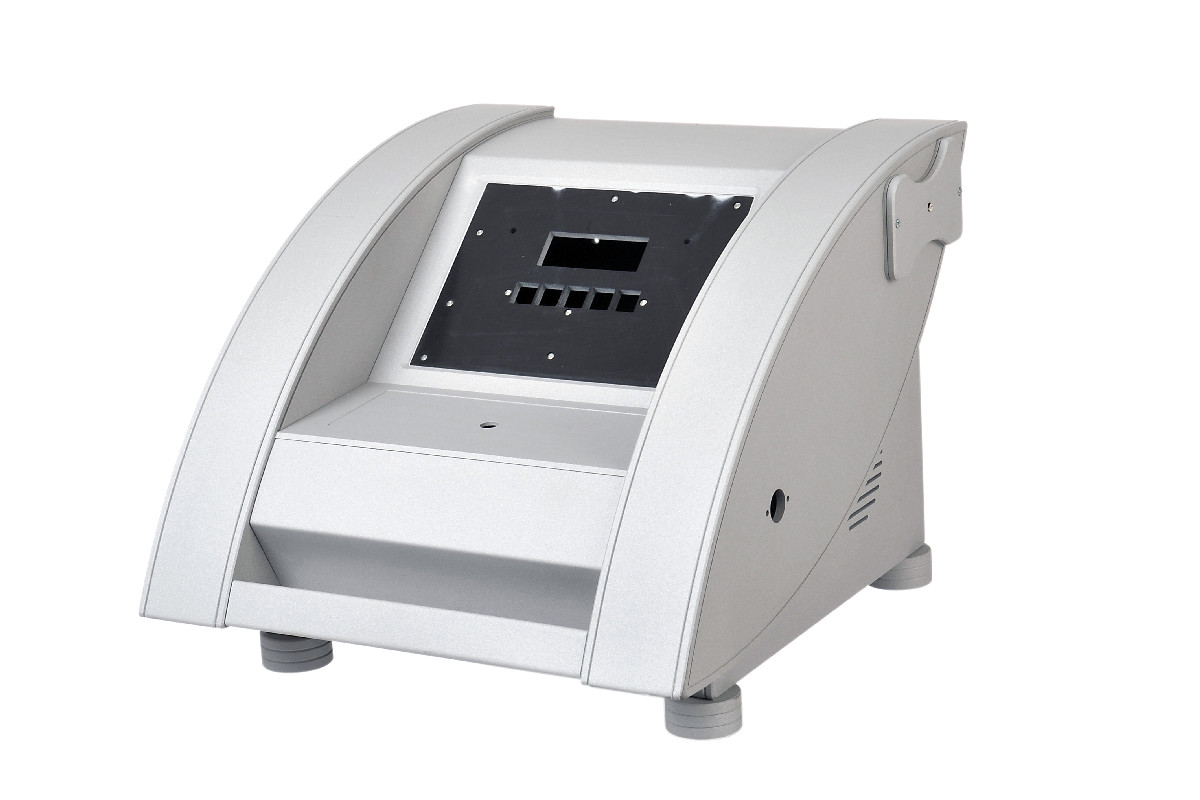
What it changes: the panel layout, since windows bond into machined recesses. The housing in our amplifier enclosure case study got an acrylic window in its bottom panel for one reason: to keep the FCC label on the component inside readable.
6. How many units, over what period
There is no minimum order. One or two units carry a setup charge, and the process is most economical from 100 to 10,000 units. Research quantities usually sit at the low end and arrive in stages, which is what blanket orders of 10 to 10,000 units, released on a schedule, are for. Quantity also decides whether a standard body will do: our C Box and U Box are pre-designed enclosures resized to your board, and the C Box is the most economical we make.
What it changes: standard or custom body, color (a custom color needs around 2,000 lb of material, so research quantities use stock white, black, light grey or dark grey) and how batches are ordered. Planning several builds is covered in enclosures in small batches.
7. Which regulatory path it is on
A device that stays in your lab, one used in a clinical study and one headed for FDA clearance or CE marking carry different obligations. In the United States, an investigational device generally has to carry a caution statement under the FDA’s investigational device rules. A device headed for clearance will typically be tested to IEC 60601-1 or IEC 61010-1, and a change to the housing after testing can mean repeating tests.
What it changes: when to freeze material and construction (before formal testing), how labeling is applied (printed permanently on the part), and records (the approved 3D model of each revision, which belongs to you). We work under an ISO 9001:2015 quality system and build the housing to your design in the material you specify; certification of the device stays with its maker.
8. When you need it
An engineer replies within one business day and quotes within 48 hours. Prototypes take 3 to 21 working days depending on complexity, and production ships three weeks after the PO. Work back from the date that matters (a study start, a grant milestone, a conference) and plan for at least two prototypes while the electronics are still changing.
What it changes: what you fix first. The board outline, mounting holes and connector positions drive the enclosure, so settle those before the display choice or the printed graphics, which are quick edits later.
Send the eight answers with your model or a sketch through our request-for-quote form, and an engineer will turn them into a 3D model for your approval.