A plastic project box bought online is the right enclosure for a bench prototype, a test fixture or a one-off. It stops being right when you drill the same eleven holes into every unit, glue standoffs in place to match your board, or put a sticker on a generic box to make it look like your product. This post covers how to read a listing so the box you order is the box you get, the signs you have outgrown it, and the options between a catalog box and a fully custom housing.
A disclosure first: Toolless does not sell, resell or review Amazon products. We make custom plastic enclosures, so read the second half knowing which side of the decision we sit on.
When a catalog box is the right answer
Buy the box online when the board will change next week, when you need one or two units, or when the box needs two round holes and a cable exit. It costs a small fraction of a custom prototype, which for an ABS enclosure of about 8 × 5 × 2 in is around $500 at Toolless, and it can be on your bench tomorrow.
A catalog box can also be the better route when the product needs a tested ingress rating from day one. A gasketed molded enclosure from a maker that publishes its IP test is a sound starting point for an outdoor or washdown unit. Sealing a fabricated housing is a design project to discuss with an engineer, not a catalog line.
How to read a listing before you buy
Listings for generic project boxes are written to sell boxes, not to support a design. Five lines in a typical listing deserve a second look.
| The listing says | What to check | Why it matters |
|---|---|---|
| 150 × 100 × 70 mm | Inside or outside, and whether the lid is included | Walls, the lid lip, the gasket channel and the corner screw bosses all take space. Molded walls carry draft, so the inside is narrower at the bottom than at the rim. |
| ABS, or just “plastic” | The resin and a datasheet | Plain ABS yellows and turns brittle in sunlight. Outdoors you want a UV-stabilized grade, often polycarbonate. |
| IP65 or IP67, waterproof | A test report or datasheet from the maker | The rating applies to the box as tested, closed with its gasket and screws. Every hole you drill has to be sealed with a rated gland or connector, and the finished product’s rating is yours to verify. |
| Flame retardant | The UL94 class and the thickness it was rated at | HB, V-2, V-1 and V-0 are different results, and each rating is listed at a minimum thickness for that material. “Flame retardant” alone tells you nothing. |
| PCB standoffs included | Positions and thread of the internal bosses | A generic boss pattern rarely matches your board’s mounting holes. |
On the IP code itself: the first digit covers solid objects and dust, the second covers water. IP65 means dust-tight and protected against water jets. IP67 means dust-tight and protected against temporary immersion, which is a different test, not a higher grade of the same one; a box tested for both is marked IP65/IP67. A listing that claims IP67 without naming who tested it is a claim, not a rating.
Seven signs you have outgrown the catalog box
One of these is a nuisance. Three or more, and the hand work is costing more than a custom enclosure would.
- You cut the same openings by hand in every unit. Connector windows, display cutouts and vent slots take time per unit, and hand-marked positions drift from box to box. A CNC program cuts them to ±0.2 mm on the flat pattern, the same way every time.
- The board does not fit the standoffs. Drilled extra holes, glued standoffs and shims are a reliability question in every unit you ship.
- One tall part forces the next size up. A connector or a capacitor 5 mm too tall puts you in a box that is too big everywhere else. A custom box is sized to the board, not to the nearest catalog step.
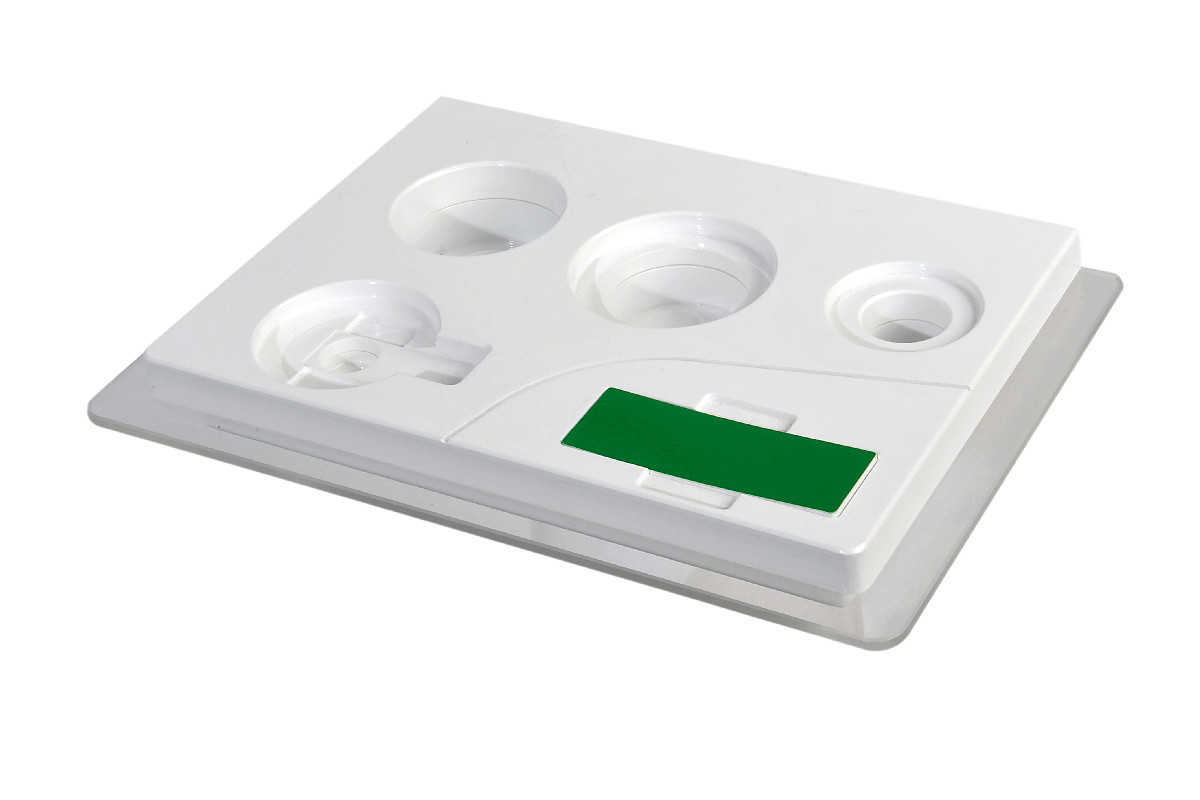
- You need a display, a window or status LEDs. An acrylic window bonded into a machined recess, or light pipes, are hard to retrofit cleanly into a molded box.
- The product needs your brand on it. A sticker on a generic shape still reads as a generic shape. Printing, two-tone panels and a form that is not a catalog part say otherwise.
- Units have to match. At fifty or five hundred units, customers notice when one box differs from the next.
- The specification asks for something the listing cannot prove. A UL94 V-0 material, a particular color, wall flanges or a DIN clip.
The middle path: a standard design sized to your board
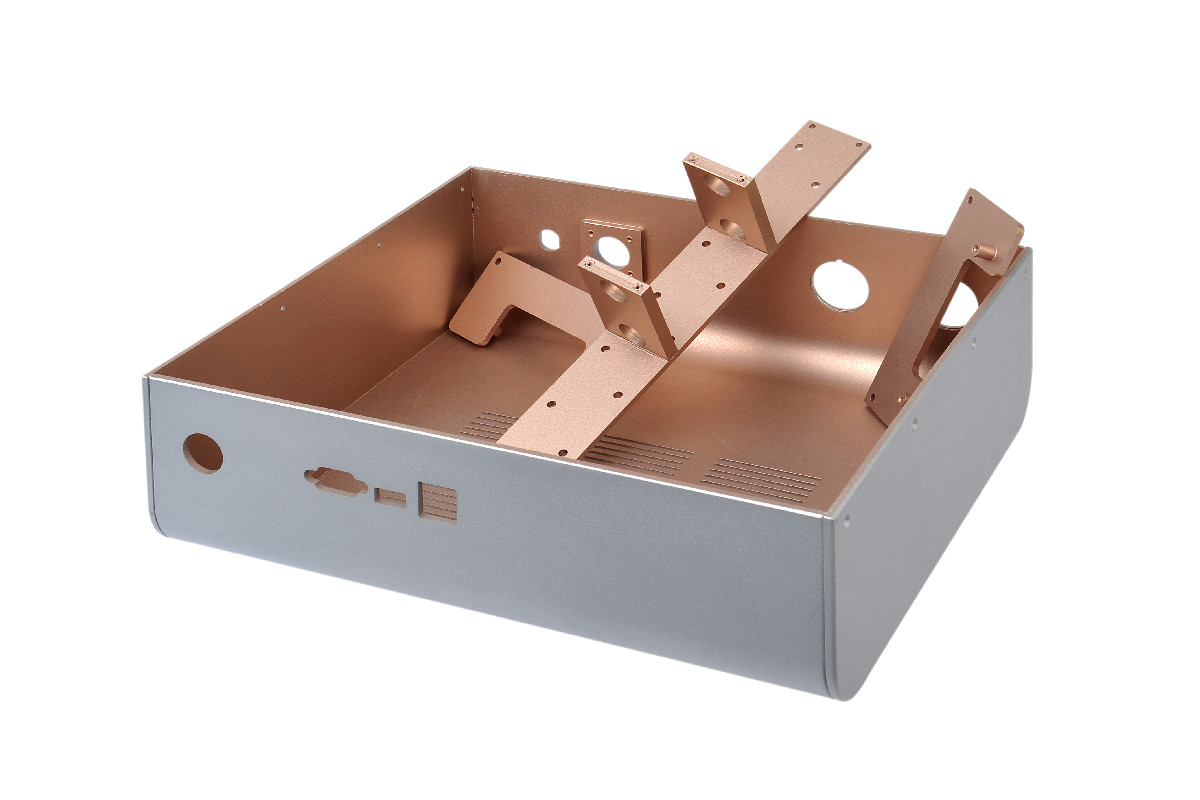
Between the catalog box and a fully custom housing sit two pre-designed constructions that are resized to your board, with no tooling at any size. The C Box is two C-shaped halves that snap together over the board, the most economical enclosure we make. The board sits on four bosses, with threaded inserts or self-tapping screws, or slides into machined slots. The U Box is a four-piece construction, a U-shaped body, a cover and two end panels, which suits long, narrow or deep boards and dense connector fields on the ends.
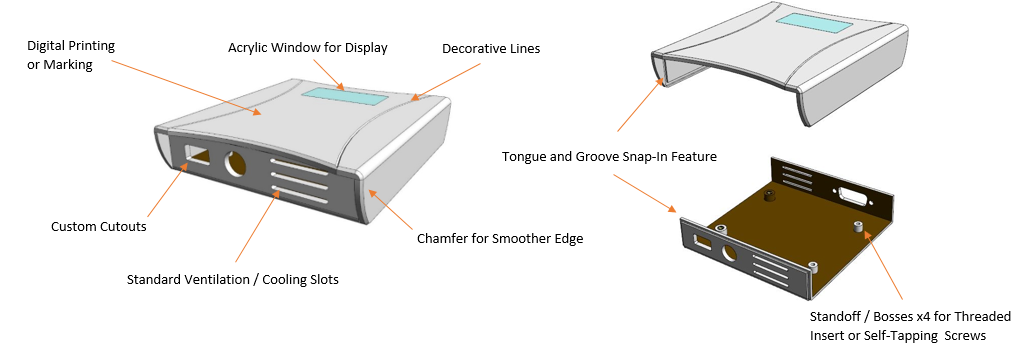
You can size either one yourself. The Product Designer takes length, width, height, sheet thickness and color, then exports a STEP or IGES model to check against your board in your own CAD. Upload it with your cutout notes and we add the openings and quote. Unlike a catalog box, the dimensions are yours, and every cutout is machined.
When to go fully custom
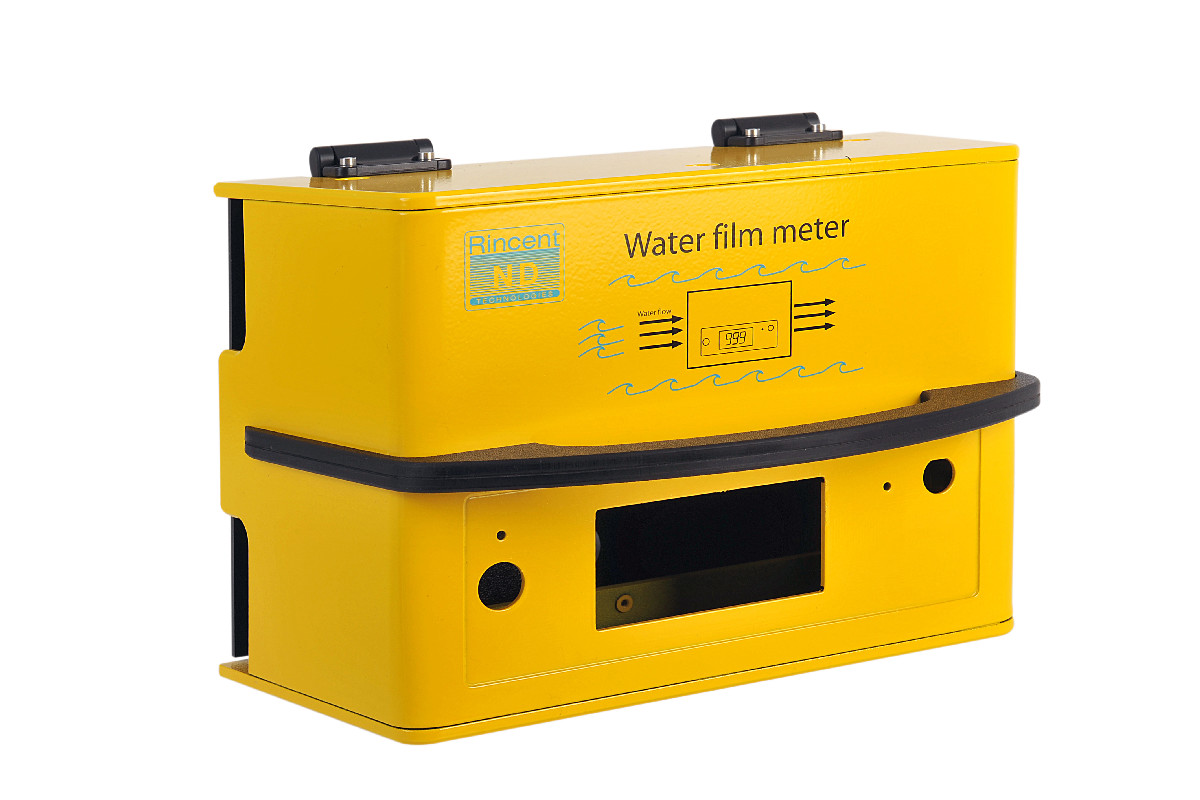
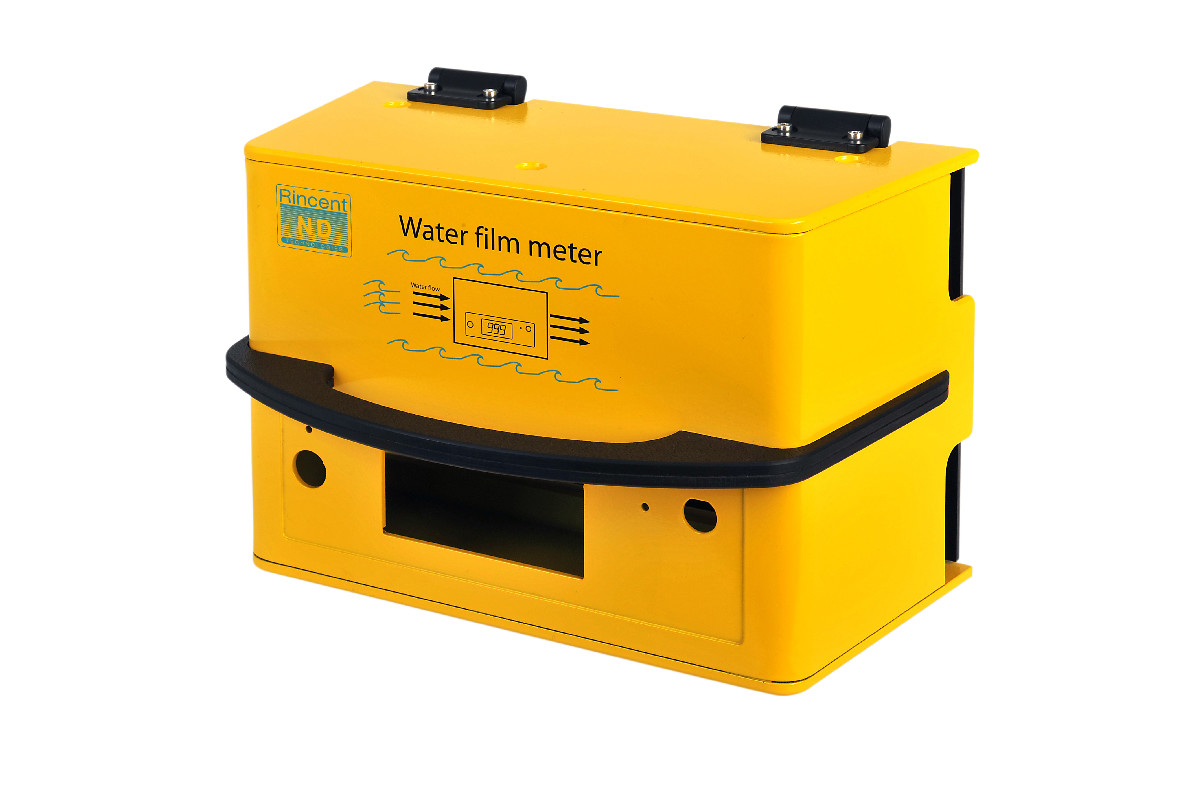
Go fully custom when the shape itself matters: a sloped front for a display read from a seat, a top curved in one direction, a hinged lid, two boards and a battery, or a housing that has to look like a finished product. A custom project box is designed around your components in SolidWorks and cut from pre-colored sheet. General-purpose ABS in 3, 4, 6 or 8 mm covers most of them, with flame-retardant grades and polycarbonate on the materials list when the specification calls for them.
The numbers that matter for planning: no minimum order, a setup charge on one or two units, prototypes in 3 to 21 working days depending on complexity, and production runs three weeks after PO. The process is most economical from 100 to 10,000 units. If you only ever need one and a catalog box works, keep the catalog box.
If three or more of the signs above apply, send the board outline, the connector list and the quantity through our request-for-quote form. An engineer replies within one business day with the options, from a resized C Box to a custom design.